




Cuba’s national electric grid collapsed on Monday, 16 March 2026, with the country’s grid operator, the Union Nacional Electrica de Cuba, reporting that approximately 10 million people had been left without power. The failure occurred amid a United States-imposed oil blockade that has severely compounded the island’s already deteriorating power generation infrastructure.
The Cuban Ministry of Energy and Mines confirmed the blackout on the social media platform X, stating that a total disconnection of the Sistema Electroenergetico Nacional had occurred and that causes were under investigation while restoration protocols had been activated. The state-owned grid operator added that no faults had been detected in the electrical units that were operating at the moment the grid failed.
It was the third major blackout in Cuba over the past four months. A large-scale outage approximately one week earlier had left millions in western Cuba without power, and a further significant blackout had affected western Cuba in early December 2025. At least six national-level blackouts have been recorded over the past year.
How the United States oil blockade on Cuba has driven the island’s acute energy crisis in 2026
Cuba has been subject to a United States trade embargo since 1962. Over subsequent decades, the island’s economy and power infrastructure developed a structural dependency on foreign oil, primarily supplied by Venezuela under preferential bilateral agreements. That arrangement deteriorated substantially as Venezuela’s own economy contracted and continued under Nicolás Maduro in progressively reduced volumes.
The current phase of Cuba’s energy crisis intensified sharply in January 2026, following the United States military detention of Venezuelan President Nicolás Maduro. The government of Venezuela’s interim leader Delcy Rodriguez subsequently agreed to halt oil shipments to Cuba. No oil has entered Cuba since January 9, 2026, amid the broader United States pressure campaign. United States President Donald Trump later threatened other countries, notably Mexico, with sanctions if they delivered fuel to the island, citing Cuba’s alignment with what the administration characterised as hostile countries and malign actors, and its hosting of foreign military and intelligence capabilities. Cuba rejected those characterisations.
No large oil imports have entered Cuba through its main commercial hubs of Matanzas or Moa, which typically handle crude for refining and fuel oil for power generation, according to satellite imagery analysed by TankerTrackers.com. The ports of Havana and Cienfuegos also recorded no import activity for more than one month.
Cuba produces approximately 40 percent of its petroleum domestically and has been generating some power from that output, but domestic supply has not been sufficient to meet national demand as the electric grid continues to deteriorate. The island’s thermoelectric plants, central to its generation capacity, are operating with ageing equipment that has not received the sustained investment or spare parts required for stable performance. Cuba does not have the hard currency necessary to import spare parts or upgrade its plants and grid, creating a compounding intersection of infrastructure degradation, fuel access failure, and fiscal constraint.
Why the Morón protest of 14 March 2026 marks a significant rupture in Cuba’s political and social order
A rally against power cuts and food shortages began peacefully in the city of Morón, in Ciego de Avila province in central Cuba, late on Friday, 13 March, before turning violent in the early hours of Saturday, 14 March 2026, according to the state-run newspaper Invasor. Social media videos showed a large fire and people throwing rocks through the windows of a building while voices shouted calls for liberty in the background. Reuters verified the location of one video in Morón, a city on Cuba’s northern coast approximately 400 kilometres east of the capital Havana, near the tourist resort of Cayo Coco.
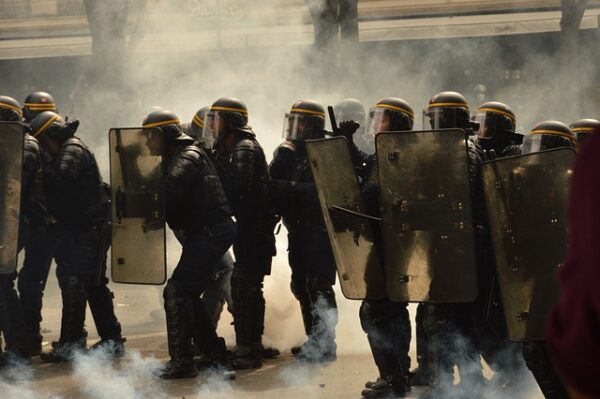
According to the Invasor newspaper, what initially began peacefully, following an exchange with local authorities, degenerated into acts of vandalism against the headquarters of the municipal committee of the Communist Party of Cuba. A smaller group of participants stoned the entrance of the building and started a fire in the street using furniture taken from the reception area. Vandals also targeted other state-run establishments in the vicinity, including a pharmacy and a government market.
Cuban authorities announced five arrests in connection with what the government characterised as vandalism acts in Morón. Cuban President Miguel Diaz-Canel responded on social media, acknowledging that public anger over prolonged power outages was understandable but issuing a direct warning against further disorder. He stated there would be no impunity for vandalism and violence.
State media outlet Vanguardia de Cuba addressed reports circulating online suggesting a protester had been shot by police, stating no one had been injured by gunfire and characterising such reports as manipulation intended to sow fear and confusion. State media reported that police detained five people and that one participant who had been drinking fell and was receiving treatment for injuries in hospital. Cuba’s Interior Ministry opened an investigation into the incident.
Public protests, particularly violent ones, are exceedingly rare in Cuba.
The 2019 Cuban constitution grants citizens the right to demonstrate, but legislation more specifically defining that right remains stalled in the legislature, leaving those who take to the streets in legal limbo. Morón carries particular historical resonance as a site of significant unrest during the anti-government protests of July 11, 2021, the largest seen in Cuba since the revolution of 1959.
What the collapse of Cuba’s power grid means for public health, aviation, transport, and civilian life in 2026
Cuban President Diaz-Canel said on Friday, 13 March, that no oil had been delivered to the island in more than three months and that Cuba was operating on solar power, natural gas, and thermoelectric plants. He confirmed the government had been forced to postpone surgeries for tens of thousands of people as a direct consequence of the fuel and power shortfall.
Sales of fuel at government-run petrol stations are now highly restricted. Only tourists, diplomats, and Cubans granted an allocation through an online system are permitted to purchase fuel, usually after waiting for extended periods. Fuel shortages have severely reduced public transportation across the island, making it difficult or impossible for teachers and students to reach educational institutions. Students staged a sit-in on the steps of the University of Havana on Monday after the government suspended in-person classes.
Airlines from numerous countries have suspended or cancelled flights to Cuba due to the shortage of aviation fuel. American Airlines, Delta Air Lines, and JetBlue have all halted services to the Caribbean island. Air Canada announced last month that it was suspending flights to Cuba citing the aviation fuel shortage. Internet traffic in Cuba has declined sharply, with the island recording only one-third of its normal traffic volume at the most recent measurement point.
Residents in Havana and other Cuban cities have resorted to banging pots and pans at night in a form of protest known as a cacerolazo, reflecting growing public frustration over electricity outages, food shortages, and deteriorating living conditions. Blackouts have previously prompted anti-government demonstrations in Cuba in 2021, 2022, and 2024.
Whether Cuba and the United States are engaged in negotiations to resolve the political and energy crisis in 2026
Cuba’s government confirmed on Friday, 13 March 2026, that it had entered talks with the United States government. Diaz-Canel said Cuban officials had held discussions with Washington to identify the bilateral problems requiring a solution. Cuba has received only two small vessels carrying oil imports since the start of 2026, according to shipping data reviewed by Reuters. Venezuela, once the island’s primary oil supplier, has sent no fuel to Cuba this year.
Trump said on Sunday that Cuba wanted to make a deal and expressed an expectation that one would be reached, while indicating that Iran would take priority in his diplomatic sequence before Cuba. Speaking to reporters on Monday as Cuba’s grid collapsed, Trump said he believed he would have the honour of taking Cuba in some form, whether by freeing it or taking it, and described Cuba as a very weakened nation. A United States official separately told CBS News that the Trump administration does not seek to trigger a collapse of the Cuban government, but rather to negotiate with Havana for a transition away from its authoritarian communist system.
What the Cuba blackout and United States oil blockade mean for the island, the region, and global energy diplomacy
- Cuba’s Union Nacional Electrica de Cuba confirmed a total disconnection of the national grid on 16 March 2026, the third major island-wide blackout in four months, leaving approximately 10 million people without power as the island’s thermoelectric and generation capacity fails under severe fuel shortages.
- No oil shipments have entered Cuba since January 9, 2026, following the United States detention of Venezuelan President Nicolas Maduro and subsequent halting of Venezuelan oil exports to Cuba, with the United States threatening tariffs against any third country supplying fuel to the island.
- Violent unrest in Morón, Ciego de Avila, on 14 March 2026, in which protesters attacked the local Communist Party of Cuba headquarters, represents one of the most significant outbreaks of public dissent in Cuba since the July 11, 2021 protests, with five arrests confirmed by Cuban authorities.
- Cuban President Miguel Diaz-Canel confirmed on 13 March 2026 that Cuba had entered talks with the United States government to identify bilateral problems requiring resolution, the first formal acknowledgment of discussions between Havana and the Trump administration amid the crisis.
- The energy crisis has produced cascading humanitarian and economic consequences including the postponement of tens of thousands of surgeries, the suspension of major airline services by American Airlines, Delta Air Lines, JetBlue, and Air Canada, severe fuel rationing, and a sharp decline in the island’s internet traffic to one-third of its normal volume.
Discover more from Business-News-Today.com
Subscribe to get the latest posts sent to your email.