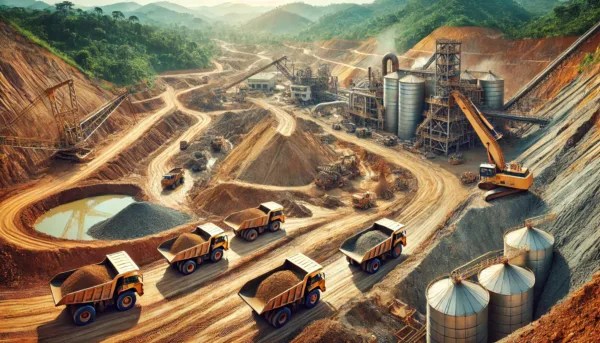



ArcelorMittal Kryvyi Rih (NYSE: MT), Ukraine’s largest steelmaker and a subsidiary of global steel giant ArcelorMittal SA, announced on 16 March 2026 that it will close two additional rolling mills, accelerating a broad operational contraction that has unfolded in a series of announcements since January. The closures, which come without a specified timeline, follow the earlier shutdowns of the plant’s Blooming shop and its Casting and Mechanical Plant and bring the cumulative job losses at the Kryvyi Rih facility to a figure that may reach 3,400 workers. The company cited two interlocking pressures: a deepening energy crisis driven by relentless Russian strikes on Ukrainian power infrastructure, and the European Union’s full enforcement of the Carbon Border Adjustment Mechanism from January 2026 without exemptions or transition provisions for Ukrainian producers. Together, these forces have made significant portions of ArcelorMittal Kryvyi Rih’s production capacity commercially unviable, prompting a fundamental restructuring of its rolling operations around a smaller number of surviving mills.
How are Russian strikes on Ukraine’s energy grid forcing ArcelorMittal Kryvyi Rih to close steel mills in 2026?
The Kryvyi Rih plant sits approximately 70 kilometres from the front line in south-eastern Ukraine, and the escalating intensity of Russian attacks on the country’s energy system has translated directly into unsustainable production economics. Electricity costs for industrial producers in Ukraine have nearly tripled since the start of the full-scale war. The price rose from around $120 per megawatt hour in the second quarter of 2024 to $230 per megawatt hour in February 2026, with peak-hour costs reaching $370 per megawatt hour. These are not marginal cost increases; they represent a structural destruction of competitiveness for energy-intensive steelmaking processes.
The damage inflicted on Ukraine’s electricity generation and transmission infrastructure has forced Kyiv to ration power to industrial users and expand expensive electricity imports from the European Union. The operational impact at ArcelorMittal Kryvyi Rih has been severe. Comparing January 2026 output against November 2025 levels, pig iron production fell by 30%, steel production dropped by 40%, and rolled steel output declined by as much as 60%. A plant designed to produce more than 6 million tonnes of steel annually was, by early 2026, operating at a fraction of its nameplate capacity. In January alone, a massive Russian attack on the energy sector on 7 January forced the temporary suspension of part of the facility’s production processes. The compounding effect of repeated strikes, chronic power shortfalls, and prohibitive electricity prices has made the economic case for maintaining a full suite of rolling operations essentially untenable.
What does the EU Carbon Border Adjustment Mechanism mean for Ukrainian steel exports and ArcelorMittal Kryvyi Rih’s market access?
The European Union’s Carbon Border Adjustment Mechanism moved from its reporting-only transition phase into full customs-linked compliance from 1 January 2026, covering carbon-intensive goods including iron and steel. For Ukrainian producers who had, under considerable wartime difficulty, reoriented their export mix toward the EU market after losing traditional trading relationships, the CBAM’s abrupt and unqualified enforcement represented a market access shock with immediate consequences.
ArcelorMittal Kryvyi Rih had invested significant effort in rebuilding its EU sales channels after the onset of full-scale war. The CBAM effectively closed or sharply curtailed those routes without any compensatory mechanism for the unique conditions of a wartime economy. The company was blunt in its assessment: the mechanism’s implementation without exceptions or a transition period for Ukrainian producers led directly to the loss of the European market for a significant portion of its metallurgical output. That market loss degraded the domestic order volume needed to justify continued operation of individual production units, including the Foundry and Mechanical Plant shut down in late February and the two rolling mills announced on 16 March.
The policy timing is particularly pointed. Ukraine’s steel industry expanded its EU-facing export orientation as a survival strategy following the disruption of pre-war trade flows. The CBAM, designed as a climate instrument, has in effect applied standard carbon-pricing logic to a country whose industrial infrastructure is being physically destroyed. ArcelorMittal Kryvyi Rih rightly argues that this outcome reflects a structural blind spot in the mechanism’s design, one that the European Commission has not yet moved to address through specific Ukrainian carve-outs or transition relief.
Which ArcelorMittal Kryvyi Rih production units are closing and what is the cumulative workforce impact across all announced shutdowns?
The sequence of closures at ArcelorMittal Kryvyi Rih since January 2026 now involves four production units. The Blooming shop, which produces billets for the plant’s small-gauge and wire mills, was the first to be announced for shutdown in the second quarter of 2026. The Casting and Mechanical Plant, a large auxiliary enterprise encompassing foundry, press-forging, thermal, weld deposition, and machining operations, was announced for closure in late February, with the decision taking effect three months from that date. Two rolling mills were added to the closure list on 16 March, with no specific timeline provided. The company stated that rolling operations would be consolidated across a smaller number of surviving mills as a response to adverse economic conditions.
The workforce impact is substantial. The Foundry and Mechanical Plant closure alone affects more than 1,700 workers. Combined with the Blooming shop and related process closures, the company previously indicated that total job reductions would exceed 2,400. With the two rolling mill closures announced on 16 March, the cumulative figure may reach 3,400. ArcelorMittal Kryvyi Rih has indicated that employees of closed units will be offered roles elsewhere within the company and access to retraining at the employer’s expense, with Ukrainian statutory employment protections applying throughout. Given the plant’s broader workforce and its position as Kryvyi Rih’s dominant industrial employer, the community-level consequences of a contraction of this scale are significant.
How has ArcelorMittal SA’s parent company supported the Kryvyi Rih subsidiary financially throughout the Ukraine war, and what does continued presence signal?
ArcelorMittal SA has not abandoned its Ukrainian subsidiary despite years of war-related disruption and deteriorating economics. Since the onset of the full-scale invasion, the parent company has invested approximately $1 billion in ArcelorMittal Kryvyi Rih, including $650 million in the first year alone. The subsidiary has acknowledged that its continued operation has been possible only because of this large-scale parental support, a statement that also implicitly signals the limits of that support should conditions deteriorate further.
In September 2025, ArcelorMittal Kryvyi Rih publicly raised the possibility of a full exit from Ukraine if electricity tariffs continued to rise disproportionately. The current closure programme represents a more measured middle path: preserving a reduced but viable core while eliminating units whose economics cannot be defended under current conditions. Whether that middle path holds depends heavily on two factors that remain entirely outside the company’s control: the trajectory of Russian attacks on Ukrainian energy infrastructure and any policy relief the EU might extend to Ukrainian steel exporters on CBAM compliance.
What are the competitive implications of ArcelorMittal Kryvyi Rih’s production cuts for the broader European and global steel market?
ArcelorMittal Kryvyi Rih is Ukraine’s largest producer of rolled steel, specialising in long products including rebar and wire rod. Its capacity, when operating, exceeds 6 million tonnes of crude steel annually. The progressive closure of production units and the concentration of output in a smaller mill footprint will reduce Ukrainian long steel supply, with downstream effects on regional construction material pricing and project costs across markets that have been absorbing Ukrainian exports.
For competing European long steel producers, Ukrainian output had already become a significant factor following the war’s redirection of ArcelorMittal Kryvyi Rih’s trade flows toward EU markets. The CBAM’s removal of that supply channel, combined with the physical capacity reductions now underway, creates a supply gap in European long steel that established regional producers are well positioned to absorb. The closures also reinforce the broader narrative around European steel overcapacity in flat products coexisting with tighter supply dynamics in long products, a structural distinction that is often lost in aggregate steel sector commentary.
ArcelorMittal Kryvyi Rih’s decision to raise rebar and wire rod prices by $50 per tonne from March 2026, citing electricity costs, signals that the company is attempting to pass through some of its cost inflation to buyers rather than absorbing it entirely through volume reduction. That pricing move, while commercially rational, also reduces the plant’s competitiveness against imports in markets outside Ukraine, compressing its remaining export options further.
How is ArcelorMittal MT stock performing and what does the Kryvyi Rih retreat mean for parent company valuation and investor sentiment?
ArcelorMittal SA shares on the Amsterdam exchange were trading at approximately 44.73 EUR on 15 March 2026, down from a previous close of 46.73 EUR, and well below the stock’s 52-week high of 57.42 EUR. The 52-week low of 20.54 EUR provides context for the recovery the stock staged through 2025, a recovery that appears to be stalling under the weight of broader steel sector headwinds. The NYSE-listed depositary receipts were trading at approximately $56.64 as of 11 March 2026, against a 52-week range of $23.20 to $67.60. The consensus 12-month price target of around 54.90 EUR on the Amsterdam listing implies modest upside from current levels, with ten analysts recommending a buy and one recommending a sell.
The Kryvyi Rih situation is not a primary driver of ArcelorMittal SA’s group valuation, given the subsidiary’s diminished output relative to the company’s global footprint. ArcelorMittal reported full-year 2025 EBITDA of $6.54 billion, net income of $3.15 billion, and basic earnings per share of $4.13. The proposed annual dividend for 2026 stands at $0.60 per share, and the board has committed to returning at least 50% of post-dividend free cash flow to shareholders via buybacks. At a trailing price-to-earnings ratio of approximately 13.7 times on NYSE-listed shares, the stock trades at a notable discount to the broader US market, reflecting a combination of steel sector cyclicality concerns, European demand softness, and geopolitical exposure. JPMorgan downgraded ArcelorMittal to Underweight in March 2026, while Bank of America Securities and Jefferies have maintained more constructive stances. The divergence in analyst positioning reflects genuine uncertainty about the near-term European steel demand environment rather than any fundamental view on the Ukraine subsidiary specifically.
What policy remedies could halt further closures at ArcelorMittal Kryvyi Rih and stabilise Ukraine’s heavy industrial base during the war?
ArcelorMittal Kryvyi Rih’s management has been consistent in identifying two levers that could change the trajectory of its restructuring: a meaningful reduction in Ukrainian industrial electricity tariffs and targeted EU policy relief on CBAM obligations for Ukrainian producers. Neither has materialised in a form adequate to the scale of the problem. The Ukrainian government has been asked repeatedly to develop emergency support mechanisms for the mining and metallurgical sector, and the European Commission has yet to introduce a formal carve-out or extended transition for Ukrainian steel.
The CBAM issue is particularly tractable as a policy matter. The EU has strong geopolitical reasons to support Ukrainian industrial survival alongside its military and financial assistance. Extending a temporary exemption or a longer transition period to Ukrainian steel producers would carry a modest fiscal cost for Brussels while providing meaningful relief to the country’s most capital-intensive industrial sector. The absence of such a measure reflects a gap between the EU’s stated support for Ukraine’s economic resilience and the practical operation of its trade policy instruments, a tension that will likely intensify as Ukraine’s industrial base continues to contract.
On the energy side, the calculus is harder. Electricity prices in Ukraine reflect genuine supply destruction from Russian strikes, and subsidising industrial tariffs diverts fiscal resources from reconstruction and welfare needs. But without some form of targeted energy cost relief for anchor industrial employers like ArcelorMittal Kryvyi Rih, the risk of further capacity losses, or an outright exit that would eliminate tens of thousands of direct and indirect jobs in one of Ukraine’s most economically vulnerable regions, grows with each additional announcement.
Key takeaways: what ArcelorMittal Kryvyi Rih’s rolling mill closures mean for Ukraine steel, EU trade policy, and global steel markets
- ArcelorMittal Kryvyi Rih has announced the closure of two more rolling mills on 16 March 2026, extending a restructuring that began in January and now encompasses four production units including the Blooming shop and the Casting and Mechanical Plant.
- Cumulative job losses from all announced closures may reach 3,400 workers at a plant designed for more than 6 million tonnes of annual steel capacity, representing one of the largest industrial workforce reductions in Ukraine since the start of the full-scale war.
- Electricity costs for Ukrainian industrial producers have nearly tripled since the war began, reaching $230 per megawatt hour in February 2026 and hitting $370 per megawatt hour at peak demand, making energy-intensive steelmaking processes economically indefensible at current tariff levels.
- Russian strikes on power infrastructure reduced ArcelorMittal Kryvyi Rih’s pig iron production by 30%, steel production by 40%, and rolled steel output by 60% in January 2026 compared to November 2025, illustrating how physical infrastructure destruction translates directly into industrial capacity loss.
- The EU’s Carbon Border Adjustment Mechanism, which entered full enforcement from 1 January 2026 without exemptions for Ukrainian producers, effectively closed the European export market that ArcelorMittal Kryvyi Rih had painstakingly rebuilt since 2022, removing a critical revenue base and accelerating closures.
- ArcelorMittal SA has invested approximately $1 billion in its Ukrainian subsidiary since the war began but raised the spectre of a full exit in September 2025 if electricity tariff escalation continued; the current restructuring represents an intermediate response rather than a final decision on Ukrainian presence.
- The closures reduce Ukrainian long steel supply in European and global markets, creating a supply gap in rebar and wire rod that benefits competing regional producers, particularly established European long steel manufacturers.
- ArcelorMittal Kryvyi Rih raised rebar and wire rod prices by $50 per tonne from March 2026 to partially offset energy cost inflation, a move that further pressures its export competitiveness and concentrates its commercial viability in the domestic Ukrainian market.
- ArcelorMittal SA stock (NYSE: MT) was trading at approximately $56.64 as of mid-March 2026 against a 52-week range of $23.20 to $67.60, with JPMorgan downgrading to Underweight in March while Bank of America and Jefferies maintained constructive ratings; the Ukraine exposure is not a primary valuation driver given the subsidiary’s reduced output share.
- Targeted EU policy relief on CBAM obligations for Ukrainian steel producers and emergency industrial electricity tariff support from the Ukrainian government represent the two most tractable interventions that could stabilise ArcelorMittal Kryvyi Rih’s remaining operational base and prevent further closures or an outright exit.
Discover more from Business-News-Today.com
Subscribe to get the latest posts sent to your email.