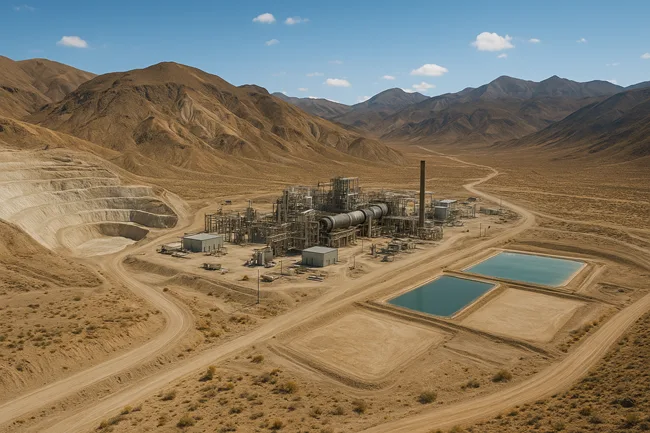



FIN Resources Limited (ASX: FIN), a West Perth-based mineral exploration company, has commenced its maiden diamond drilling program at the Cabin Lake Gold Project in Canada’s Northwest Territories, marking the first phase of systematic drill testing since the company completed its acquisition of the project. The 1,500-metre program is designed to follow up on a series of high-grade historical intercepts, including 31.4 metres at 15.2 grams of gold per tonne from shallow depth, which ranks among the more compelling near-surface gold results in the region. FIN Resources shares were trading at A$0.013 on 16 March 2026, down 13.3% in the prior session but up approximately 85.7% over the past twelve months, reflecting the market re-rating the stock has undergone since announcing the Cabin Lake acquisition in late October 2025. The commencement of drilling is a tangible execution milestone for a company whose market capitalisation remains in micro-cap territory, making every drill result a potential material catalyst.
Why is FIN Resources drilling at Cabin Lake now and what historical results justify the program?
The Cabin Lake Gold Project sits within the Archean Slave Craton in Canada’s Northwest Territories, a greenstone belt that has historically produced in excess of 14 million ounces of gold and hosts a further 10 million ounces in the development pipeline. The mineralisation at Cabin Lake is hosted within the Bugow Iron Formation, a banded iron formation sequence that shares geological characteristics with the Lupin Gold Mine, a past-producer that generated approximately 3.3 million ounces of gold at grades exceeding 10 grams per tonne. That geological analogy matters because it provides an exploration model with proven precedent, reducing some of the uncertainty inherent in early-stage discovery-stage programs.
The historical drill results that have shaped FIN Resources’ target selection are notably high-grade. The Arrow Zone, the most advanced of several prospects on the property, returned 31.4 metres at 15.2 grams per tonne gold from 17.49 metres depth in hole CL-20-08, along with 19.9 metres at 8.5 grams per tonne from 24.69 metres in hole CL-20-01, and 13.6 metres at 7.3 grams per tonne from 41.19 metres in hole CL-20-03. These are shallow, wide intersections with grades that would attract interest at any gold price environment, let alone the current spot price of approximately USD 5,019 per ounce as of mid-March 2026, a level that has roughly doubled from where it stood two years ago. The economic case for advancing a high-grade near-surface gold system is materially stronger today than it would have been for the previous owners.
FIN Resources acquired the project from Stockworks Gold for approximately A$200,000 in cash and 30 million shares, with up to A$450,000 in deferred consideration structured through performance rights. At those terms, the acquisition cost was nominal relative to the exploration spend Stockworks Gold had already deployed, reportedly in excess of C$4 million across four years of programs including diamond drilling, magnetics, induced polarisation surveys, and LiDAR mapping. FIN Resources has effectively inherited a technically de-risked dataset and then applied its own geological reinterpretation to prioritise the current drill targets.
How has FIN Resources structured the technical program and what are the priority exploration targets?
The current program comprises approximately 1,500 metres of diamond drilling across a series of priority zones identified through what FIN Resources describes as integrated geological interpretation, 3D modelling, and reprocessing of historical data. Aurora Geosciences, a Yellowknife-based integrated geological and geophysical consulting company with prior involvement at Cabin Lake, has been appointed to manage the drill program. The selection of a contractor with site-specific familiarity is a practical efficiency in a remote subarctic environment where mobilisation logistics are time-sensitive and costly.
The Cabin Lake property contains multiple named prospects along a 15-kilometre corridor of the Bugow Iron Formation, including Arrow, Andrew, and Beaver. Of these, the Arrow Zone is the primary target given the density and quality of historical results. The property also carries eight fully permitted drill targets, a material regulatory advantage in a jurisdiction where permitting timelines can constrain exploration schedules. The Wek’eezhi Land and Water Board formally transferred the Land Use Permit to FIN Resources’ wholly owned Canadian subsidiary ahead of the current campaign, satisfying the final condition precedent of the acquisition and providing operational certainty.
A geophysics crew has also been deployed to site alongside the drilling team, with the stated purpose of collecting additional data and integrating it with the ongoing exploration program to refine follow-up targets in real time. This concurrent approach, running geophysics in parallel with drilling rather than sequentially, is a sensible capital allocation decision for a company of FIN Resources’ size. It compresses the timeline between initial drilling results and the identification of the next set of targets, which is important when exploration windows in the Northwest Territories are constrained by seasonal weather.
How did FIN Resources fund the Cabin Lake drilling program and is the capital structure adequate?
FIN Resources completed the first tranche of an A$3.75 million capital raising prior to the current drill campaign, issuing 255 million new fully paid ordinary shares at A$0.01 per share to raise approximately A$2.55 million before costs. The second tranche, comprising 120 million shares to raise a further A$1.2 million, remains subject to shareholder approval at a general meeting scheduled for 31 March 2026 in Perth. If approved, total proceeds from the placement would reach approximately A$3.75 million, providing the company with stated funding certainty for the drilling program and associated exploration activities.
The structure of this funding arrangement carries some execution risk. With the second tranche still pending shareholder approval and the drilling program already underway, FIN Resources is operating with only A$2.55 million of confirmed capital at this stage. While shareholder approval of placement tranches is generally a procedural outcome for companies that have secured sophisticated investor support, it is not automatic. The general meeting date of 31 March 2026 means approximately two weeks of drilling will have occurred before the company has full clarity on its funding position. For a micro-cap explorer with a lean corporate cost base, this is manageable but worth monitoring.
The issue price of A$0.01 per share is notable in the context of the company’s current share price of A$0.013.
The placement was conducted at a discount to market, which is standard practice for small-cap raisings but is nonetheless dilutive to existing shareholders. The total share count following both tranches, if approved, would expand by 375 million shares. For a company that was trading near its all-time low of A$0.003 as recently as June 2025, the share price recovery and successful completion of a A$3.75 million raise represents a meaningful operational repositioning, even if the absolute market capitalisation remains modest.
What does the elevated gold price environment mean for early-stage explorers like FIN Resources in Canada?
Gold’s trajectory to approximately USD 5,019 per ounce as of mid-March 2026 represents a rise of roughly 68% over the prior year, driven by a combination of central bank accumulation, persistent safe-haven demand tied to geopolitical uncertainty, and the structural support of expectations for Federal Reserve rate reductions. At these levels, the economics of high-grade near-surface gold deposits are substantially more attractive than they were when Cabin Lake was last drilled in 2020 to 2022. The Arrow Zone’s headline intercept of 31.4 metres at 15.2 grams per tonne, computed as a gold-metre value of 477 gram-metres, represents material in-situ value at current prices even before factoring resource delineation, metallurgical recovery, or development cost assumptions.
The broader strategic context is that Canada’s Northwest Territories is experiencing renewed investor interest as elevated gold prices have reactivated exploration programs across the Slave Craton region. FIN Resources sits in a cluster of projects that includes assets with endowments ranging from 1 million ounces to over 11 million ounces, providing a degree of regional validation for the geological prospectivity of the area. Proximity to Yellowknife, located approximately 105 kilometres to the southeast, and to the NICO mine development approximately 60 kilometres to the southeast, means Cabin Lake is not isolated from infrastructure corridors, which matters for any future development conversation.
For ASX-listed gold explorers with assets in jurisdictions outside Australia, the gold price environment also intersects with currency dynamics. A stronger Australian dollar relative to the Canadian dollar would compress the A$-denominated value of Canadian gold ounces, while a weaker Australian dollar amplifies it. FIN Resources has not disclosed any currency hedging arrangements, which is standard for early-stage explorers, but investors should be aware of this additional variable when assessing the financial sensitivity of potential future development scenarios.
What are the key operational and execution risks that could affect the Cabin Lake drilling results?
The Cabin Lake project is a remote subarctic exploration site, and the current program is being conducted in winter conditions that impose logistical constraints. Snowcats are being used to prepare access trails to additional drill locations, camp infrastructure is fully operational, and a dedicated airstrip has been confirmed at site. These are the routine realities of northern Canadian exploration, not unusual complications, but they do mean that weather events, equipment issues, or supply chain delays carry amplified consequences in terms of program timing and cost.
At the technical level, the most significant risk for FIN Resources is the interpretation gap between historical drill results and the current program’s targets. The historical intercepts that define the Arrow Zone were generated through earlier drilling campaigns with different equipment, geological frameworks, and data integration tools. FIN Resources has applied its own 3D modelling and reinterpretation to those historical datasets, but the degree to which the current drill holes will intersect the same mineralised zones with similar grades and widths is an empirical question that only the assay results can answer. High-grade near-surface gold systems in banded iron formations can display significant lateral and vertical variability, and the structural controls on mineralisation at Cabin Lake will become clearer as the current program advances.
Community engagement is also an ongoing operational requirement. FIN Resources has an existing access agreement with the Tlı̨cho Government and the company’s project team is conducting scheduled meetings in Behchoko as part of continued engagement with local stakeholders. The Tlı̨cho Government’s involvement extends beyond compliance, with the community engaged to undertake on-ground earthworks as part of the broader project framework. Maintaining this relationship is a baseline requirement for continued operations and a factor that larger mining companies examining the Slave Craton region will assess when evaluating any future interest in the project.
What market and investor signals should be watched as FIN Resources releases Cabin Lake assay results?
FIN Resources shares have risen approximately 85.7% over the twelve months to mid-March 2026, recovering from an all-time low of A$0.003 in June 2025 to a recent price of A$0.013. That recovery has been driven almost entirely by the Cabin Lake acquisition announcement and subsequent progress milestones, rather than by any change in the company’s underlying financial performance. The stock remains thinly traded and highly speculative by nature, with a market capitalisation of approximately A$2.8 million. At that valuation, individual drill results carry the potential to generate material share price movements in either direction.
The assay results from the first holes are the primary near-term catalyst. FIN Resources has stated that results will be made available as soon as practicable, which is standard regulatory language for ASX-listed explorers subject to continuous disclosure obligations. Investors accustomed to junior exploration cycles will recognise that the timing gap between drilling and assay reporting can range from weeks to months depending on laboratory turnaround times and the volume of samples submitted. Given the company’s stated intention to integrate geophysical data alongside drilling in real time, there may also be interim operational updates before formal assay results are released.
The broader question that results will begin to address is whether the current program can generate sufficient data to support a JORC-compliant resource estimate, which would represent the next major de-risking milestone for the project. A maiden resource, even at the inferred category, would transform Cabin Lake from a high-grade exploration concept into a quantified asset, opening a different set of strategic conversations with potential partners, acquirers, or capital providers.
Key takeaways: What FIN Resources’ Cabin Lake drilling means for investors and the ASX gold exploration sector
- FIN Resources has commenced a 1,500-metre diamond drilling program at the Cabin Lake Gold Project in Canada’s Northwest Territories, its first systematic drill campaign since completing the acquisition in late 2025.
- The program targets high-grade historical intercepts including 31.4 metres at 15.2 g/t gold from shallow depth in the Arrow Zone, within the Archean Slave Craton, a region with over 14 million ounces of historical gold production.
- Gold trading near USD 5,019 per ounce as of mid-March 2026 materially strengthens the economic case for advancing near-surface high-grade systems, providing a favourable macro backdrop for the program.
- FIN Resources acquired Cabin Lake for nominal consideration, inheriting over C$4 million of prior exploration spend by Stockworks Gold, including geophysics, LiDAR mapping, and three prior diamond drill programs.
- The company has completed the first tranche of an A$3.75 million capital raising, securing A$2.55 million before costs, with a second tranche of A$1.2 million pending shareholder approval at a general meeting on 31 March 2026.
- Aurora Geosciences, with prior Cabin Lake experience, is managing the drill program, while a concurrent geophysics crew on site aims to accelerate target refinement in real time.
- All eight drill targets across the 15-kilometre Bugow Iron Formation corridor are fully permitted, a regulatory advantage that distinguishes Cabin Lake from many comparable-stage exploration projects in the region.
- FIN Resources shares trade at A$0.013, up approximately 85.7% over twelve months but down 13.3% in the prior session, reflecting the binary nature of micro-cap exploration stocks ahead of first drill results.
- Assay results from the current program are the primary near-term catalyst, with a maiden JORC-compliant resource estimate the logical next de-risking milestone if results confirm the historical data.
- Ongoing engagement with the Tlı̨cho Government, including scheduled meetings in Behchoko and existing earthworks agreements, is a baseline operational requirement and a differentiating factor for any future development or partnership discussion.
Discover more from Business-News-Today.com
Subscribe to get the latest posts sent to your email.