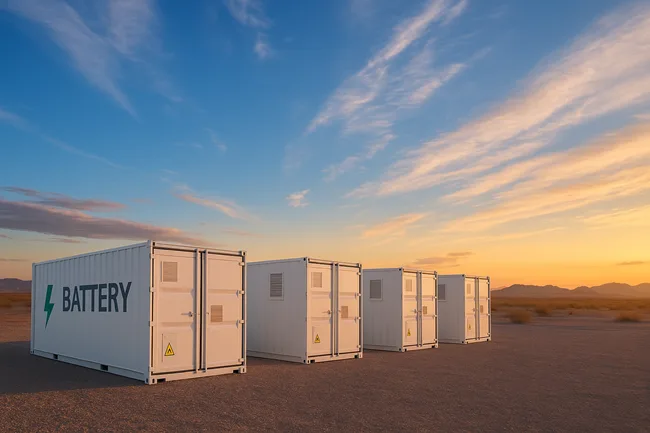





Bass Oil Limited (ASX: BAS) has closed a A$3 million share placement, issuing approximately 47.6 million new shares at A$0.063 each to fund two strategically distinct priorities: completing the acquisition and recommissioning of the Vanessa gas field in South Australia’s Cooper Basin, and drilling the Bunian 6 oil development well in Indonesia. The raise arrives at a pivotal inflection point for the Melbourne-based company, which is simultaneously pursuing its first entry into the East Coast Gas Market and seeking to lift oil production volumes from an Indonesian joint venture that has historically anchored its revenue base. The placement was priced at a 13 percent discount to Bass Oil’s last traded price of A$0.072 per share and at a 25 percent discount to the 15-day volume weighted average price ending 11 March 2026, reflecting terms consistent with a tightly held microcap seeking to move quickly without a prospectus process. Both existing and new institutional and sophisticated investors participated, and the company’s board confirmed that no related parties were involved.
Why is Bass Oil entering the East Coast Gas Market now and what does the Vanessa deal mean for its strategy?
The Vanessa gas field acquisition has been the centrepiece of Bass Oil’s strategic repositioning since December 2025, when the company secured a binding three-year gas sales agreement with Origin Energy (ASX: ORG) covering up to 12.045 petajoules of supply from the field. That contract, which underpins the entire Vanessa commercialisation thesis, obligates Bass to complete the asset acquisition and return the field to production before deliveries can commence. The placement proceeds directly address that sequencing requirement, funding both the acquisition completion and the recommissioning of the Vanessa well, production facilities, and the five-kilometre pipeline connecting to the Cooper Basin transmission network.
The strategic logic is clear and the timing defensible. The East Coast Gas Market has faced persistent tightness since the withdrawal of several legacy fields and the broader structural shift away from new upstream development. Bass Oil is positioning Vanessa as a low-cost re-entry point into that market, leveraging existing infrastructure rather than building from scratch. The field was drilled in 2007, brought online in 2018 at a rate of 3.5 million standard cubic feet per day, and produced 1.1 billion cubic feet before going offline. Recommissioning an asset with known geology and existing surface infrastructure is materially lower risk than greenfield development, and the Origin offtake agreement eliminates the most significant commercial uncertainty that would otherwise weigh on any investment decision of this scale relative to Bass Oil’s size.
First gas sales are targeted for the second half of 2026, which aligns with the placement timeline. Settlement of the placement shares is scheduled for 23 March 2026, with quotation and trading beginning the following day, meaning funds will be available to management within days of the announcement.
How does the Bunian 6 well in Indonesia fit into Bass Oil’s dual-track production growth plan?
Alongside the Australian gas strategy, Bass Oil continues to operate its Indonesian oil business through a 55 percent interest in the Tangai-Sukananti KSO in South Sumatra. Indonesian production has provided the company with its primary source of operating cash flow over recent years, and the Bunian 6 well represents the next discrete step in sustaining and lifting that output. The company’s January 2026 operations update confirmed that all materials for the Bunian 6 drilling program had been delivered to site and that a recommendation had been made to the joint venture partnership pending contract award and rig securing.
Bass Oil’s total group production in January 2026 averaged 237 barrels of oil per day on a company share basis, split between its Cooper Basin fields and the Indonesian joint venture. Indonesian operations contributed 148 barrels of oil per day in January, down two percent from December due to minor downtime and natural field decline. The Bunian 6 well is intended to arrest that decline trajectory and boost production to a level that supports cash generation while the more capital-intensive Vanessa commissioning proceeds in parallel. Managing Director Tino Guglielmo explicitly flagged elevated oil prices as a supporting backdrop for the placement rationale, and with Cooper Basin Australian oil fetching approximately A$98.86 per barrel in January, the revenue arithmetic for a successful new Indonesian well is attractive.
What are the financial mechanics of the placement and what does the option structure signal to investors?
The placement structure includes a material optionality component that warrants attention. For every two placement shares subscribed, investors receive one free attaching option exercisable at A$0.0945 and expiring two years from issue. At the current share price of approximately A$0.087, those options are modestly out of the money but represent meaningful upside if the Vanessa commissioning and Bunian 6 drilling proceed on schedule and the share price recovers toward the levels seen in early March 2026, when the stock briefly touched A$0.096 intraday.
The option exercise price of A$0.0945 is set approximately 50 percent above the placement price, structuring the instruments as longer-dated call options rather than immediately dilutive secondary capital. The options will require shareholder approval at the upcoming Annual General Meeting before they can be listed on the ASX, adding a further governance step to the timeline. PAC Partners Securities acted as Lead Manager to the placement and Peak Asset Management as Co-Manager, both receiving fees on normal commercial terms. The shares will be issued under the company’s Listing Rule 7.1 placement capacity, meaning no shareholder vote is required for the primary share issue itself.
The total dilution from the placement is approximately 13 to 14 percent of shares on issue prior to the raise, depending on the precise pre-placement share count. That is a meaningful but not unusual quantum for an ASX microcap executing a capital raise in a period of operational transition. The stronger signal is the investor composition: the company described the placement as very strongly supported by both existing shareholders and new institutional and sophisticated participants, which suggests the Origin Energy gas sales agreement has meaningfully broadened Bass Oil’s institutional investor base beyond the retail-heavy register that typically characterises companies of this capitalisation.
How has the ASX market priced Bass Oil shares in the lead-up to this placement and what does that context reveal?
The market context around this placement is notable. Bass Oil shares traded at A$0.087 on 6 March 2026, a gain of approximately 20.8 percent in that single session, having risen 74 percent over the prior two weeks and approximately 93 percent over the prior month. Against that backdrop, the placement price of A$0.063 represents a discount to a share price that has itself recently run hard on the Vanessa news flow and broader positive sentiment. The company’s last traded price before the trading halt associated with the placement announcement was A$0.072, establishing the 13 percent discount reference point.
The 52-week low for Bass Oil shares was A$0.021, reached in September 2025, meaning the stock has more than quadrupled from its trough as investors have re-rated the company following the Origin Energy gas sales agreement in December 2025 and the subsequent SA Government grant of A$3.5 million for the Kiwi liquids-rich gas project announced in February 2026. At a market capitalisation of approximately A$27.8 million as of early March 2026, Bass Oil remains firmly in microcap territory, and the A$3 million placement is sized proportionally to that base. The market reaction to the series of positive announcements suggests investors are increasingly willing to ascribe value to the East Coast Gas Market entry thesis rather than pricing Bass Oil solely on its current oil production metrics.
Whether the share price can consolidate above the placement level once the new shares begin trading on 24 March 2026 will depend heavily on the pace of visible operational progress. Any delay to the Vanessa recommissioning timeline or the Bunian 6 drilling award could introduce selling pressure on a stock that has moved significantly in a short period on the basis of forward expectations.
What execution risks and competitive dynamics should investors and analysts weigh against Bass Oil’s gas ambitions?
The execution risks in this transaction are real and should not be underestimated given Bass Oil’s size and the complexity of the activities being funded concurrently. Recommissioning an upstream gas field and pipeline that has been idle, completing a corporate acquisition, drilling a new oil development well in a different country, and progressing a separate liquids-rich gas project toward a Final Investment Decision all simultaneously represents a demanding operational agenda for a company with eight employees listed by some data providers.
The Vanessa field recommissioning requires regulatory certification as well as physical reinstatement of the well, production facility, and pipeline. Bass Oil has noted that the regulator had indicated approval for the Vanessa acquisition during January, which is a positive signal, but full recommissioning from cold to first gas sales is an operationally intensive process even for established operators. For a company of Bass Oil’s scale, execution slippage would have direct consequences for cash runway given the proceeds of this placement are earmarked for specific activities rather than providing a general liquidity buffer.
On the competitive dimension, Bass Oil’s entry into the East Coast Gas Market as a small, single-field supplier does not threaten the major incumbents such as Santos (ASX: STO) and Beach Energy (ASX: BPT) in any material sense. However, the Origin Energy offtake agreement does position Bass Oil as a credible counter-party and establishes a commercial reference point that could support future negotiations for the Kiwi project and PEL 182 deep coal gas play. The strategic value is less about near-term volume and more about building a track record and market relationship that underpins the longer-dated growth pathway.
What does the Kiwi project and PEL 182 coal gas play represent for Bass Oil’s medium-term valuation case?
Beyond the immediate priorities funded by this placement, Bass Oil’s medium-term valuation argument rests substantially on two additional assets. The Kiwi liquids-rich gas project, located within the company’s PEL 182 acreage in the Cooper Basin, has already demonstrated meaningful production potential: the Kiwi-1 well flowed at 4.1 million cubic feet per day of gas and 988 barrels of condensate per day at 1,585 psi wellhead pressure during a production test in late 2024. The A$3.5 million SA Government grant secured in February 2026 provides cornerstone infrastructure funding for the pipeline connection required to bring the field to market, with an end-2028 target commissioning date.
The PEL 182 deep coal gas play represents a longer-dated and higher-risk opportunity. Bass Oil has engaged SLB to lead phase two of a study focused on well and fracture stimulation design for the deep coal resource. This is genuinely exploratory in character and should be treated as an option rather than a near-term production catalyst. The combination of Vanessa contracted production, Kiwi condensate upside, and the deep coal gas play gives Bass Oil a layered growth narrative that is unusual for a company of its size, though each layer carries execution and technical risk commensurate with its position in the development lifecycle.
Key takeaways: what the Bass Oil A$3 million placement means for investors, competitors, and the East Coast Gas Market
- Bass Oil has closed a A$3 million placement at A$0.063 per share, structured with one free attaching option per two shares subscribed, exercisable at A$0.0945, providing upside optionality without immediate additional dilution.
- The primary use of proceeds is completing the Vanessa gas field acquisition and recommissioning, which triggers delivery obligations under a binding three-year gas sales agreement with Origin Energy covering up to 12.045 petajoules, with first gas sales targeted for H2 2026.
- Concurrent Indonesian drilling via the Bunian 6 well targets a production lift at the Tangai-Sukananti KSO before natural field decline erodes the oil revenue base that has historically funded Bass Oil’s operating costs.
- The placement was priced at a 13 percent discount to last traded price and 25 percent to the 15-day volume weighted average price, reflecting normal microcap placement mechanics but signalling management’s willingness to move quickly given operational urgency.
- Both new institutional investors and existing shareholders participated, suggesting the Origin Energy gas sales agreement has materially improved Bass Oil’s capital market standing beyond its prior retail-dominated register.
- Bass Oil shares have risen approximately 93 percent over the prior month and more than quadrupled from their September 2025 low of A$0.021, meaning the placement is raising capital against a significantly re-rated base but one that now carries elevated expectations that must be met operationally.
- The SA Government’s A$3.5 million grant for the Kiwi project, secured in February 2026, provides a further de-risking data point for the PEL 182 acreage and extends the timeline for any follow-on capital requirement associated with that asset.
- Execution risk is the dominant near-term concern: simultaneous recommissioning, acquisition completion, overseas drilling, and a separate project moving to Final Investment Decision is a demanding agenda for a microcap operator.
- Bass Oil’s entry into the East Coast Gas Market is not volume-significant for major incumbents but establishes a commercial precedent and Origin Energy relationship that underpins the longer-dated Kiwi and PEL 182 growth pathway.
- The options issued under this placement and subject to shareholder approval represent potential future dilution at A$0.0945, a level the stock would need to exceed sustainably for conversion to occur, making operational delivery in H2 2026 the key pricing catalyst for the next twelve months.
Discover more from Business-News-Today.com
Subscribe to get the latest posts sent to your email.