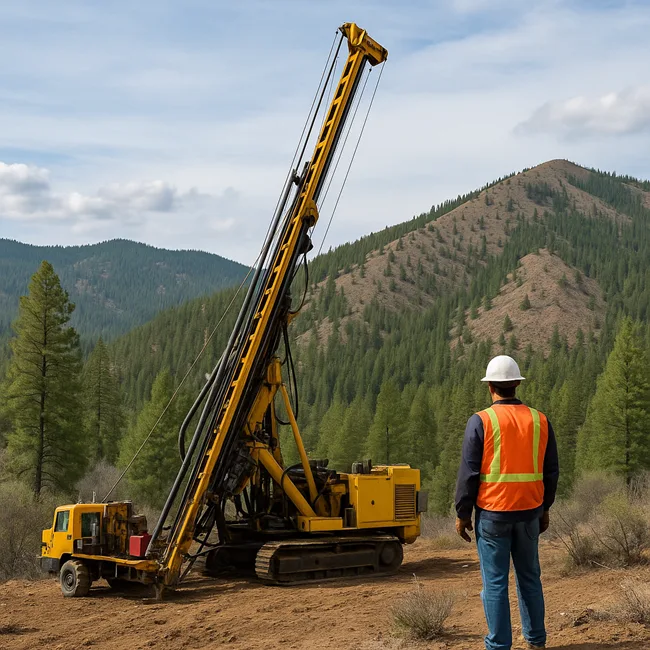





Athena Gold Corporation has completed the acquisition of the Forester Gold Project in Ontario through the purchase of Last Bounty Gold Corp., a private British Columbia company that holds a 100 percent interest in the property. The transaction places Athena Gold Corporation along the same regional geological trend as the Musselwhite Mine operated by Orla Mining Ltd., positioning the junior explorer within one of Canada’s established gold-producing districts.
The acquisition reflects a strategic pivot toward historically overlooked exploration ground near major producing mines. By completing the transaction through a share-based structure rather than a cash purchase, Athena Gold Corporation expands its exploration pipeline while preserving capital for drilling and fieldwork.
Why did Athena Gold Corporation pursue the Forester Gold Project near Orla Mining Ltd.’s Musselwhite mine now?
Athena Gold Corporation’s decision to acquire the Forester Gold Project follows a long-standing exploration strategy of targeting land packages located along mineralized trends near producing mines. The Forester property lies along the same regional geological corridor associated with the Musselwhite Mine, a major Canadian gold operation that has produced several million ounces of gold over its operating life.
Exploration companies often view such structural corridors as promising exploration environments because mineralization systems rarely end at mine boundaries. Deposits frequently extend along strike or occur within broader geological systems that remain only partially explored.
Athena Gold Corporation’s management believes the Forester property may host a near-surface bulk-tonnage orogenic gold system. Deposits of this type have received renewed attention as mining economics have evolved and open-pit mining techniques have improved.
Historically, exploration programs prioritized high-grade underground deposits while overlooking large lower-grade systems that required significant scale to become profitable. Advances in mining technology and stronger gold prices have changed that equation.
Large open-pit mines such as Detour Lake and Canadian Malartic demonstrated that bulk-tonnage deposits with lower grades can generate strong economic returns when mined at scale. As a result, exploration companies increasingly revisit geological environments that were previously dismissed. Athena Gold Corporation’s acquisition of Forester reflects this broader industry trend of reassessing overlooked geological ground near established gold operations.
How does the Forester acquisition fit into Athena Gold Corporation’s broader Red Lake and Ontario exploration strategy?
Athena Gold Corporation has gradually assembled an exploration portfolio focused on established Canadian gold districts, particularly within Ontario. The company’s flagship Laird Lake project is located within the Red Lake gold district, one of the most historically productive gold camps in North America.
The Forester acquisition extends this regional focus while maintaining a consistent exploration strategy centered on productive geological belts. Rather than pursuing projects across widely dispersed jurisdictions, Athena Gold Corporation appears to be concentrating its efforts within regions that already support mining activity.
Ontario remains one of the most attractive exploration jurisdictions globally due to its infrastructure, skilled workforce, and stable regulatory environment. Mining companies operating within the province benefit from road access, nearby processing facilities, and long-established supply chains.
Management commentary suggests that the geological reasoning behind the Forester project is similar to the exploration thesis behind the Laird Lake project. Both properties lie along structural contacts that geologists increasingly view as favorable for gold mineralization.
For junior exploration companies, building a portfolio of projects within proven mining districts can help manage geological risk. Exploration success rates remain inherently low, and companies often rely on multiple prospects to increase the probability that at least one project yields a meaningful discovery.
What financial structure did Athena Gold Corporation use to acquire Last Bounty Gold Corp. and what dilution risks remain?
Athena Gold Corporation completed the acquisition by issuing 42 million common shares to acquire all issued and outstanding shares of Last Bounty Gold Corp. The shares were issued at a deemed price of CAD 0.08 per share, representing approximately 12 percent of the company on a non-diluted basis at closing.
Equity-financed acquisitions are common in the junior mining sector because exploration companies must conserve cash for drilling programs and geological surveys. Exploration campaigns require sustained capital over long timelines before deposits are confirmed.
By structuring the acquisition as a share transaction, Athena Gold Corporation avoids an immediate cash outflow while gaining full ownership of the Forester project. However, the transaction increases the company’s share count and therefore introduces dilution for existing shareholders.
The consideration shares are subject to a statutory hold period of four months and one day before they can be traded in the public market. Such restrictions are designed to reduce short-term selling pressure following the transaction.
For investors, the central question is whether the exploration potential of the Forester project ultimately justifies the dilution created by the share issuance. In the junior mining sector, exploration success can rapidly outweigh dilution concerns if a project begins to demonstrate strong discovery potential.
Could modern exploration economics revive overlooked gold systems similar to Detour Lake and Canadian Malartic?
The exploration model behind the Forester project reflects a broader transformation in how the mining industry evaluates gold deposits. Several of Canada’s largest gold mines today were once considered uneconomic under earlier mining assumptions.
The Detour Lake mine in Ontario and the Canadian Malartic mine in Quebec are often cited examples. Both deposits were known for decades but gained economic viability when mining companies applied large-scale open-pit methods supported by modern processing technologies.
These developments reshaped exploration thinking across the industry. Geological environments that once received limited attention are now being revisited as potential hosts for large bulk-tonnage deposits.
Athena Gold Corporation’s Forester project appears to fit within this exploration framework. If the geological model proves correct, the property could host mineralization comparable to other large Canadian deposits that were historically overlooked.
However, early-stage exploration projects remain speculative. Geological concepts must ultimately be confirmed through drilling programs and resource modeling before any conclusions can be drawn about the size or grade of potential mineralization. Athena Gold Corporation’s future exploration work at Forester will therefore determine whether the project evolves from a conceptual geological target into a more advanced exploration asset.
What investor sentiment signals might the Forester acquisition send within the junior gold exploration sector?
Investor sentiment toward junior mining companies often depends on exploration catalysts and broader gold market conditions. Transactions such as the Forester acquisition can help shape market perception by signaling a company’s strategic direction.
By securing a project located along the Musselwhite geological trend, Athena Gold Corporation positions itself within a district that already hosts a producing mine. Proximity to established operations often improves the credibility of exploration targets.
However, investors typically focus on measurable exploration progress. Drill results, geological surveys, and resource estimates tend to drive valuations more than early-stage acquisitions.
Athena Gold Corporation’s planned drilling program at the Laird Lake project could therefore influence investor sentiment in the near term. Positive results there may strengthen confidence in the company’s broader geological strategy, including its newly acquired Forester project.
At the same time, weak exploration outcomes could dampen enthusiasm. The uncertainty inherent in mineral exploration means investor sentiment can shift quickly as new geological data emerges.
How might the Forester Gold Project influence Athena Gold Corporation’s long-term exploration pipeline?
In the near term, the Forester acquisition expands Athena Gold Corporation’s exploration portfolio in Ontario and adds another target for geological evaluation. The project can now progress through mapping, geophysical surveys, and eventually drilling.
For junior explorers, maintaining a pipeline of projects is critical because exploration timelines are long and unpredictable. Individual prospects may take years to move from early evaluation to confirmed mineral resources.
If early exploration work identifies encouraging signs of gold mineralization, the Forester project could become a central component of Athena Gold Corporation’s exploration strategy. Alternatively, the company may continue prioritizing more advanced assets while gradually advancing Forester.
Another possible outcome involves partnerships with larger mining companies. Major producers frequently monitor junior explorers operating near established mines and may pursue joint ventures if early exploration results prove promising.
For now, the Forester acquisition primarily represents a strategic positioning move. Athena Gold Corporation has increased its exposure to a favorable geological environment while aligning its exploration model with deposit types that have produced significant discoveries elsewhere in Canada.
Key takeaways on what this development means for Athena Gold Corporation and the Canadian gold exploration sector
- Athena Gold Corporation expanded its Ontario exploration footprint by acquiring the Forester Gold Project located along the same geological trend as the Musselwhite Mine.
- The exploration thesis focuses on bulk-tonnage gold systems similar to deposits such as Detour Lake and Canadian Malartic.
- The share-based transaction preserved cash for exploration programs but created approximately 12 percent shareholder dilution.
- Forester strengthens Athena Gold Corporation’s portfolio alongside the Laird Lake project in the Red Lake district.
- Future drilling at Laird Lake and geological work at Forester will likely shape investor sentiment toward the company.
- If exploration results prove promising, the project could attract interest from mid-tier or major mining companies operating in the region.
Discover more from Business-News-Today.com
Subscribe to get the latest posts sent to your email.