Rapidus Corporation has secured 267.6 billion yen, equivalent to approximately 1.7 billion United States dollars, in new funding from the Government of Japan and a consortium of 32 private-sector companies to advance its 2nm logic semiconductor program toward mass production by 2027. The capital injection, which includes 100 billion yen from the Information-Technology Promotion Agency under the Ministry of Economy, Trade and Industry, materially strengthens Japan’s push to re-establish domestic leadership in advanced logic manufacturing amid intensifying global chip geopolitics.
For Rapidus Corporation, this is not just another funding round. It is a public policy endorsement and a balance sheet reinforcement that moves the company from a research and development narrative into an execution phase with defined industrial milestones.
Why is the Government of Japan backing Rapidus Corporation’s 2nm semiconductor strategy at this scale now?
The 100 billion yen investment from the Information-Technology Promotion Agency, an independent administrative agency under the Ministry of Economy, Trade and Industry, follows a formal public solicitation process designed to identify operators capable of ensuring stable semiconductor production. Rapidus Corporation was selected in November 2025 and subsequently secured the investment.
This matters because Japan is not funding abstract research. It is underwriting domestic control over sub-3nm logic manufacturing capability at a time when advanced node production is concentrated in Taiwan and South Korea, with the United States racing to onshore capacity through federal incentives. In practical terms, Japan is attempting to close a strategic vulnerability that became painfully visible during pandemic-era chip shortages and escalating United States–China technology restrictions.
Rapidus Corporation’s mandate aligns directly with national industrial policy. The New Energy and Industrial Technology Development Organization has already been supporting its 2nm research under the Post-5G Information and Communication Systems Infrastructure Enhancement R&D Project. The latest capital injection consolidates that policy into hard capital structure.
From a sovereign strategy perspective, the message is clear. Japan does not intend to remain dependent on foreign foundries for its most advanced logic supply chain.
How does the 167.6 billion yen private-sector participation reshape Rapidus Corporation’s credibility and ecosystem positioning?
Beyond government backing, 32 private-sector entities have contributed 167.6 billion yen. The roster includes Canon Inc., Fujitsu Limited, NTT, Inc., SoftBank Corporation, Sony Group Corporation, Toyota Motor Corporation, NEC Corporation, Kioxia Corporation, Denso Corporation, Development Bank of Japan Inc., and several major Japanese financial institutions.
This breadth of participation is strategically significant. It reflects ecosystem alignment rather than passive capital placement. Automotive manufacturers, telecom operators, electronics firms, banks, materials suppliers, and equipment players have collectively signaled that a domestic 2nm foundry is a national priority.
For Toyota Motor Corporation and Denso Corporation, advanced logic nodes are increasingly tied to next-generation automotive compute architectures. For NTT, Inc. and SoftBank Corporation, semiconductor sovereignty underpins long-term telecom and data infrastructure strategy. For Sony Group Corporation, image sensors and advanced processors remain core competitive domains.
The presence of Development Bank of Japan Inc. and multiple regional banks adds another dimension. This is patient capital oriented toward industrial buildout rather than short-term financial engineering.
Following this capital raise, Rapidus Corporation’s stated capital and legal capital surplus total approximately 274.95 billion yen. While substantial, this figure remains modest relative to the multi-trillion yen investments required for sustained advanced-node scaling. That reality implies further capital increases, structured financing, and potentially long-term debt issuance will be necessary.
Rapidus Corporation has already indicated that additional public and private funding, including loans, will follow.
Can Rapidus Corporation realistically transition from R&D to 2nm mass production by 2027?
The central question is execution.
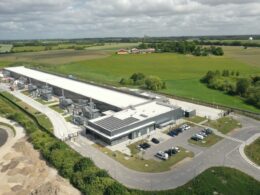
Rapidus Corporation has begun prototyping 2nm gate-all-around transistors at its Innovative Integration for Manufacturing facility in Chitose City, Hokkaido. The company has connected more than 200 advanced semiconductor tools into an automated material handling system to support 2nm development. Prototype wafers have reportedly begun generating electrical characteristic data.
However, the gap between prototyping and high-yield mass production at 2nm is formidable. Yield learning, defect density reduction, design enablement, and packaging integration all demand iterative cycles measured in quarters, not weeks.
Rapidus Corporation’s Rapid and Unified Manufacturing Service model introduces single-wafer processing across all manufacturing steps to reduce turnaround time. If successful, that architecture could offer differentiation in cycle time and customer responsiveness. If it fails to deliver consistent yields at scale, the cost structure could quickly become uncompetitive.
The 2027 mass production target places Rapidus Corporation on an aggressive timeline relative to global incumbents that have accumulated decades of process integration expertise. The capital raise improves runway. It does not eliminate technical risk.
How do Rapidus Corporation’s AI design tools fit into its foundry competitiveness strategy?
In December 2025, Rapidus Corporation unveiled its Rapidus AI-Agentic Design Solution suite, including Raads Generator and Raads Predictor, designed to integrate artificial intelligence into front-end semiconductor design workflows.
Raads Generator uses large language model-based techniques to translate design specifications into register-transfer level outputs optimized for Rapidus Corporation’s 2nm process. Raads Predictor estimates power, performance, and area metrics for rapid iteration. Additional tools such as Raads Navigator, Raads Indicator, Raads Manager, and Raads Optimizer are expected through 2026.
This is not branding flourish. Advanced nodes require tight design-manufacturing co-optimization. By embedding AI-driven feedback loops into process design kits and reference flows, Rapidus Corporation is attempting to reduce design cycle time by 50 percent and design costs by 30 percent, according to its internal projections.
The strategic implication is that Rapidus Corporation is not positioning itself solely as a wafer fabrication contractor. It is attempting to build an integrated ecosystem that compresses time-to-silicon, which could appeal to artificial intelligence accelerator developers, automotive chip designers, and telecom hardware innovators.
The execution test will be whether customers adopt these tools alongside established electronic design automation platforms from global incumbents.
Why does the Keysight Technologies collaboration matter for yield, PDK accuracy, and manufacturing credibility?
In August 2025, Rapidus Corporation announced a strategic collaboration with Keysight Technologies Japan K.K. to improve process design kit accuracy and yield through enhanced parametric testing and analytics.
At 2nm and below, minor process variability can materially impact performance and defect rates. Keysight Technologies’ wafer operations analytics solutions are intended to accelerate root-cause identification and yield optimization.
For Rapidus Corporation, this partnership addresses a core vulnerability of any new foundry entrant: the learning curve. Yield improvement is the silent determinant of economic viability. High defect density can erase gross margin assumptions rapidly.
If the Keysight Technologies collaboration shortens yield ramp timelines, Rapidus Corporation’s capital efficiency improves. If yield stabilization proves slower than expected, additional capital rounds may become unavoidable sooner than planned.
What does this funding round signal about Japan’s broader semiconductor industrial strategy?
This capital raise reinforces a multi-layered Japanese strategy: subsidize domestic advanced-node capacity, align industrial champions around a national platform, and reduce structural dependence on offshore manufacturing.
It also reflects geopolitical recalibration. With the United States tightening export controls on advanced semiconductor equipment to China and global supply chains increasingly politicized, Japan appears intent on ensuring that its own advanced fabrication capability is not externally constrained.
From a policy perspective, this aligns Japan more closely with the United States’ reshoring and allied supply chain diversification agenda, while maintaining autonomy.
What happens next if Rapidus Corporation executes successfully or falls short?
If Rapidus Corporation meets its 2027 mass production target with competitive yields and cost structures, Japan re-enters the advanced logic manufacturing conversation as a credible node leader rather than a memory-dominated semiconductor player.
That would reshape competitive dynamics in Asia and potentially introduce an additional strategic partner for United States and European fabless firms seeking geographic diversification.
If execution falters, the capital burn could escalate, and the narrative may shift from industrial renaissance to costly policy experiment. The consortium model could mitigate reputational fallout by distributing risk across stakeholders, but financial strain would still be real.
For now, the funding provides runway and credibility. The clock, however, is running.
Key takeaways on what Rapidus Corporation’s 267.6 billion yen funding round means for Japan’s semiconductor strategy and global competition
- Rapidus Corporation’s capital raise marks a transition from R&D positioning to execution-focused industrial buildout at the 2nm node.
- The 100 billion yen investment from the Information-Technology Promotion Agency formalizes Japan’s commitment to domestic advanced logic sovereignty.
- Participation from 32 private-sector companies signals ecosystem alignment rather than symbolic backing.
- Total capital of nearly 275 billion yen improves balance sheet resilience but does not eliminate future financing needs.
- The 2027 mass production target places Rapidus Corporation on an aggressive timeline relative to established global foundries.
- AI-driven design tools under the Rapidus AI-Agentic Design Solution initiative aim to differentiate on cycle time and cost, not just process node.
- The collaboration with Keysight Technologies Japan K.K. addresses yield optimization, a critical determinant of long-term economic viability.
- Successful execution could reposition Japan as a strategic advanced-node manufacturing hub alongside Taiwan, South Korea, and the United States.
- Failure to stabilize yields and cost structures would likely necessitate further public funding or strategic restructuring.
- The funding round underscores a broader shift toward semiconductor nationalism and allied supply chain resilience.
Share this:
Discover more from Business-News-Today.com
Subscribe to get the latest posts sent to your email.