




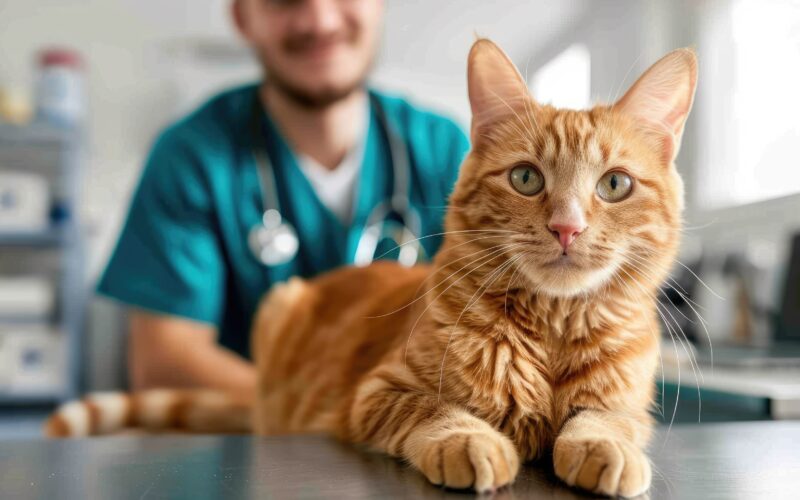
Gallant, a San Diego-based animal health biotechnology company, announced on February 27, 2026 a fulfillment agreement with MWI Animal Health, the veterinary distribution division of global healthcare company Cencora, to establish the first ultra-low temperature cold chain in the history of veterinary medicine. The agreement is timed to support the anticipated commercial launch of sonruvetcel injectable suspension, Gallant’s lead therapy for cats with refractory feline chronic gingivostomatitis, which is advancing toward what would be the first-ever FDA-conditionally approved, off-the-shelf stem cell therapy in veterinary medicine. The partnership addresses a foundational infrastructure gap that would have made clinical deployment of the product commercially unviable regardless of regulatory outcome.
The timing of this announcement is deliberate. Gallant does not yet have FDA conditional approval in hand, but the company has spent the past six months clearing the two most substantive clinical hurdles in the FDA Center for Veterinary Medicine’s conditional approval process. In September 2025, the agency issued a Technical Section Complete determination for Reasonable Expectation of Effectiveness. In November 2025, it issued the equivalent determination for Target Animal Safety, confirming that Gallant’s data satisfied the 365-day safety requirement for a cell therapy administered to client-owned cats with active disease. With both pillars accepted, Gallant entered early 2026 in a position where distribution infrastructure needed to be built in parallel with the remaining approval steps, not after them.

Why does sonruvetcel’s -80 degrees Celsius storage requirement force the creation of entirely new logistics infrastructure for veterinary distribution networks in the United States?
The core logistical challenge is temperature. Sonruvetcel must be stored and transported at -80 degrees Celsius, a requirement that places it in a fundamentally different category from virtually every other product in veterinary pharmaceutical distribution. Standard veterinary cold chain infrastructure operates in the 2 to 8 degrees Celsius range. The ultra-low temperature requirement is more commonly associated with certain oncology biologics and mRNA-based human vaccines — products for which the human pharmaceutical sector has built specialized handling and distribution capacity over many years. No equivalent infrastructure existed on the veterinary side before this agreement.
Under the terms of the partnership, MWI Animal Health will develop and deploy a scalable ultra-low temperature fulfillment model operating from its Edwardsville, Kansas distribution center. The model supports overnight shipping to veterinary clinics across the continental United States and extends to noncontiguous markets including Alaska, Hawaii, and Puerto Rico. The overnight shipping model is operationally significant because it defines the maximum geographic reach of the product at launch and sets the handling protocol that clinic staff will need to follow upon receipt. Every additional hour of transit time at inadequate temperatures is a potential product integrity risk, and overnight delivery from a centralized node is the most practical way to control that variable in the near term.
The infrastructure investment by MWI Animal Health is not purely altruistic logistics support. By building ultra-low temperature veterinary distribution capability before any competitor does, MWI positions itself as the default channel partner for any future entrant in veterinary regenerative medicine that requires similar cold chain handling. Distribution relationships in pharmaceutical supply chains are sticky. Once veterinary practices establish ordering workflows with a specific distributor and their staff are trained on specialist handling protocols, switching costs are high. MWI’s parent company Cencora has deep experience deploying this logic in human specialty pharmaceuticals, and the move into veterinary ultra-cold chain reflects a familiar strategic pattern applied to a new category.
What did Gallant’s FDA safety and effectiveness milestones in late 2025 establish, and why does the clinical trial design strengthen the conditional approval case?
The regulatory foundation supporting this commercial buildout was assembled across the second half of 2025. In September of that year, the FDA Center for Veterinary Medicine accepted Gallant’s Reasonable Expectation of Effectiveness data for sonruvetcel. The pivotal clinical trial supporting that determination, published in the peer-reviewed Journal of Feline Medicine and Surgery, reported that over 75% of treated cats demonstrated clinically relevant quality-of-life improvement by Day 90, with nearly half showing measurable improvement in oral lesions and no serious treatment-related adverse events recorded.
The November 2025 Target Animal Safety clearance added another dimension. Unlike most safety studies in veterinary drug development, which are conducted in healthy animals under controlled conditions, Gallant’s 365-day safety study was run in client-owned cats with active refractory feline chronic gingivostomatitis. That design decision exposes the therapy to a more realistic patient population with existing inflammatory burden and variable health backgrounds, making the safety dataset more clinically credible and harder to challenge than data drawn from a healthy-animal model.
The underlying disease is important context for understanding why regulatory and commercial urgency is high. Refractory feline chronic gingivostomatitis is a severe, debilitating oral inflammatory condition. The current standard of care frequently escalates to full-mouth tooth extraction, and even that intervention fails to resolve symptoms in a substantial proportion of cats. There is no approved pharmaceutical option specifically for refractory cases. Sonruvetcel, as a uterine-derived allogeneic mesenchymal stromal cell therapy sourced from healthy, specific-pathogen-free feline donors and manufactured under current Good Manufacturing Practice conditions, would represent the first regulated option designed to address the condition’s underlying inflammatory mechanism rather than manage its symptoms.
How does veterinary practitioner sentiment data shape the commercial opportunity for Gallant, and what does the gap between stated intent and purchasing behavior mean for realistic adoption projections?
Gallant conducted survey research in collaboration with the American Animal Hospital Association that offers a measure of practitioner readiness for the category. Approximately 95% of veterinary professionals surveyed said they believe stem cell therapy will become a standard treatment option within the next decade. Some 79% indicated they are likely to use or recommend stem cell therapy in the future. Most commercially relevant is the finding that 93% said they would be more likely to offer regenerative therapies in-house if they were off-the-shelf and delivered through a simple intravenous protocol.
The standard caveat applies: surveys commissioned by companies developing the products in question reflect intent, not purchasing behavior. Veterinary practices operate under real cost constraints, and pet owners face meaningful price sensitivity for treatments that fall outside standard preventive or acute care. The commercial question is not whether practitioners are philosophically aligned with regenerative medicine — most appear to be — but whether practice economics and client willingness to pay will support adoption at the price points that cGMP manufacturing, specialized cold chain logistics, and regulatory compliance will require of a novel biologic.
That said, the 93% figure on intravenous protocol preference carries genuine commercial weight. It signals that delivery format is a gating factor for in-clinic adoption. Gallant has designed sonruvetcel for intravenous administration, which sidesteps the specialist equipment and referral complexity that have historically kept regenerative therapies confined to academic veterinary centers and specialty practices. If general practitioners can administer the therapy during a standard appointment without additional infrastructure, the addressable market expands substantially beyond the referral channel.
What are the primary execution risks between Gallant’s current regulatory position and genuine commercial scale across the United States veterinary market?
Several risks sit between conditional approval and commercial success. Manufacturing consistency is the most fundamental. Allogeneic cell therapies are biologically complex. Donor sourcing, cGMP batch manufacturing, potency testing, and quality release must all hold at scale, and any deviation that triggers a product hold would not only interrupt revenue but could erode early practitioner confidence in a category that has not yet established a track record in veterinary medicine.
The single-node distribution model is a second structural risk. Overnight shipping from Edwardsville, Kansas is practical at launch volumes but introduces concentration risk as demand grows. Logistical disruption at a single fulfillment center, whether from weather, operational failure, or capacity constraints, would affect availability nationally. Gallant and MWI Animal Health will need to assess whether a multi-node ultra-low temperature network is warranted as commercial scale increases, which carries additional capital requirements for MWI.
Pricing remains an unresolved variable in the public record. Gallant has not disclosed expected per-dose pricing for sonruvetcel. The cost structure of a cGMP-manufactured cell therapy with ultra-low temperature logistics will exert significant upward pressure on price, and veterinary medicine lacks the centralized reimbursement mechanisms that buffer specialty drug pricing in human healthcare. Pet insurance penetration in the United States, while growing, remains low enough that out-of-pocket cost will be the determining factor for most pet owners considering a novel biologic.
Key takeaways: What the Gallant and MWI Animal Health stem cell therapy partnership means for veterinary medicine, cold chain logistics, and the future of regenerative animal health
- Gallant’s partnership with MWI Animal Health establishes the first ultra-low temperature cold chain in veterinary medicine, solving an infrastructure gap that did not have a commercial solution before this agreement.
- The -80 degrees Celsius storage requirement for sonruvetcel places it outside the handling capability of all existing veterinary distribution networks, making the MWI partnership a prerequisite for commercial viability, not an optional add-on.
- MWI Animal Health and its parent Cencora are investing in veterinary ultra-cold chain ahead of product approval, positioning MWI as the default distributor for any future entrant in veterinary regenerative medicine requiring similar handling.
- FDA Center for Veterinary Medicine accepted both core clinical pillars of Gallant’s conditional approval package in late 2025, with Target Animal Safety cleared in November following Reasonable Expectation of Effectiveness clearance in September.
- The Target Animal Safety study was conducted in client-owned cats with active disease rather than healthy animals, making the safety dataset more clinically robust and harder to challenge than standard veterinary drug safety data.
- Refractory feline chronic gingivostomatitis has no approved pharmaceutical treatment for refractory cases, giving sonruvetcel a clear unmet need position rather than a competitive market entry.
- Gallant’s intravenous administration protocol is a deliberate commercial decision: 93% of surveyed veterinary professionals said they would be more likely to offer regenerative therapies in-house if delivered through a simple IV protocol, broadening the addressable market beyond specialty referral centers.
- Single-node distribution from Edwardsville, Kansas introduces concentration risk that will require strategic reassessment as commercial volumes grow, with potential multi-node expansion carrying meaningful capital implications for MWI.
- Pricing for cGMP-manufactured, ultra-cold chain cell therapies will face upward cost pressure with no centralized veterinary reimbursement mechanism to absorb it, making client price sensitivity a key adoption variable.
- The Gallant pipeline extends beyond sonruvetcel to inflammatory and degenerative conditions in companion animals, meaning the cold chain infrastructure being built now is intended to serve a multi-product commercial strategy, not a single-product launch.
Discover more from Business-News-Today.com
Subscribe to get the latest posts sent to your email.
