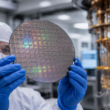



Science Corporation and Neurosoft Bioelectronics disclosed a multiyear ecosystem partnership on February 20, 2026, granting Neurosoft access to Science Corporation’s full clinical-grade brain-computer interface technology stack. The agreement positions Science Corporation as an infrastructure provider for the BCI sector while enabling Neurosoft Bioelectronics to accelerate clinical deployment of its minimally invasive neural implants without bearing the capital burden of building proprietary hardware from scratch.
The announcement matters less as a bilateral collaboration and more as a signal that the BCI sector may be entering a platform phase, where shared infrastructure replaces vertically isolated development and shifts competition toward data quality, clinical execution, and regulatory throughput rather than custom electronics.
Why Science Corporation is repositioning itself from device developer to BCI infrastructure enabler
Science Corporation has historically been known for vertically integrated neural systems, most visibly through its PRIMA retinal implant program. By opening its clinical-grade recording, stimulation, and systems stack to partners, Science Corporation is effectively decoupling infrastructure from application development.
This move mirrors patterns seen in other deep-technology industries where early pioneers discover that ecosystem leverage can outweigh single-product returns. Semiconductor manufacturing, cloud computing, and genomic sequencing all reached inflection points when shared platforms reduced capital intensity for downstream innovators. Science Corporation’s leadership appears to be making a similar wager that the limiting factor for BCI progress is no longer scientific feasibility but economic and operational friction.
By offering partners a path to first-in-human trials at a reported cost below $5 million rather than the $75 to $100 million typically required to assemble a full clinical-grade BCI stack, Science Corporation is reframing its value proposition. The company is no longer competing solely on end-product outcomes but on time-to-clinic, regulatory readiness, and system reliability. That positioning may ultimately prove more defensible than any single therapeutic indication.
How Neurosoft Bioelectronics uses the ecosystem to shift focus from hardware risk to data and AI scale
For Neurosoft Bioelectronics, the partnership is a strategic shortcut rather than a technological concession. The company has already demonstrated human use of its ultra-soft neural interfaces and is now confronting the classic second-phase challenge of neurotechnology startups: scaling without drowning in engineering overhead.
Access to Science Corporation’s ecosystem allows Neurosoft Bioelectronics to eliminate entire categories of risk, including custom electronics validation, long-cycle manufacturing iteration, and early regulatory system integration. That frees capital and talent to focus on what differentiates the company, namely its full-cortical coverage strategy and the neural data it uses to train large-scale brain models.
The long-term ambition articulated by Neurosoft Bioelectronics goes beyond implantable therapeutics. Its strategy hinges on using pristine, high-bandwidth cortical data to pre-train AI models that can later interpret noisier signals from consumer-grade wearables. In that context, the ecosystem partnership is less about saving money and more about accelerating data compounding, where time lost to hardware development translates directly into competitive disadvantage.
What the economics of BCI development reveal about why shared platforms may become unavoidable
The cost figures disclosed alongside the partnership are unusually explicit for a sector that often avoids discussing capital intensity. A full-stack clinical BCI platform approaching nine-figure development costs creates structural barriers that only a handful of well-funded entities can overcome.
That reality has historically pushed BCI development toward either academic labs with limited scalability or venture-backed companies forced into extreme vertical integration. Both models slow iteration and fragment standards. Science Corporation’s ecosystem model attempts to break that cycle by centralizing compliance, tooling, and validation while decentralizing therapeutic creativity.
If successful, this approach could reshape how investors evaluate BCI companies. Instead of underwriting entire technology stacks, capital may increasingly flow toward application-layer differentiation such as indication choice, clinical protocol design, and reimbursement strategy. That shift could broaden participation in the sector and reduce binary risk profiles that have historically plagued neurotechnology investing.
How this partnership quietly challenges Neuralink-style vertical integration strategies
Although not named in the announcement, the ecosystem approach implicitly contrasts with fully closed, vertically integrated models popularized by high-profile BCI developers. Vertical integration offers speed and secrecy but concentrates risk and capital exposure within a single organization.
Science Corporation’s model suggests an alternative vision where infrastructure providers specialize in regulatory-grade systems while application developers compete above that layer. This separation mirrors how operating systems and cloud platforms enabled explosive innovation in software once hardware abstraction became reliable.
If ecosystem participation grows, vertically integrated players may face pressure to justify why they retain full-stack ownership rather than leveraging shared infrastructure. The competitive advantage may shift from who builds everything to who learns fastest from real-world neural data and translates insights into approved therapies.
What regulators are likely to infer from ecosystem-based BCI development models
From a regulatory standpoint, shared platforms introduce both efficiencies and new oversight questions. On one hand, repeated use of the same validated systems across multiple indications could accelerate review cycles as regulators gain familiarity with the underlying technology. On the other, platform failures could propagate across multiple products, increasing systemic risk.
Science Corporation’s emphasis on clinical-grade tooling suggests it is positioning the ecosystem as regulator-friendly rather than experimental. If regulators accept platform reuse as a valid development paradigm, BCI approval timelines could compress meaningfully. That would represent a structural shift for a field long characterized by slow, bespoke approvals.
Neurosoft Bioelectronics’ early human use history further strengthens this case, as regulators often view incremental evolution on proven systems more favorably than entirely novel architectures.
Why the real competitive battlefield may shift to neural data ownership and interpretation
Beyond hardware economics, the partnership underscores a deeper strategic truth: neural data, not electrodes, may become the scarcest resource in the BCI industry. High-fidelity, full-cortical datasets collected under clinical conditions are extraordinarily difficult to obtain and impossible to synthesize.
By accelerating Neurosoft Bioelectronics’ access to large-scale human neural data, the ecosystem partnership potentially compounds advantages that extend far beyond its initial therapeutic targets such as tinnitus and epilepsy. The resulting datasets could inform future decoding algorithms, adaptive stimulation protocols, and cross-modal AI systems.
In that sense, Science Corporation is not merely selling tools but enabling data flywheels that could lock in long-term partners. Once a company’s AI models are trained on data collected through a specific ecosystem, switching costs rise dramatically.
What success or failure of this partnership would signal for the wider neurotechnology sector
If the Science Corporation ecosystem gains traction, the BCI sector could begin to resemble other platform-driven industries where standards emerge organically through adoption rather than top-down coordination. That would lower entry barriers while intensifying competition at the clinical and algorithmic layers.
Conversely, if partners struggle to translate ecosystem access into approved therapies, skepticism may grow around whether shared infrastructure can truly accommodate diverse neurological indications. In that scenario, the field could revert to fragmented, vertically siloed development despite its inefficiencies.
Early outcomes from Neurosoft Bioelectronics’ expanded clinical programs will therefore be closely watched, not just as proof points for its own technology but as validation of the ecosystem thesis itself.
Why the Science Corporation and Neurosoft Bioelectronics partnership may mark a structural inflection point for the brain-computer interface industry
The timing of this announcement reflects mounting pressure across neurotechnology to demonstrate real-world scalability rather than perpetual promise. Capital markets have grown less tolerant of long timelines and undefined regulatory paths, particularly in capital-intensive medical technologies.
By reframing BCI development as a shared infrastructure problem rather than a series of isolated moonshots, Science Corporation and Neurosoft Bioelectronics are testing whether collaboration can succeed where heroic individualism has struggled. If they are right, the next wave of BCI innovation may look less like a race to build everything and more like a race to apply shared tools better than anyone else.
Key takeaways on what the Science Corporation and Neurosoft Bioelectronics BCI partnership signals for the industry
- The partnership positions Science Corporation as a BCI infrastructure provider rather than solely a device company
- Neurosoft Bioelectronics gains accelerated clinical pathways while preserving focus on neural data and AI models
- The economics disclosed highlight why bespoke full-stack BCI development is increasingly unsustainable
- Shared platforms could reduce regulatory friction if systems demonstrate repeatable clinical-grade performance
- Competitive advantage in BCIs may shift from hardware ownership to neural data scale and interpretation
- Ecosystem models implicitly challenge fully vertically integrated BCI strategies
- Investor evaluation frameworks for neurotechnology companies may evolve toward application-layer differentiation
- Regulatory acceptance of platform reuse would materially shorten BCI development timelines
- Early clinical outcomes from ecosystem partners will determine whether this model scales
- The announcement signals a maturation phase for BCIs, where infrastructure efficiency becomes decisive
Share this:
Discover more from Business-News-Today.com
Subscribe to get the latest posts sent to your email.