



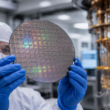


India’s Ministry of Commerce and Industry has positioned the Production Linked Incentive (PLI) Scheme as one of the most consequential industrial policy interventions undertaken since economic liberalisation, with cumulative data pointing to a broad-based strengthening of domestic manufacturing capacity. With a total incentive outlay of ₹1.91 lakh crore and 836 approved applications across 14 strategic sectors, the scheme reflects sustained industry participation and a measurable shift toward localisation, scale manufacturing, and export-oriented production.
According to data released by the Press Information Bureau in New Delhi, the Production Linked Incentive Scheme has attracted cumulative investments exceeding ₹2.16 lakh crore as of December 31, 2025. These investments have translated into cumulative production and sales of more than ₹20.41 lakh crore, alongside exports exceeding ₹8.3 lakh crore. The Ministry of Commerce and Industry reported that the scheme has generated more than 14.39 lakh direct and indirect jobs, underscoring its role as both an industrial and employment-linked policy instrument.
Incentive disbursements under the scheme stood at ₹28,748 crore as of the end of December 2025. The Ministry stated that these disbursements are directly tied to verified incremental production, reinforcing the performance-linked design of the policy framework and ensuring that public expenditure is aligned with measurable industrial outcomes.

Why the Production Linked Incentive Scheme marks a shift from input subsidies to outcome-linked industrial policy
The Production Linked Incentive Scheme was launched in 2020 as a strategic reform initiative aimed at strengthening India’s manufacturing base, reducing import dependence, enhancing global competitiveness, and generating employment. Unlike earlier industrial incentive models that relied heavily on input-based subsidies, the Production Linked Incentive framework links government support directly to incremental sales of goods manufactured in India over a defined base year.
The Ministry of Commerce and Industry has described this as a paradigm shift in industrial policy design. By tying incentives to outcomes rather than inputs, the scheme seeks to improve efficiency, transparency, and accountability while encouraging firms to expand capacity, adopt advanced technologies, deepen domestic value addition, and integrate more closely with global supply chains.
How electronics manufacturing has emerged as the flagship success under the PLI framework
Electronics manufacturing has been one of the most visible beneficiaries of the Production Linked Incentive Scheme, with India consolidating its position as a major manufacturing hub for mobile phones and information technology hardware. The Ministry reported that mobile phone imports have declined by nearly 77 percent since the financial year 2020 to 2021, while more than 99 percent of domestic demand is now met through local production.
Crucially, the expansion has not been limited to final assembly operations. Manufacturing activity has progressively moved into higher value segments such as printed circuit board assemblies, batteries, camera modules, display modules, enclosures, and other critical sub-assemblies. This shift has enabled deeper integration of Indian facilities into global electronics value chains, reducing vulnerability to external supply disruptions and improving domestic value capture.
The Production Linked Incentive Scheme has also supported expansion of domestic manufacturing capacity for information technology hardware, including laptops, tablets, servers, and all-in-one personal computers. Progressive localisation of components has reduced dependence on imports and strengthened India’s position as a competitive manufacturing destination in global electronics supply networks.
How pharmaceuticals and medical devices localisation is addressing structural import dependence
In the pharmaceuticals and medical devices sector, the Production Linked Incentive Scheme has played a central role in addressing long-standing import dependence for critical inputs. The Ministry of Commerce and Industry stated that the scheme has enabled first-time domestic manufacturing of 191 bulk drugs, resulting in import substitution valued at approximately ₹1,785 crore and increasing domestic value addition to 83.7 percent.
Beyond bulk drugs, the scheme has supported indigenous development of biosimilars, monoclonal antibodies, and new chemical entities. These developments have strengthened India’s pharmaceutical export potential and improved supply chain resilience in an industry that is strategically critical for public health and global medicine supply.
In medical devices, domestic manufacturing has expanded to include imaging systems, implants, and diagnostic equipment. Adoption of globally benchmarked quality systems has been a key feature of this transition, supporting both domestic demand and export competitiveness while reducing reliance on imported devices.
What early momentum in advanced automotive manufacturing reveals about technology-led industrial upgrading
The Production Linked Incentive Scheme has catalysed investments in automobiles and advanced automotive technology, with a focus on electric mobility, power electronics, and advanced safety systems. The Ministry reported sales of ₹32,879 crore under this segment in the financial year 2025 to 2026, indicating early momentum in technology-driven manufacturing.
These investments are contributing to the development of a more sophisticated automotive supplier ecosystem and are aligned with broader national objectives related to clean mobility, energy efficiency, and technological self-reliance. The focus on advanced automotive technologies reflects a shift away from volume-driven manufacturing toward higher value, innovation-led production.
How telecom and networking manufacturing is strengthening India’s strategic technology autonomy
In the telecom and networking products sector, the Ministry reported that sales have increased more than six-fold over the base year of financial year 2019 to 2020. Exports from this segment have reached ₹21,033 crore, signalling growing international demand for domestically manufactured telecom equipment.
A major institutional milestone highlighted by the Ministry is the deployment of India’s indigenous end-to-end fourth-generation technology stack by Bharat Sanchar Nigam Limited. This development places India among a limited group of countries with domestic capability across the full telecom technology stack, carrying implications for strategic autonomy, network security, and long-term innovation capacity.
Why food processing investments under PLI are focused on efficiency and export readiness
The food processing sector has recorded investments exceeding ₹9,200 crore across approved projects under the Production Linked Incentive Scheme. The Ministry of Commerce and Industry noted that these investments have supported adoption of advanced processing technologies, including automated rice and bran-based milling systems, Tetra Recart packaging solutions, and automated seafood processing equipment.
These technological upgrades are improving operational efficiency, enhancing product quality, and increasing export readiness in a sector that has significant employment potential and plays a critical role in agricultural value chains.
How localisation in white goods manufacturing is reshaping component ecosystems
Under the white goods segment covering air conditioners and light-emitting diode lighting, domestic manufacturing has commenced for critical components such as compressors, motors, copper tubes, and LED drivers. The Ministry stated that domestic value addition in this segment is targeted to increase to between 75 percent and 80 percent by the financial year 2028 to 2029.
This focus on component-level manufacturing is intended to strengthen domestic supply chains, reduce import dependence, and improve resilience against global supply disruptions.
Why man-made fibre and technical textiles are central to India’s textile transition strategy
The Production Linked Incentive Scheme has supported a strategic shift in the textile sector toward high-value man-made fibre and technical textile products. Integration with PM MITRA Parks has enabled scale manufacturing, improved logistics efficiency, and better infrastructure support for large-scale textile operations.
The Ministry of Commerce and Industry has positioned this segment as critical for enhancing competitiveness in global textile markets where demand is increasingly shifting toward performance-oriented and technical applications.
How high efficiency solar photovoltaic manufacturing aligns industrial policy with energy transition goals
In the renewable energy sector, the Production Linked Incentive Scheme for high efficiency solar photovoltaic modules under Tranche I and Tranche II targets 48 gigawatts of fully integrated manufacturing capacity. Investment commitments under this segment amount to nearly ₹52,942 crore.
The Ministry stated that this capacity expansion is expected to significantly reduce import dependence in the renewable energy sector while supporting India’s broader energy transition objectives. By encouraging fully integrated manufacturing, the scheme aims to capture greater value domestically across the solar supply chain.
What the cumulative data suggests about the long-term role of the PLI Scheme in industrial competitiveness
From a phase of relatively higher import dependence, India’s manufacturing ecosystem is witnessing a progressive strengthening of domestic capabilities. The Ministry of Commerce and Industry stated that sustained investment, expansion of production capacity, growth in exports, and employment generation under the Production Linked Incentive Scheme collectively point to its role as a central policy instrument for enhancing manufacturing competitiveness.
By supporting strategically selected sectors, encouraging technology adoption, and strengthening domestic supply chains, the Production Linked Incentive Scheme is contributing to deeper localisation, improved integration with global value chains, and the long-term strengthening of India’s manufacturing base. The cumulative performance indicators released as of December 2025 suggest that the scheme is moving beyond pilot-scale success toward structural transformation of India’s industrial landscape.
Key takeaways: What the Production Linked Incentive Scheme means for India’s manufacturing and trade ecosystem
- The Production Linked Incentive Scheme has approved 836 applications across 14 strategic sectors with a total incentive outlay of ₹1.91 lakh crore, reflecting broad industry participation.
- Cumulative investments exceed ₹2.16 lakh crore, with production and sales above ₹20.41 lakh crore and exports surpassing ₹8.3 lakh crore as of December 31, 2025.
- Electronics, pharmaceuticals, telecom, automobiles, food processing, and renewable energy have recorded significant localisation and capacity expansion.
- The outcome-linked incentive model ties government support directly to incremental production, improving transparency and accountability.
- The scheme is positioned as a central policy instrument for reducing import dependence, strengthening domestic supply chains, and enhancing India’s global manufacturing competitiveness.
Share this:
Discover more from Business-News-Today.com
Subscribe to get the latest posts sent to your email.

