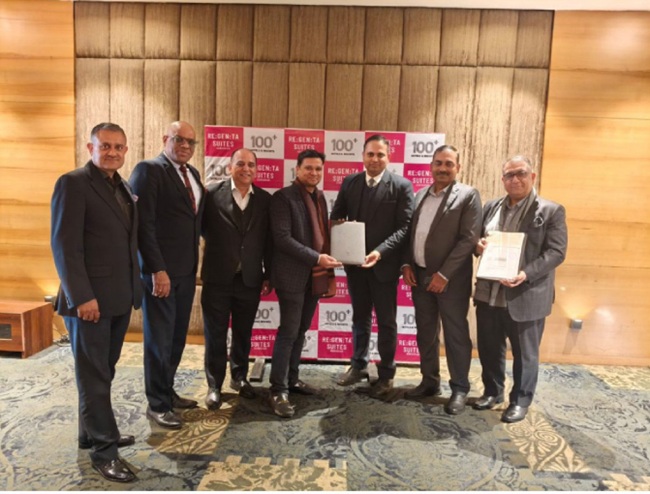
Royal Orchid Hotels Limited (BSE: 532699, NSE: ROHLTD) has signed a management contract for Regenta Z Vrindavan in Mathura, marking a further expansion into India’s fast-growing religious tourism market through an asset-light model. The greenfield property, scheduled for handover in April 2027, strengthens Royal Orchid Hotels Limited’s portfolio in year-round pilgrimage destinations with predictable demand characteristics.
The strategic relevance is not the addition of another hotel but the deliberate concentration on religious tourism corridors where occupancy volatility is structurally lower and brand penetration remains limited.
Why Royal Orchid Hotels Limited is prioritising religious tourism corridors over cyclical business travel markets
Religious tourism in India has shifted from being a seasonal, price-sensitive segment to a structurally resilient demand driver supported by infrastructure spending, improved rail connectivity, and rising middle-class domestic travel. Destinations such as Vrindavan benefit from steady footfall across the calendar rather than event-led peaks.
For Royal Orchid Hotels Limited, this segment offers a hedge against the cyclicality seen in corporate travel and conference-led urban hotels. Business travel remains sensitive to macro slowdowns, corporate cost controls, and hybrid work policies. Religious tourism, by contrast, is tied to cultural practice rather than discretionary corporate budgets.
By expanding in Vrindavan, Royal Orchid Hotels Limited is effectively reallocating growth capital toward markets where occupancy stability matters more than average daily rate maximisation. This reflects a shift in Indian hospitality strategy from yield-first thinking to cash-flow durability.
How the Regenta Z brand fits into Royal Orchid Hotels Limited’s asset-light expansion playbook
The Regenta Z brand is positioned as a contemporary, efficient hospitality format designed for smaller inventory hotels in high-footfall locations. With 36 keys, a multi-cuisine restaurant, and a banquet facility, the Vrindavan property is deliberately scoped to match local demand patterns rather than upscale destination leisure expectations.
From a capital allocation perspective, this matters. Asset-light expansion through management contracts allows Royal Orchid Hotels Limited to scale presence without balance-sheet strain, construction risk, or long gestation capital lock-ups. The ownership structure places asset risk with the local owner while allowing the brand to earn management and incentive fees tied to performance.
This model also improves return on invested capital consistency. Instead of concentrating capital into fewer owned assets, the company spreads brand presence across multiple cities, improving national visibility while limiting downside exposure.
What the Vrindavan location signals about Royal Orchid Hotels Limited’s portfolio strategy
Vrindavan is not a lifestyle leisure destination in the traditional sense. It is a pilgrimage ecosystem with predictable inflows tied to religious calendars, festivals, and daily footfall. Properties near temples, railway stations, and arterial access points benefit from high utilisation even at modest room counts.
By selecting a location approximately six kilometres from Prem Mandir and within reachable distance of Mathura Railway Station, Royal Orchid Hotels Limited is prioritising accessibility over premium land positioning. This is consistent with a volume-led hospitality thesis rather than exclusivity.
The implication is that future additions under the Regenta Z or adjacent brands are likely to cluster around similar spiritual hubs rather than metropolitan CBDs where supply risk and pricing competition are higher.
How asset-light expansion reduces execution risk while increasing brand optionality
One of the most underappreciated advantages of management-contract-led growth is execution risk containment. Construction delays, regulatory approvals, and cost overruns sit primarily with the asset owner rather than the operator.
For Royal Orchid Hotels Limited, this allows management bandwidth to remain focused on brand standardisation, operating efficiency, and distribution rather than project management. It also creates optionality. Underperforming assets can be exited more cleanly than owned properties, preserving capital discipline.
This matters in a hospitality cycle where demand visibility beyond twelve to eighteen months remains uncertain in urban markets. Religious tourism locations offer a partial offset, but asset-light structures ensure flexibility if demand assumptions change.
What Regenta Z Vrindavan reveals about pricing power versus occupancy strategy
A 36-key property does not materially move revenue in isolation. The strategic value lies in yield stability rather than scale. Religious tourism hotels typically operate at higher occupancy with lower pricing volatility, producing steadier operating margins even if headline room rates are modest.
Royal Orchid Hotels Limited appears to be leaning into this trade-off. Instead of chasing premium positioning, the focus is on consistent utilisation, ancillary food and beverage revenue, and banquet usage tied to religious and social gatherings.
This approach reduces earnings sensitivity to macro slowdowns while creating cross-sell opportunities across the broader Regenta and Royal Orchid portfolio for repeat domestic travellers.
How this move fits into the broader competitive landscape in Indian hospitality
India’s hospitality market remains fragmented outside the luxury and upper-upscale segments. Many pilgrimage towns still rely on unbranded or locally operated hotels with uneven service quality. This creates an opening for mid-scale branded operators to capture trust-led demand.
Peers pursuing aggressive owned-asset expansion face balance-sheet constraints and longer payback cycles. Royal Orchid Hotels Limited’s asset-light model positions it competitively against both independent hotels and capital-heavy chains.
The risk, however, lies in overextension. Rapid brand proliferation without operational consistency can dilute guest experience. The success of Regenta Z Vrindavan will depend less on location and more on execution discipline across staffing, hygiene, and service delivery.
What regulatory and infrastructure trends mean for Vrindavan’s long-term demand outlook
Government focus on religious tourism infrastructure, including rail upgrades, road connectivity, and destination beautification, has materially improved accessibility to towns like Vrindavan. These investments support sustained visitor growth rather than one-time surges.
For Royal Orchid Hotels Limited, this reduces demand uncertainty over the property’s operating life. Regulatory risk remains relatively low compared to coastal or environmentally sensitive leisure destinations, although local zoning and municipal approvals can still impact timelines.
The April 2027 handover target leaves adequate runway for infrastructure benefits to compound before operations commence, aligning supply addition with medium-term demand growth rather than immediate saturation.
How investors may interpret Royal Orchid Hotels Limited’s continued asset-light expansion
From an investor sentiment perspective, asset-light growth is generally viewed favourably in hospitality, particularly when it improves return metrics without stretching leverage. The market tends to reward predictable fee-based income streams over volatile owned-asset earnings.
However, investors will likely scrutinise the pace of signings relative to operational bandwidth. A growing management contract portfolio must translate into consistent fee income and margin stability rather than headline property count expansion.
For Royal Orchid Hotels Limited, the key signal from the Vrindavan signing is strategic discipline rather than scale ambition. The company is choosing markets where downside risk is limited and brand relevance is clear.
What happens next if the religious tourism strategy scales successfully or stalls
If the Vrindavan property performs as expected, it strengthens the case for replicating this model across other pilgrimage centres with similar demand dynamics. This could lead to a network effect where brand familiarity drives preference across locations.
If execution falters, either due to operational inconsistencies or slower-than-expected demand growth, the asset-light structure limits financial damage. Management contracts can be renegotiated or exited with far less balance-sheet impact than owned hotels.
The real test will be whether Royal Orchid Hotels Limited can maintain service quality at scale while continuing to sign properties at pace.
Key takeaways: What this development means for Royal Orchid Hotels Limited and the Indian hospitality market
- Royal Orchid Hotels Limited is deliberately reallocating growth toward religious tourism corridors with structurally stable demand.
- The Regenta Z Vrindavan signing reinforces an asset-light expansion model that prioritises return consistency over asset accumulation.
- Small-format, high-occupancy hotels offer predictable cash flows even at moderate room rates.
- Religious tourism provides a hedge against cyclical corporate travel volatility.
- Management contracts reduce execution and capital risk while preserving brand optionality.
- Competitive advantage will depend on operational consistency rather than property count.
- Infrastructure investment around pilgrimage towns supports long-term demand visibility.
- Investor sentiment is likely to favour disciplined asset-light growth if margins remain stable.
- Overextension remains the primary strategic risk if expansion outpaces execution capacity.
Discover more from Business-News-Today.com
Subscribe to get the latest posts sent to your email.