



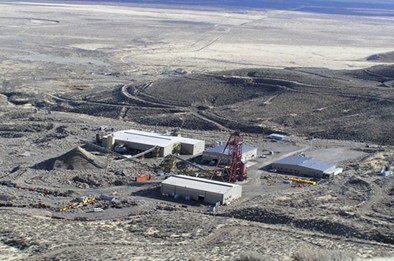
Blue Moon Metals Inc. (TSXV: MOON) (NASDAQ: BMM) has closed its previously announced acquisition of the Springer tungsten and critical metals mine and processing plant in Pershing County, Nevada, for total consideration of US$18.5 million. The transaction, completed with GOODS LG LLC, secures a largely permitted tungsten processing facility equipped with an Ammonium Paratungstate circuit at a time when US policymakers are intensifying scrutiny of critical mineral supply chains under Section 232 of the Trade Expansion Act.
The strategic relevance is not simply the ore body. It is the processing capacity. In the current US critical minerals debate, the bottleneck is less about discovering deposits and more about refining and chemical conversion capacity within domestic borders.
How does the Springer Mine acquisition reposition Blue Moon Metals Inc. within the US critical minerals supply chain?
By acquiring both the historic tungsten deposit and the flotation mill with an operational Ammonium Paratungstate circuit, Blue Moon Metals Inc. moves upstream and downstream simultaneously. It gains control over a historically mined tungsten asset and, crucially, a facility capable of producing higher-value processed output rather than raw concentrate alone.
The company has articulated a hub-and-spoke strategy in which smaller, high-grade underground mines across the western United States could feed a centralized processing facility at Springer. This is structurally different from a single-asset development story. It suggests platform thinking, where the mill becomes the anchor and satellite projects become modular additions.
In a market where China has historically dominated tungsten supply and processing, even modest US processing capacity can carry outsized strategic weight. Section 232 reviews have increasingly framed processed critical minerals as a national security concern. By owning a facility that already includes autoclave infrastructure for Ammonium Paratungstate production, Blue Moon Metals Inc. reduces redevelopment timelines compared to greenfield builds.
Why does Section 232 of the Trade Expansion Act make this Nevada tungsten asset more valuable now?
Section 232 of the Trade Expansion Act allows the US government to investigate whether certain imports threaten national security. Recent initiatives have placed renewed emphasis on domestic and allied processing of critical minerals, including tungsten.
Tungsten is listed by both the United States Geological Survey and the European Union as critical due to its applications in defense, aerospace, energy, and advanced manufacturing. Supply concentration risk remains high. When policy signals align with commodity price momentum, asset repricing can follow.
Since October 2025, tungsten prices have more than doubled, according to company commentary. Price volatility alone does not justify an acquisition. However, when price appreciation coincides with policy alignment and infrastructure availability, timing becomes strategic rather than speculative.
The Springer facility is largely permitted and sits on private land with established infrastructure, including electrical substations, tailings capacity, water rights, and proximity to rail. In a regulatory environment where permitting timelines can stretch into years, that matters.
Can Blue Moon Metals Inc. realistically execute a hub-and-spoke processing model in the western United States?
Execution risk is real. Converting historical resources into compliant, updated mineral resource estimates will require confirmatory drilling and updated technical studies. Redeveloping a historic mine is rarely as simple as reopening the shaft and flipping a switch.
Blue Moon Metals Inc. has indicated plans to accelerate drilling to convert historical resources into modern standards. That process will determine whether the historical indicated and inferred resources can underpin a credible redevelopment plan.
The economics will hinge on throughput, grade stability, and the ability to attract third-party feed. The Blue Moon project in California, where underground exploration is underway, could serve as initial feedstock. The company has reported that its underground decline is progressing under a US$16.5 million phase one development program, with drilling already initiated.
If the California asset can produce feed that complements Springer’s processing profile, the hub-and-spoke thesis strengthens. If not, Springer risks becoming an underutilized processing facility waiting for supply.
What are the capital allocation and balance sheet implications of the $18.5 million acquisition?
The aggregate consideration consisted of a US$500,000 deposit and a final US$18 million cash payment. For a company of Blue Moon Metals Inc.’s scale, this is a meaningful but not transformative outlay. The strategic logic suggests management views the mill as foundational infrastructure rather than a standalone speculative bet.
Major shareholders include funds managed by Oaktree Capital Management, Hartree Partners LP, Wheaton Precious Metals, and Altius Minerals Corporation. The public endorsement from Hartree Partners LP signals continued institutional support for the critical minerals pivot.
The next capital phase will likely involve redevelopment spending, mill refurbishment, drilling, and potential expansion. Investors will scrutinize funding sources. Equity issuance, strategic partnerships, offtake agreements, or government-backed financing could all come into play, particularly given the policy alignment narrative.
How might investor sentiment evolve following Blue Moon Metals Inc.’s dual listing and asset consolidation strategy?
Blue Moon Metals Inc. trades on the TSX Venture Exchange and recently listed on NASDAQ under ticker BMM. The NASDAQ listing increases access to US-based institutional capital and aligns with the company’s domestic supply chain positioning.
For investors, the story transitions from exploration optionality to infrastructure-backed redevelopment. That can reduce perceived risk if execution milestones are met. It can also increase scrutiny. Public market participants tend to reward clarity on timelines, capital intensity, and return metrics.
Tungsten price momentum provides a favorable backdrop, but commodity cycles are unforgiving. If prices retrace before redevelopment reaches production scale, margin assumptions may compress.
Institutional positioning will likely focus on three questions. Can Blue Moon Metals Inc. update resources quickly? Can it secure feedstock certainty? Can it leverage Section 232 momentum into tangible incentives or policy support?
What competitive and industry implications does the Springer Mine transaction signal for US critical metals developers?
The broader implication is that processing assets may become more strategically valuable than undeveloped deposits. If domestic refining capacity remains scarce, developers may prioritize acquiring mills over staking new claims.
Blue Moon Metals Inc. is effectively betting that midstream capacity will command a premium in a supply-constrained policy environment. If that thesis proves correct, other junior and mid-tier developers may pursue similar consolidation strategies.
The move also reinforces a shift from single-mine narratives toward integrated supply chain positioning. Companies that can offer domestic mining plus processing may gain favor with policymakers and downstream customers in aerospace and defense.
The risk is that policy momentum softens or shifts. Section 232 reviews can lead to tariffs, quotas, or other trade remedies, but they do not guarantee direct financial support. Blue Moon Metals Inc. must still prove commercial viability independent of political tailwinds.
What are the key takeaways on what this development means for Blue Moon Metals Inc., competitors, and the US critical minerals sector?
- Blue Moon Metals Inc. has secured a rare US-based tungsten processing asset, addressing a structural bottleneck in domestic supply chains.
- The acquisition aligns directly with Section 232 policy momentum, strengthening the company’s strategic positioning.
- Control of an Ammonium Paratungstate circuit provides downstream value potential beyond raw concentrate sales.
- The hub-and-spoke model could reduce capital intensity per mine if feed aggregation succeeds.
- Execution risk remains high until historical resources are updated and redevelopment plans are validated.
- Tungsten price strength improves project economics but exposes the company to commodity cycle volatility.
- The NASDAQ listing broadens capital access and increases institutional scrutiny of delivery milestones.
- Competitors may reassess the value of processing infrastructure versus undeveloped deposits.
- Policy alignment is supportive but not sufficient without operational discipline and capital control.
- If successful, the Springer platform could position Blue Moon Metals Inc. as a cornerstone player in a re-emerging US tungsten ecosystem.
Discover more from Business-News-Today.com
Subscribe to get the latest posts sent to your email.