



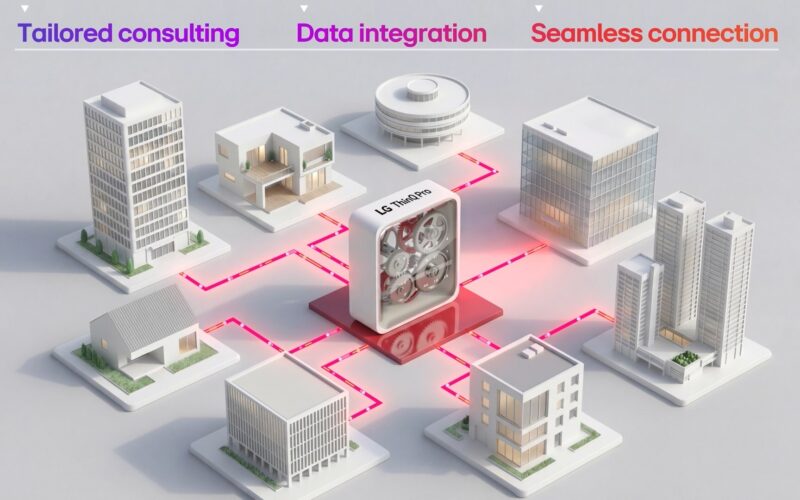
LG Electronics Inc. announced the launch of LG ThinQ Pro, a B2B-focused smart home and residential property management platform, at the 2026 Kitchen and Bath Industry Show in North America. The platform extends LG Electronics Inc.’s appliance ecosystem into centralized installation, operations, and lifecycle management for builders, installers, and property managers, signaling a strategic move to deepen its position in the North American multi-family and rental housing market.
Rather than positioning smart appliances as isolated consumer features, LG Electronics Inc. is reframing them as infrastructure assets embedded into residential real estate workflows, with implications for long-term service revenue, builder relationships, and competitive positioning against both appliance peers and property technology platforms.
Why LG Electronics is targeting builders and property managers rather than end consumers with LG ThinQ Pro
The introduction of LG ThinQ Pro reflects a clear strategic pivot by LG Electronics Inc. toward B2B decision-makers who influence large-scale appliance deployment. Builders, installers, and property managers control purchasing at volume, dictate brand standardization across developments, and shape long-term maintenance and replacement cycles.
In North America, the multi-family housing segment has become increasingly operationally complex. Property owners are under pressure to control energy costs, reduce maintenance incidents, improve resident satisfaction, and comply with evolving safety and efficiency expectations. At the same time, labor constraints and rising service costs have made reactive maintenance models increasingly unattractive.
LG ThinQ Pro positions LG Electronics Inc. not simply as an appliance supplier but as a systems partner that spans installation, monitoring, predictive maintenance, and asset tracking. This shifts the value proposition away from one-time appliance sales toward embedded operational relevance across the property lifecycle.
By anchoring the platform around builders and installers rather than residents, LG Electronics Inc. is effectively locking in appliance ecosystems at the design and construction stage, where switching costs are highest and competitive displacement is most difficult.
How LG ThinQ Pro changes appliance deployment from a product sale into an operational platform decision
A defining feature of LG ThinQ Pro is its focus on the earliest stages of appliance deployment. Installers can register multiple appliances through QR code scanning, enabling centralized setup and configuration across units. Builders and project managers gain visibility into installation progress through a unified digital workflow rather than fragmented, manual coordination.
This matters strategically because installation is where appliance brands typically lose influence. Once appliances are installed, manufacturers often disappear from the operational picture, ceding ground to third-party service providers, property management software, and maintenance vendors.
LG ThinQ Pro reasserts control at this stage by embedding LG Electronics Inc. directly into the deployment workflow. Appliance model data, serial numbers, unit-level assignments, and service histories are captured from day one, creating a persistent data layer that remains relevant throughout the asset’s lifespan.
This approach effectively turns appliances into managed endpoints rather than static hardware, aligning them more closely with enterprise technology platforms than traditional consumer goods.
What centralized monitoring and predictive maintenance signal about LG Electronics’ service revenue ambitions
Post-installation, LG ThinQ Pro provides property managers with a centralized dashboard that aggregates appliance status across units and buildings. The platform supports real-time monitoring, alerts for potential issues, asset tracking, and structured warranty and service request management.
From a strategic standpoint, this positions LG Electronics Inc. to participate more directly in ongoing service and maintenance economics. Predictive alerts related to water leaks, blocked dryer ducts, or operational anomalies reduce the incidence of costly failures while also creating opportunities for proactive service engagement.
For LG Electronics Inc., this model opens the door to recurring service relationships rather than episodic warranty interactions. Over time, such platforms can support subscription-based services, preferred servicing arrangements, and deeper integration with facility management providers.
While the company has not disclosed monetization details, the platform architecture aligns with broader industry trends where hardware manufacturers seek recurring revenue streams through software and lifecycle services.
Why energy efficiency and safety monitoring are becoming core buying criteria in multi-family housing
Energy efficiency and safety monitoring are not peripheral features in LG ThinQ Pro. They are central to the platform’s value proposition, reflecting shifting priorities among property owners and institutional investors in residential real estate.
Utility costs represent a significant and volatile expense for multi-family operators. Platforms that enable visibility into appliance performance, usage patterns, and potential inefficiencies help operators manage energy exposure more proactively, even if actual savings vary by property and behavior.
Safety monitoring is equally critical. Water leaks, ventilation issues, and appliance-related incidents carry both financial and reputational risk. By flagging potential hazards early, LG ThinQ Pro supports risk mitigation strategies that resonate with insurers, regulators, and asset managers.
This framing aligns LG Electronics Inc. with the operational risk management concerns of large property portfolios rather than the lifestyle-oriented messaging typical of consumer smart home platforms.
How LG ThinQ Pro fits into a crowded proptech and smart building ecosystem without forcing rip-and-replace
One of the more strategically important aspects of LG ThinQ Pro is its stated flexibility. Many residential properties already operate building management systems, property management software, and third-party monitoring tools. Full system replacement is rarely feasible or attractive.
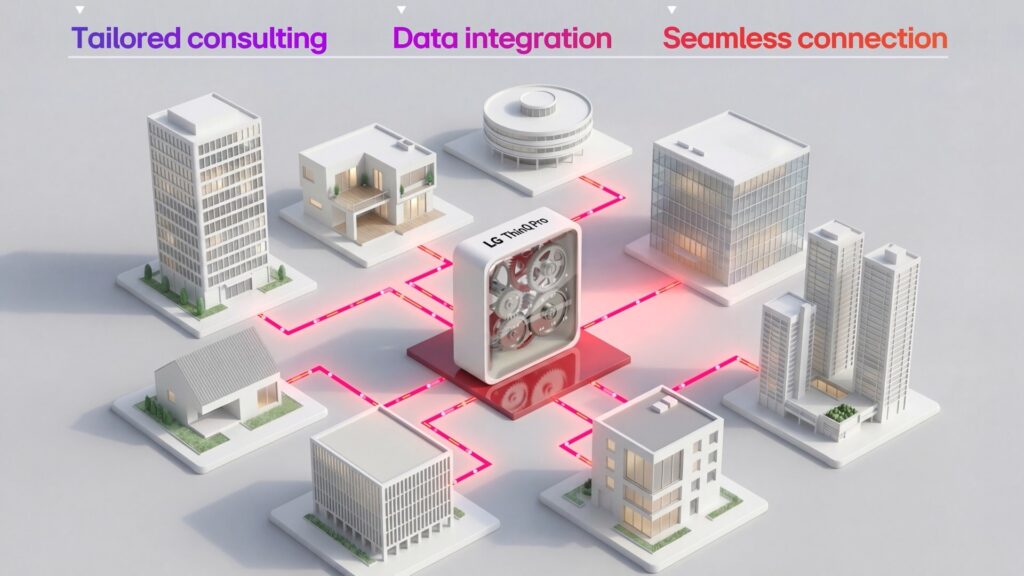
LG Electronics Inc. has positioned LG ThinQ Pro as a platform capable of integrating required appliance data into existing management environments through consultation-driven integration. This reduces adoption friction and positions the platform as complementary rather than disruptive.
This matters because the competitive landscape is not limited to appliance manufacturers. LG Electronics Inc. is indirectly competing with proptech firms, building automation vendors, and Internet of Things platforms that seek to own the operational data layer of residential assets.
By focusing narrowly on appliance-centric intelligence while allowing coexistence with broader systems, LG Electronics Inc. avoids overreach while still securing a valuable foothold in the data stack.
What the North American builder market reveals about LG Electronics’ broader B2B strategy
The choice to debut LG ThinQ Pro at the Kitchen and Bath Industry Show is revealing. KBIS is not a consumer electronics showcase. It is a decision-making venue for builders, developers, and design professionals who shape procurement standards at scale.
LG Electronics Inc. has been steadily expanding its presence in North America’s built-in appliance segment, where design integration, long-term reliability, and brand consistency matter more than impulse buying. LG ThinQ Pro reinforces this positioning by tying appliances directly to operational outcomes.
This suggests a broader B2B strategy in which LG Electronics Inc. leverages its hardware footprint as a foundation for software-driven differentiation, particularly in markets where scale and standardization favor platform adoption.
Competitive implications for appliance manufacturers and smart home platform providers
For traditional appliance competitors, LG ThinQ Pro raises the bar on what builders and property managers may expect from premium appliance vendors. Hardware parity is no longer sufficient if one provider offers centralized lifecycle management while others do not.
For smart home platform providers, the move underscores the advantage of native hardware integration. Platforms that rely on heterogeneous device ecosystems may struggle to match the depth of operational insight available to a vertically integrated manufacturer.
This does not eliminate competition, but it reshapes it. The battleground shifts from consumer-facing features to backend reliability, data fidelity, and service integration.
How investors are likely to interpret LG ThinQ Pro as a signal of LG Electronics Inc.’s long-term platform and margin strategy
While LG Electronics Inc. has not framed LG ThinQ Pro in financial terms, the strategic direction is consistent with investor expectations around margin stability and revenue diversification. Appliance markets are cyclical and competitive. Software-enabled services offer a pathway to smoother revenue profiles and stronger customer lock-in.
Institutional investors tend to reward companies that demonstrate credible progress toward platform economics without overextending into unproven models. LG ThinQ Pro appears calibrated to that balance, focusing first on operational relevance rather than aggressive monetization claims.
Execution will matter. Adoption by builders and property managers is not automatic, and integration complexity can slow deployment. However, the direction itself reflects a disciplined response to structural shifts in both real estate operations and appliance competition.
What happens next if LG ThinQ Pro succeeds or fails in the North American market
If LG ThinQ Pro gains traction, LG Electronics Inc. strengthens its role as a long-term partner to residential developers rather than a replaceable vendor. This could influence procurement standards, service relationships, and even design decisions across future developments.
If adoption stalls, the risk is not reputational damage but opportunity cost. Competitors and proptech platforms are unlikely to wait. The strategic logic behind appliance-centric management platforms is sound, but execution speed and ecosystem alignment will determine winners.
Either way, LG ThinQ Pro marks a meaningful shift in how LG Electronics Inc. frames its role in the residential value chain.
What are the key takeaways from LG Electronics’ LG ThinQ Pro launch for builders, investors, and the smart home industry
- LG Electronics Inc. is repositioning appliances as managed infrastructure assets rather than standalone consumer products.
- LG ThinQ Pro targets builders and property managers, where purchasing power and long-term influence are concentrated.
- Centralized installation and lifecycle management strengthen LG Electronics Inc.’s control beyond the point of sale.
- Predictive maintenance and safety monitoring align with rising operational and insurance pressures in multi-family housing.
- The platform supports recurring service economics without forcing immediate monetization commitments.
- Flexibility and integration reduce adoption friction in properties with existing management systems.
- Competitive pressure increases on appliance peers lacking comparable B2B management capabilities.
- Smart home competition is shifting from consumer features to backend operational reliability and data ownership.
- Investor relevance lies in margin resilience and long-term ecosystem positioning rather than short-term revenue impact.
Discover more from Business-News-Today.com
Subscribe to get the latest posts sent to your email.