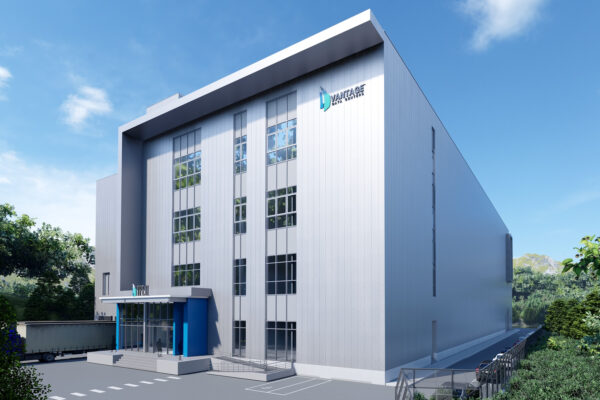





Anant Raj Limited (NSE: ANANTRAJ, BSE: 515055) has disclosed that its wholly owned subsidiary, Anant Raj Cloud Private Limited, has entered into a strategic collaboration with Spain-based Submer Technologies to enhance AI-ready infrastructure across its data centre portfolio in India. The collaboration positions Anant Raj more decisively in high-density, GPU-intensive data centre infrastructure at a time when India’s policy, capital, and enterprise demand cycles are converging around sovereign artificial intelligence capacity.
The announcement signals a shift beyond traditional colocation toward utility-grade AI infrastructure, with implications for capital allocation, execution risk, and long-term returns in a segment that is quickly becoming one of the most competitive battlegrounds in Indian infrastructure and real estate-adjacent markets.
What exactly changed with Anant Raj Limited’s strategic collaboration with Submer Technologies?
The core development is the formalisation of a strategic collaboration between Anant Raj Cloud Private Limited and Submer Technologies to deploy modular, AI-ready data centres designed for high-density computing workloads across India. According to the company’s disclosure, the partnership is structured to deliver end-to-end AI infrastructure, combining physical data centre assets, liquid cooling systems, and prefabricated mechanical, electrical, and plumbing modules into deployable facilities capable of supporting GPU-heavy workloads at scale.
Importantly, this is not positioned as a pilot or proof-of-concept. The collaboration is framed as a scalable blueprint intended for replication across multiple campuses, including Anant Raj’s existing sites in Manesar and Panchkula in Haryana. The emphasis on modularity and repeatability suggests that Anant Raj is attempting to industrialise AI data centre deployment rather than treat it as a bespoke, one-off expansion.
Why does this partnership matter now for India’s AI data centre and cloud infrastructure market?
Timing is central to the strategic relevance of this move. The disclosure explicitly references India’s Union Budget 2026–27, which has prioritised artificial intelligence, data centres, and semiconductors as core pillars of digital infrastructure expansion. This policy backdrop is catalysing enterprise demand, hyperscaler interest, and institutional capital flows into AI-ready capacity.
At the same time, Indian enterprises and public-sector bodies are increasingly sensitive to data sovereignty, latency, and energy efficiency. The collaboration is framed as enabling sovereign AI workloads within India’s borders while reducing environmental impact through liquid cooling and higher compute density per square foot. In effect, Anant Raj is positioning itself not merely as a landlord for servers, but as a foundational enabler of India’s AI stack.
This matters because the competitive bar for data centre operators is rising rapidly. Standard Tier-III colocation is becoming commoditised, while AI workloads demand higher capital intensity, deeper technical integration, and tighter operational discipline. The partnership with Submer is an attempt to bridge that gap quickly rather than build those capabilities organically over a longer learning curve.
How does this collaboration change Anant Raj Limited’s long-term data centre strategy?
Historically, Anant Raj Limited has been best known as a real estate developer with a long operating history across residential, commercial, and IT infrastructure. Over the past few years, the company has increasingly highlighted data centres as a strategic growth vertical. This collaboration accelerates that pivot by explicitly targeting high-density AI infrastructure rather than conventional cloud and colocation services.
The company has disclosed ambitions for Anant Raj Cloud to reach approximately 307 megawatts of data centre capacity by FY32. Achieving that scale economically will depend on differentiation, not just footprint. AI workloads, if executed well, can support higher pricing, longer contract durations, and stickier enterprise relationships. However, they also introduce higher execution risk, greater upfront capital expenditure, and more stringent uptime and performance expectations.
By aligning with Submer’s liquid cooling and modular design expertise, Anant Raj appears to be outsourcing part of the technical risk while retaining ownership of physical assets and campus development. This hybrid approach suggests a strategic preference for speed-to-market over vertical integration in the early phases of AI infrastructure buildout.
What are the competitive implications for Indian data centre operators and real estate-linked players?
The Indian data centre market is already crowded with global hyperscaler-backed platforms, infrastructure funds, and domestic developers racing to secure land, power, and anchor tenants. What differentiates this move is its explicit focus on AI-specific infrastructure rather than generic capacity expansion.
If successful, this collaboration could pressure competitors who are still optimising for traditional colocation economics. High-density AI facilities demand different cooling architectures, power redundancy designs, and operational workflows. Operators without those capabilities may find themselves excluded from the most attractive AI workloads or forced into margin-dilutive retrofit investments.
For real estate-linked players, the announcement reinforces a broader trend. Land ownership and campus development expertise alone are no longer sufficient. The value is increasingly shifting toward integrated infrastructure platforms that can deliver compute as a utility rather than space as a commodity.
What execution and capital risks should investors monitor as this strategy unfolds?
While the strategic logic is clear, execution risk remains significant. AI-ready data centres require materially higher capital expenditure per megawatt than traditional facilities. Liquid cooling systems, GPU-dense racks, and prefabricated infrastructure add complexity to procurement, deployment, and maintenance.
There is also demand-side risk. While AI enthusiasm is high, enterprise adoption curves can be uneven, and pricing power will depend on workload quality rather than headline capacity. Investors will need to monitor how quickly Anant Raj converts this collaboration into contracted capacity, not just installed infrastructure.
Energy availability and cost are another variable. High-density AI workloads place enormous strain on power infrastructure. Any delays or cost overruns in securing reliable electricity could impact returns and timelines, particularly as competition for power intensifies in key data centre corridors.
How are markets likely to interpret this announcement for Anant Raj Limited stock sentiment?
From an investor sentiment perspective, the disclosure is likely to be viewed as strategically positive but financially immaterial in the near term. The collaboration strengthens Anant Raj Limited’s long-term growth narrative in digital infrastructure and aligns the company with national policy priorities around artificial intelligence and data sovereignty.
However, markets are unlikely to re-rate the stock meaningfully until there is clearer visibility on capital deployment, customer wins, and return metrics within the data centre vertical. As with many infrastructure pivots, credibility will be earned through execution milestones rather than announcements.
In the near term, the development adds optionality rather than immediate earnings impact. For long-term investors, it signals that Anant Raj is consciously repositioning itself for the next phase of India’s digital economy, even if the payoff lies several years ahead.
What this collaboration signals about the future direction of India’s AI infrastructure buildout
Beyond Anant Raj specifically, the announcement reflects a broader shift in how AI infrastructure is being built in India. The emphasis on modularity, sustainability, and sovereign control suggests that the next wave of capacity will look very different from first-generation cloud data centres.
Rather than monolithic facilities designed primarily for global hyperscalers, the market appears to be moving toward distributed, high-density campuses optimised for a mix of enterprise, public-sector, and neocloud workloads. Partnerships like this one indicate that domestic players are increasingly willing to collaborate with specialised international technology providers to accelerate that transition.
Key takeaways on what this development means for Anant Raj Limited, competitors, and India’s AI infrastructure market
- Anant Raj Limited is accelerating its pivot from traditional real estate into high-density AI data centre infrastructure through a strategic collaboration rather than organic capability buildout.
- The partnership with Submer Technologies targets sovereign, GPU-intensive workloads, a segment with higher potential returns but materially higher execution risk.
- This move aligns closely with India’s Union Budget 2026–27 priorities around artificial intelligence, semiconductors, and digital infrastructure.
- Competitive pressure is likely to increase on data centre operators that lack liquid cooling and modular deployment capabilities.
- Near-term financial impact is limited, but long-term optionality in digital infrastructure has improved.
- Capital intensity, power availability, and customer conversion will be the key variables determining success.
- Investors should watch for contracted capacity announcements rather than capacity targets alone.
- The collaboration reinforces a broader shift toward industrialised, AI-specific data centre design in India.
Discover more from Business-News-Today.com
Subscribe to get the latest posts sent to your email.