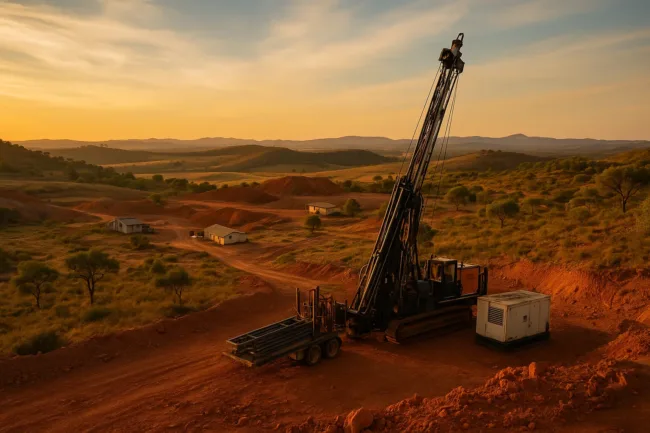
Silvercorp Metals Inc. (TSX/NYSE American: SVM) has raised the capital budget for its El Domo project in Ecuador to $284 million, up from the prior estimate of $240 million. As a result, the production timeline has shifted from early 2027 to July 1, 2027, introducing a six-month delay that now recalibrates investor expectations and capital payback scenarios.
What are the key drivers of the $44 million budget increase at Silvercorp’s El Domo project?
The updated construction budget reflects both macroeconomic pressures and scope expansions that were not fully accounted for in earlier feasibility plans. The most significant cost jump came from Ecuador’s value-added tax (VAT) rate revision from 10 percent to 15 percent, inflating that line item by $16 million alone. Silvercorp expects to reclaim this as a tax credit once concentrate exports begin, but the initial cash flow burden still matters from a working capital standpoint.
The processing plant has been another major contributor. An extra $15 million was added to address critical equipment omissions in previous designs, including a SAG mill, regrind mill, and expanded flotation systems necessary for a higher-than-expected sulfur content—now estimated at 25 percent instead of the original 9 percent. These adjustments not only raised equipment costs but increased the complexity of the engineering design and logistics burden, particularly around customs, sea freight, and inland transport.
Infrastructure items such as the southern access road, a 61.3-kilometre powerline, and third-party engineering oversight collectively added millions more to the revised estimate. Additionally, Silvercorp has allocated $6.6 million in local procurement spending to strengthen community engagement, and $10.1 million for environmental, quality assurance, and digital connectivity upgrades—elements often overlooked but crucial for regulatory compliance and local license to operate.
How does the six-month delay in production impact Silvercorp’s capital return timeline?
The move to push the project’s start date to mid-2027 may look modest at first glance, but it reshapes the entire investment return landscape. Silvercorp’s original capital payback period now elongates, delaying both revenue generation and the timing of free cash flow from one of its most significant growth assets. This places pressure on internal capital allocation decisions, especially as the company balances development costs with sustaining operations across its other producing assets.
Execution risk also increases. Any further slip in the construction timeline—whether due to contractor delays, adverse weather, or regulatory setbacks—could begin to materially affect the project’s internal rate of return and investor confidence. Contingency levels have already been cut from 20 percent to 8 percent, suggesting tighter margins for error.
What are the strategic implications of awarding mining operations to CRCC 19?
Silvercorp expects to finalize its open-pit mining and stripping contract with China Railway 19th Bureau Group Co., Ltd. (CRCC 19) in early 2026, following a competitive bidding process. CRCC 19’s “unit cost” contract model—estimated at $35 million for construction and $63 million for operational phases—offers price predictability and operational continuity. CRCC 19 has a notable presence in Ecuador, having operated similar copper-gold mines for over a decade, and has already begun mobilizing personnel to the El Domo site.
While the contractor’s regional experience is a clear plus, it also introduces a layer of geopolitical and performance risk given the current global scrutiny of Chinese infrastructure firms abroad. Silvercorp will need to carefully manage expectations and maintain oversight to ensure milestones are hit without compromising safety or ESG compliance.
Could process flowsheet changes improve the project’s economics despite higher capex?
Interestingly, the updated processing flowsheet developed by Yantai Jinpeng Mining Machinery Co., Ltd. has improved metallurgical recovery assumptions. The revised sequential flotation approach for copper-gold concentrate is now projected to deliver a 5.4 percent increase in copper recovery and a 6.2 percent uplift in gold recovery compared to previous designs. These enhancements could partially offset the capital overrun if sustained during operations.
However, the gains hinge on actual performance matching lab results, and on the timely completion of plant construction. Yantai Jinpeng is expected to finish the detailed plant design by April 2026, after which construction tenders will be issued. Delays in procurement or site readiness could once again shift timelines or escalate costs.
How critical is the powerline and diesel backup plan to hitting the 2027 start date?
Power availability has emerged as a potential bottleneck for El Domo. While contracts have been awarded for the northern section of the powerline and three substations, CNEL’s delayed approval has held up ground construction. The southern section, still in engineering design, risks slipping further unless expedited.
Silvercorp’s mitigation plan includes the deployment of 14 megawatts of diesel generator sets by December 2026. These backup systems will be essential for commissioning the plant on schedule, but they also raise operating cost concerns due to fuel logistics and pricing volatility.
The powerline delay now stands as a single-point-of-failure risk for Silvercorp’s 2027 commissioning deadline, making it a focal point for investor scrutiny and internal contingency planning.
Can Silvercorp manage remaining execution risks and still deliver strategic upside?
Silvercorp’s progress in 2025 was substantial: 16 percent of the new budget was already spent, over 2.6 million cubic metres of material moved, and the 5000-square-metre ROM ore shed construction was initiated. Importantly, the project cleared archaeological units in compliance with Ecuador’s permitting requirements—often a stumbling block for mining projects in Latin America.
The company has also embedded itself well with local stakeholders, upgraded 23 kilometres of external road for haul truck access, and implemented a strong safety culture with over 960,000 incident-free work hours. These foundational achievements suggest Silvercorp is operationally aligned, even if financial pressures have grown.
The El Domo project’s value proposition remains strong, but the path to production is now more fragile. Investors and strategic planners will need to watch 2026 closely for signs of slippage, particularly around power readiness, plant construction, and contractor execution.
Key takeaways on what Silvercorp Metals’ El Domo project budget update means for strategy and risk
- Silvercorp has raised its El Domo project capex to $284 million, reflecting a $44 million increase from April 2025 estimates.
- The project’s production start has been pushed to July 2027, six months later than previously forecast.
- Ecuador’s VAT rate increase from 10 to 15 percent added $16 million, with expected future credit recovery.
- Equipment cost inflation and omissions in prior studies led to higher process plant costs and logistical complexity.
- Contractor CRCC 19 will lead mining operations under a fixed unit-rate model, reducing cost unpredictability.
- Revised processing flowsheet offers up to 6.2 percent gold recovery improvement, which may support margin enhancement.
- Powerline delays are a major risk to 2027 readiness, mitigated by diesel generators to ensure commissioning.
- The reduction in contingency from 20 percent to 8 percent increases exposure to future cost overruns.
- Community engagement and regulatory clearance milestones achieved in 2025 de-risk local execution.
- Execution risk, timing discipline, and cash flow timing will now dominate investor focus through 2026.
Discover more from Business-News-Today.com
Subscribe to get the latest posts sent to your email.