





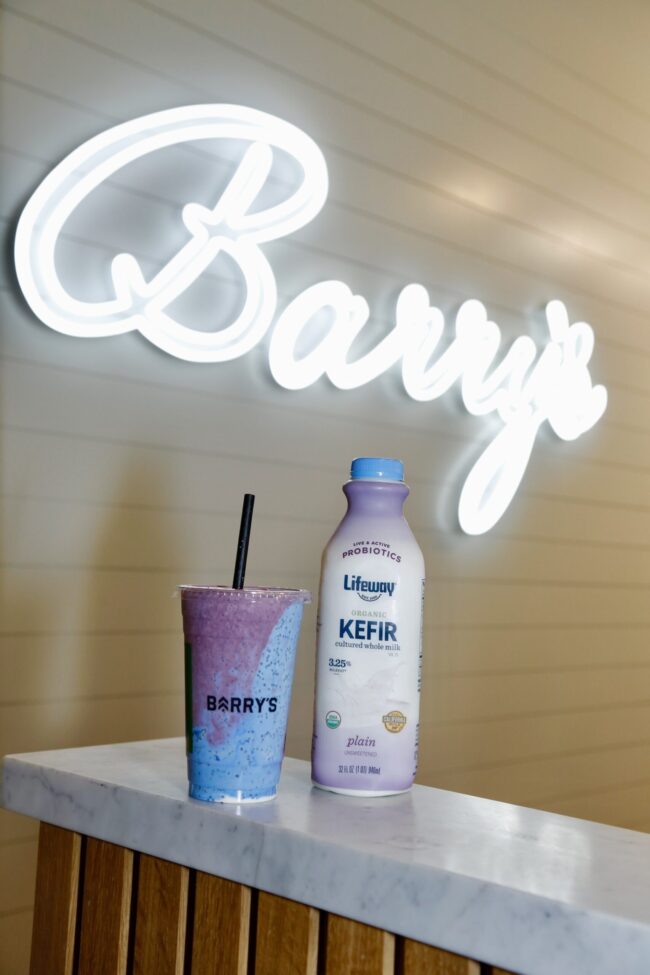
Lifeway Foods Inc. (NASDAQ: LWAY) has launched a new probiotic-rich kefir shake—Power Play—across Barry’s Fuel Bar locations in the United States, marking a fresh retail activation that aligns with Barry’s global “Find Your Strength” fitness challenge. The collaboration signals an intensified bid by Lifeway Foods to extend its fermented dairy portfolio deeper into the wellness lifestyle and premium fitness verticals, capitalizing on demand for recovery-focused functional beverages.
The tie-up with Barry’s—a network of 97 studios across 18 countries—extends beyond co-branded products. It integrates Lifeway Foods into Barry’s wellness ecosystem, including exclusive in-studio promotions and a summer kefir smoothie bowl bar at the Barry’s Hamptons studio. While the short-term revenue uplift from this partnership may be modest, the broader strategic relevance lies in Lifeway Foods embedding itself in the social and recovery routines of a high-income, health-committed consumer base—a positioning with longer-term brand equity implications.
For Barry’s, the collaboration enhances its Fuel Bar offerings with a clean-label, gut-health-aligned product that resonates with its community’s post-workout consumption habits. For Lifeway Foods, the move goes beyond traditional retail and expands its touchpoints in the $22 billion U.S. functional beverage market.
Why is Lifeway Foods entering boutique fitness retail channels with its kefir strategy?
Lifeway Foods’ latest partnership with Barry’s underscores a key directional shift in how the company wants kefir to be perceived—not just as a supermarket dairy item, but as a premium, lifestyle-driven functional product. By launching the Power Play shake directly into Barry’s Red Room network, Lifeway Foods is effectively bridging the gap between shelf-stable probiotics and real-time workout recovery.
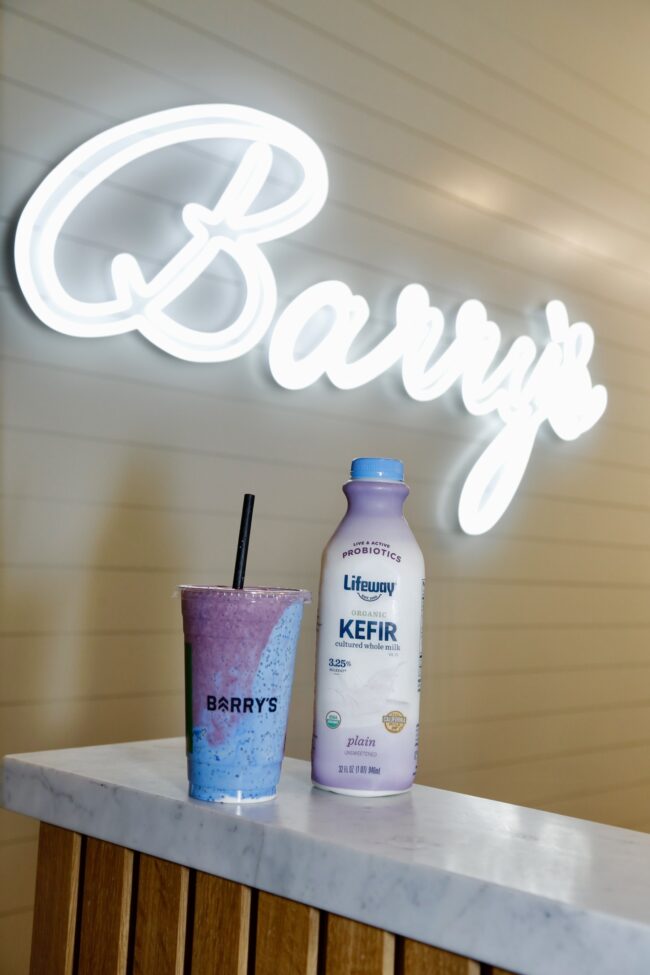
The Power Play shake blends organic plain whole milk kefir with almond milk, chia seeds, blue spirulina, granola, blueberries, and vanilla whey protein. Beyond the nutritional profile, the ingredient mix suggests Lifeway Foods is targeting the same audience segments occupied by cold-pressed juice bars and plant-based protein blends—typically urban, affluent, and wellness-driven consumers.
This shift in placement also reflects a broader trend in the functional dairy category: premium positioning via experiential partnerships. Rather than relying solely on supermarket footfall or online direct-to-consumer sales, Lifeway Foods is leaning into curated distribution channels where brand association enhances perceived value. Barry’s, with its digitally integrated fitness model, provides just such a platform.
As Julie Smolyansky, Chief Executive Officer of Lifeway Foods, indicated, the brand sees the campaign as a way to support recovery and wellness with “essential, bioavailable nutrients”—a phrase that strategically connects Lifeway’s heritage in fermented dairy to current conversations around gut-brain health and holistic fitness.
How does this fit within Lifeway Foods’ broader brand transformation and expansion playbook?
Lifeway Foods has been steadily repositioning itself from a niche probiotic beverage maker to a broader health and wellness challenger brand. Recognition as Dairy Foods’ “Processor of the Year 2025” and inclusion in Inc. and Forbes lists as a top small business suggest that Lifeway’s reinvention is being noticed.
In recent years, Lifeway Foods has expanded kefir distribution into six countries including the United States, Mexico, Ireland, France, the United Arab Emirates, and South Africa. The Barry’s partnership allows Lifeway to further root its presence in an experiential retail setting without needing to invest in brick-and-mortar or standalone retail locations.
Additionally, the announcement of a dedicated kefir smoothie bowl bar activation in Barry’s Hamptons studios this summer hints at a future pipeline of seasonal activations and limited-edition blends. This micro-batching strategy may mirror the tactics used by boutique coffee or wellness brands that build scarcity and exclusivity into their product rollouts.
Operationally, these moves also indicate Lifeway is willing to absorb higher customer acquisition costs in premium channels to deepen its share-of-wallet among loyal fitness consumers, rather than pursue undifferentiated volume in traditional retail. This is a capital-light but brand-intensive strategy that could improve brand valuation over time if margins hold.
What are the risks and potential limitations of this collaboration?
While brand alignment between Lifeway Foods and Barry’s is strong on paper, the financial materiality of such partnerships remains modest in the near term. Boutique fitness remains a niche within the broader U.S. fitness market, and while Barry’s carries global reach, the actual distribution footprint of Fuel Bars is narrower than national retail chains.
There’s also the risk that cross-promotional activations may not translate to measurable lift in grocery sales, unless supported by broader above-the-line marketing and digital amplification. If the goal is to convert Barry’s participants into long-term Lifeway kefir consumers, then tracking and reinforcing behavior outside the studio will be critical.
Moreover, the probiotic beverage category is experiencing increased competition from plant-based alternatives, functional sodas, and gut-health supplements. Simply owning the kefir category is not enough. The challenge for Lifeway Foods will be to continuously innovate within its niche while communicating the unique value proposition of fermented dairy versus trendier non-dairy options.
There is also execution risk associated with blending perishable dairy-based products into a retail model that often relies on modular consistency across locations. While Barry’s has a quality-focused brand, not all Fuel Bars operate under identical conditions or with uniform demand profiles. Inventory management, freshness, and localized training will all be key.
Could the Barry’s partnership signal broader functional retail ambitions?
If successful, the Barry’s partnership could serve as a replicable model for other boutique fitness and wellness brands. Potential analogs include SoulCycle, Equinox, and independent yoga chains, many of which operate in the same urban catchments and serve similar demographics.
Beyond fitness, the strategy could extend into corporate wellness programs, luxury hotel gyms, airport lounges, or even college recreation centers—all of which are seeking clean-label, better-for-you food and beverage options that complement their wellness narratives.
From a capital allocation standpoint, these partnerships are relatively low-cost compared to direct retail expansion or acquisition of competing brands. That makes them attractive as margin-leveraged brand investments. However, the scalability of such arrangements remains to be tested.
Investors may also read this move as part of a longer-term brand moat strategy, where Lifeway Foods seeks to entrench itself not just as a dairy company but as a recovery-focused wellness brand—a move that could drive future valuation multiples if executed at scale.
What are the key takeaways for investors, competitors, and the functional beverage industry?
- Lifeway Foods has launched a new kefir-based Power Play shake across Barry’s Fuel Bars nationwide, embedding its product into premium fitness recovery routines.
- The partnership aligns Lifeway Foods with Barry’s global “Find Your Strength” challenge and integrates the kefir brand into the boutique fitness lifestyle ecosystem.
- This marks a strategic push by Lifeway Foods into functional beverage retail channels beyond traditional supermarkets or direct-to-consumer platforms.
- The Power Play shake includes a probiotic and protein-rich blend that targets wellness-conscious consumers seeking workout recovery solutions.
- Lifeway will also activate a smoothie bowl bar at Barry’s Hamptons location in summer 2026, hinting at seasonal, location-specific retail rollouts.
- The collaboration positions Lifeway Foods as a lifestyle brand within the $22 billion U.S. functional beverage market, emphasizing brand experience and differentiation.
- Risks include scalability challenges, perishability concerns, and limited short-term revenue impact, with potential dependence on successful consumer behavior reinforcement.
- The partnership could pave the way for similar tie-ups with other boutique wellness or hospitality brands, offering capital-light brand expansion.
- For investors, the move may indicate Lifeway Foods’ evolving strategic intent to build long-term brand equity in high-margin, lifestyle-driven verticals.
- Competitors in plant-based and probiotic beverage categories may view this as a signal that Lifeway intends to play aggressively in experiential wellness channels.
Share this:
Discover more from Business-News-Today.com
Subscribe to get the latest posts sent to your email.