
The Mohammed bin Rashid Al Maktoum Solar Park (MBR Solar Park) has emerged as one of the most consequential infrastructure undertakings of the 2020s, standing at the forefront of the global clean energy revolution. Located in Saih Al-Dahal, roughly 50 kilometers south of Dubai in the United Arab Emirates, this sprawling utility-scale renewable energy complex has grown rapidly in both capacity and strategic importance. Originally envisioned as a 5,000 megawatt facility by 2030, the solar park’s development trajectory has been accelerated and expanded, with its installed capacity reaching 3,860 megawatts by the end of 2025. Official forecasts now project total capacity to exceed 8,000 megawatts by 2030, a 60 percent increase over the original target.
This capacity leap directly advances the emirate’s Dubai Clean Energy Strategy 2050 and the UAE Net Zero by 2050 Strategic Initiative, which aim to supply 100 percent of Dubai’s electricity from clean sources. The solar park’s output now accounts for approximately 21.5 percent of the Dubai Electricity and Water Authority’s total generation portfolio and is set to expand further with upcoming phases. From a reference standpoint, it has become a globally recognized model for how state utilities, independent power producers, and advanced solar technologies can align to deliver large-scale decarbonization outcomes.
What is the capacity of Mohammed bin Rashid Al Maktoum Solar Park and how has production evolved?
The solar park’s capacity profile has transformed significantly since the project’s inception. It began in October 2013 with a modest 13 megawatt photovoltaic installation. That first phase laid the groundwork for what would become one of the world’s most ambitious solar undertakings. The second phase, completed in 2017, added 200 megawatts using photovoltaic panels. The third phase, finalized in 2020, brought another 800 megawatts to the grid and introduced single-axis tracking technology to improve efficiency.
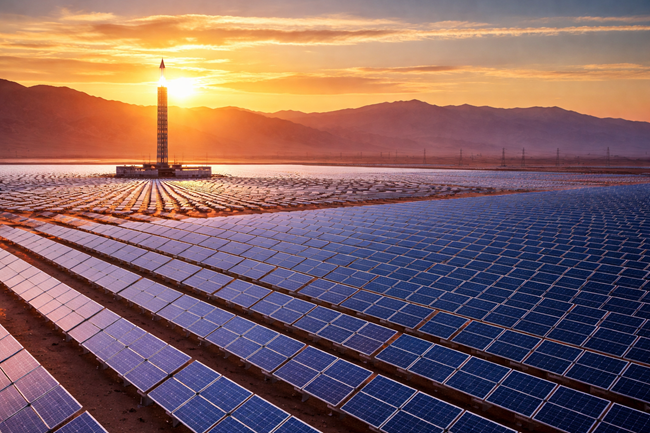
Phase four, completed in 2023, added a hybrid configuration of 950 megawatts comprising concentrated solar power (CSP) and photovoltaic technologies. This phase includes the world’s tallest solar tower and an expansive molten salt thermal energy storage system, enabling power generation beyond sunlight hours. The fifth phase, commissioned in 2023, brought an additional 900 megawatts of photovoltaic capacity, serving approximately 270,000 homes with clean power.
As of early 2026, the sixth phase of the Mohammed bin Rashid Al Maktoum Solar Park is nearing completion, with approximately 1,000 megawatts of its planned 1,800 megawatts already operational by the end of 2025. The remaining 800 megawatts are under construction and expected to be fully commissioned by late 2026. The addition of Phase 6 brought the park’s total installed capacity to approximately 3,860 megawatts as of year-end 2025. The seventh phase has already been announced and is expected to include 2,000 megawatts of solar power coupled with a 1,400 megawatt battery energy storage system, marking a shift toward solar-plus-storage integration.
Production has therefore evolved from modest, standalone photovoltaic modules to a hybrid CSP and PV architecture with dispatchable capacity and grid resiliency features. The scale and mix of technologies deployed position the park as one of the most advanced solar complexes in the world.
Who operates Mohammed bin Rashid Al Maktoum Solar Park and how is it structured?
The Dubai Electricity and Water Authority is the lead operator and developer of the MBR Solar Park, overseeing project execution through its independent power producer framework. This model allows DEWA to contract major global energy companies as partners while retaining ownership and operational oversight. Under this framework, DEWA signs long-term power purchase agreements with project developers, ensuring revenue visibility and cost control.
Key partners have included ACWA Power, Masdar, Shanghai Electric, and other regional and international energy developers. For example, ACWA Power played a central role in Phase Two and Phase Four. Masdar, the Abu Dhabi Future Energy Company, led the Phase Three consortium and helped bring advanced photovoltaic systems online. Shanghai Electric contributed to the construction of the CSP tower and parabolic trough systems in Phase Four. These partnerships reflect Dubai’s strategy of leveraging international expertise while retaining national ownership over core energy infrastructure.
Ownership structures vary by phase. Typically, DEWA maintains a majority stake in the project company, with minority shares held by private sector partners. This balance allows for risk-sharing and access to global capital markets while maintaining strategic control.
How is the Mohammed bin Rashid Al Maktoum Solar Park connected and monetized?
The park is situated in Saih Al-Dahal and covers tens of square kilometers of flat desert terrain, ideal for solar harvesting. The infrastructure includes both fixed and tracked photovoltaic panels, parabolic trough CSP collectors, and a 262-meter-high solar power tower with molten salt storage.
Electricity generated at the park is transmitted into Dubai’s high-voltage grid through dedicated substations and transmission lines. This allows DEWA to dispatch clean electricity to residential, commercial, and industrial users across the emirate. Advanced grid integration technologies, including smart metering and supervisory control systems, support efficient load balancing and demand-side management.
Planned battery storage deployments in Phase Seven are expected to improve output flexibility further, enabling the park to contribute to peak demand coverage and overnight supply. These storage systems will likely enable multi-hour discharge capabilities and improve the park’s role as a baseload contributor.
What is the project’s development history and timeline of key milestones?
The solar park was launched in 2012 as part of a broader national strategy to diversify energy sources and reduce dependency on natural gas imports. The first photovoltaic plant came online in 2013. A series of competitive tenders issued by DEWA between 2014 and 2023 facilitated the rapid rollout of Phases Two through Five, each one larger and more technologically advanced than the last.
Major milestones include the commissioning of the CSP tower in 2023, which became a symbol of the UAE’s clean energy ambitions. The fifth phase reached commercial operation ahead of schedule in 2023, reinforcing DEWA’s reputation for timely project delivery. In 2025, DEWA began construction of the sixth phase, targeting completion in 2026.
Each phase followed a clear investment cycle: announcement, request for proposal, contract award, financing closure, and construction. Notably, many phases achieved record-low solar tariffs at the time of their tender, attracting global attention and redefining solar energy economics.
Which companies won contracts for Mohammed bin Rashid Al Maktoum Solar Park?
Across its phases, the solar park has attracted a deep roster of engineering, procurement, and construction firms. ACWA Power secured contracts for multiple phases, particularly Phase Two and Phase Four. TSK Group, a Spanish EPC firm, collaborated on construction and project management for the earlier stages. Masdar led the Phase Three consortium alongside EDF Renewables.
Shanghai Electric served as the primary EPC contractor for Phase Four, including the central tower CSP plant and associated thermal storage systems. Other suppliers include First Solar and Trina Solar for PV modules, as well as companies specializing in solar trackers, inverter systems, and grid interconnection equipment.
The seventh phase, still under bidding in 2025, is expected to attract new entrants, particularly those with experience in battery energy storage integration. This phase will test market appetite for advanced solar-plus-storage configurations and could set new benchmarks in project economics and technical design.
What regulatory and environmental frameworks shape the project?
The MBR Solar Park operates under Dubai’s energy regulatory framework, which supports independent power projects through long-term contracts and streamlined permitting. The Dubai Clean Energy Strategy 2050 provides the policy foundation, setting milestones for renewable energy integration and greenhouse gas reduction.
Environmental regulations in the UAE require comprehensive impact assessments, particularly for land use, water consumption, and ecosystem protection. The solar park’s desert location reduces ecological disruption, and its low water-use design aligns with sustainability goals. Air quality, noise, and land disturbance are closely monitored during construction and operation.
International financing partners have imposed additional standards related to transparency, social impact, and emissions metrics, making the park a compliance-driven reference case in clean infrastructure development.
How does the solar park impact national energy strategy and global markets?
At the national level, the project strengthens Dubai’s energy independence by displacing natural gas imports and reducing exposure to global fuel price volatility. It supports the UAE’s goal of becoming a global leader in clean energy exports, with potential tie-ins to green hydrogen production and regional power trading.
Internationally, the park has helped shift investor and policymaker perceptions about the scalability and economic viability of solar energy in high-temperature, high-radiation environments. Its success has inspired similar projects in Saudi Arabia, Egypt, and Morocco, and influenced how clean energy tenders are structured globally.
From a geopolitical standpoint, the project enhances the UAE’s position as a post-oil economy and clean tech hub, while aligning with energy security concerns in an increasingly volatile world.
What are the latest updates and developments in 2025?
As of December 2025, the solar park reached a cumulative installed capacity of 3,860 megawatts. The sixth phase advanced into the final stages of construction, while the seventh phase, featuring 2,000 megawatts of solar photovoltaic capacity and a 1,400 megawatt battery storage system, was in the early procurement stage.
DEWA reported improved efficiency ratios, reduced curtailment, and higher annual utilization factors due to improved weather forecasting, automated cleaning technologies, and grid flexibility measures.
The project also received renewed interest from institutional investors and sovereign funds in 2025, reflecting growing demand for stable, climate-aligned infrastructure assets.
What is the long-term outlook for Mohammed bin Rashid Al Maktoum Solar Park?
The solar park’s future remains deeply tied to the UAE’s clean energy strategy. With nearly 4,000 megawatts already operational and another 4,000 megawatts in planning or construction, the project is expected to cross 8,000 megawatts by 2030. Advanced storage technologies, green hydrogen integration, and demand-side participation programs could all play a role in its next growth phase.
The park is likely to serve as a blueprint for other large-scale solar installations worldwide, particularly in desert regions with strong sun exposure and land availability. Its success has also proven the feasibility of pairing CSP and PV at scale, a model that few other projects globally have executed with similar depth or reliability.
What are the key takeaways from the Mohammed bin Rashid Al Maktoum Solar Park for energy planners, contractors, and investors?
- The Mohammed bin Rashid Al Maktoum Solar Park is the world’s largest single-site solar energy project, with over 3,860 megawatts operational as of 2025 and a goal to exceed 8,000 megawatts by 2030.
- Operated by the Dubai Electricity and Water Authority, the project is developed through independent power producer frameworks involving ACWA Power, Masdar, Shanghai Electric, and others.
- The park combines photovoltaic and concentrated solar power technologies, including thermal storage, allowing for both daytime and overnight clean energy dispatch.
- Battery storage is a core feature of the next phase, marking a shift toward 24/7 renewable power delivery.
- Environmental, regulatory, and investment standards are tightly managed, with the project operating under the UAE’s Net Zero 2050 goals and Dubai’s Clean Energy Strategy.
- Globally, the park sets pricing and technical benchmarks for large-scale solar tenders and continues to influence energy transition strategies across the Middle East and North Africa.
- With new tenders, expanded storage, and infrastructure growth, the project remains a high-visibility opportunity for contractors, financiers, and policymakers looking to scale clean power deployment.
Discover more from Business-News-Today.com
Subscribe to get the latest posts sent to your email.