


Chevron Corporation reported fourth-quarter 2025 earnings of 2.8 billion dollars, with adjusted earnings of 3.0 billion dollars. Full-year net income fell sharply to 12.3 billion dollars from 17.7 billion dollars in 2024, as lower commodity prices, integration costs from the Hess Corporation acquisition, and structural resets in capital allocation compressed margins despite record oil-equivalent production volumes.
Although Chevron raised its quarterly dividend by 4 percent to 1.78 dollars per share and returned over 27 billion dollars to shareholders in 2025, it did so against a backdrop of deteriorating return on capital employed, which slipped to 6.6 percent from 10.1 percent a year earlier. The disconnect between record operational delivery and lower financial return signals a broader structural adjustment that Chevron must manage heading into 2026.
Why did Chevron’s record oil production not translate into stronger earnings growth in Q4 and FY25?
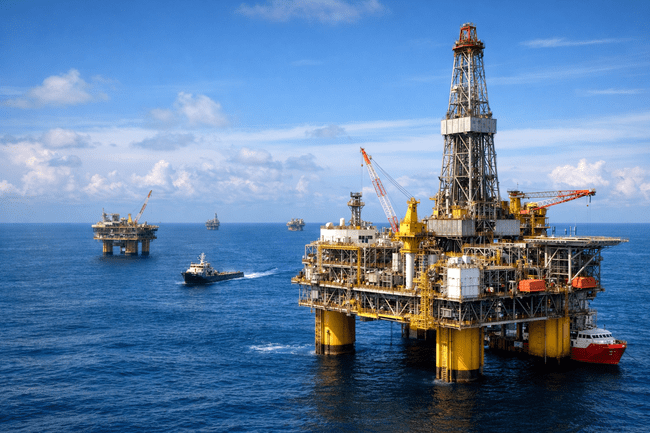
Chevron delivered 4,045 thousand barrels of oil-equivalent per day in the fourth quarter, a 21 percent increase over the prior-year period. That included 2,055 MBOED from its U.S. operations, marking a 25 percent year-on-year jump. Gains were driven by new production from the Gulf of Mexico, growth in the Permian Basin, and the full-year contribution of Hess Corporation assets, particularly in Guyana and the Bakken.
However, average Brent prices dropped to 69 dollars per barrel in 2025 from 81 dollars in 2024, compressing the earnings impact of higher volumes. In the United States, Chevron realized 42.99 dollars per barrel for liquids in Q4, down from 53.12 dollars the year prior. Internationally, that figure dropped to 57.53 dollars per barrel from 67.33 dollars. Natural gas realizations followed a similar trend, weakening across major markets. These price drops, coupled with higher operating expenses and foreign exchange losses, muted the upside from Chevron’s production records.
Total adjusted earnings per share for the quarter fell to 1.52 dollars, down from 2.06 dollars in Q4 2024. The weaker top-line performance occurred even as cash flow from operations rose to 33.9 billion dollars for the year, with adjusted free cash flow dropping slightly to 20.2 billion dollars from 21.3 billion dollars.
What has Chevron achieved through the Hess Corporation acquisition so far?
Chevron completed its acquisition of Hess in early 2025, delivering a material uplift in daily production and significantly boosting its long-life reserves. Hess added 261 thousand barrels per day to full-year output and expanded Chevron’s proved reserves to roughly 10.6 billion barrels of oil equivalent. Strategic assets in Guyana, including the Stabroek Block, have already contributed to earnings, with the Yellowtail project entering production and final investment approval granted for the Hammerhead development.
Chevron also reported that it had fully realized its initial 1 billion dollar synergy target from the transaction within the first year. However, integration was not without friction. Transaction-related costs, severance payments, and the impact of purchase accounting adjustments weighed on results throughout the year. The deal increased Chevron’s capital base at a time of falling prices, reducing return on capital employed and highlighting the risk of near-term dilution in pursuit of long-term growth.
Still, by consolidating Hess’ low break-even barrels and maintaining pace on Guyana’s high-margin projects, Chevron strengthened its long-term asset base in one of the world’s most productive offshore regions. The acquisition also deepened its shale footprint in the Bakken and reinforced its competitive standing in North American unconventionals.
How did downstream performance help offset upstream earnings compression?
Chevron’s downstream business, particularly in the United States, staged a notable recovery in 2025. U.S. downstream earnings reached 1.4 billion dollars for the full year, reversing a weak 2024. Fourth-quarter U.S. downstream income came in at 230 million dollars, a sharp turnaround from a 348 million dollar loss in the same quarter a year ago. This rebound was driven by improved margins on refined products, lower impairment charges, and reduced operating expenses following the completion of cost-cutting initiatives.
Refining throughput also reached new heights. The company achieved its highest U.S. refinery crude input levels in 20 years despite operating a leaner asset base. This was supported by operational efficiency at the Pasadena refinery and a sustained ramp-up in the Light Tight Oil processing stream. Increased demand for jet fuel and diesel helped lift refined product sales by 3 percent year-on-year.
Internationally, Chevron added 1.6 billion dollars in downstream earnings in 2025. Altogether, downstream earnings rose to 3.0 billion dollars for the year, up from 1.7 billion dollars in 2024. This segment thus served as a reliable shock absorber as upstream earnings came under price pressure.
What capital allocation choices reveal Chevron’s financial posture heading into 2026?
Chevron returned 27.1 billion dollars to shareholders in 2025, including 12.8 billion dollars in dividends and 12.1 billion dollars in share buybacks. Additionally, the company executed 2.2 billion dollars of Hess stock repurchases to complete the deal. This aggressive payout strategy was sustained despite weaker profitability and a rising debt burden.
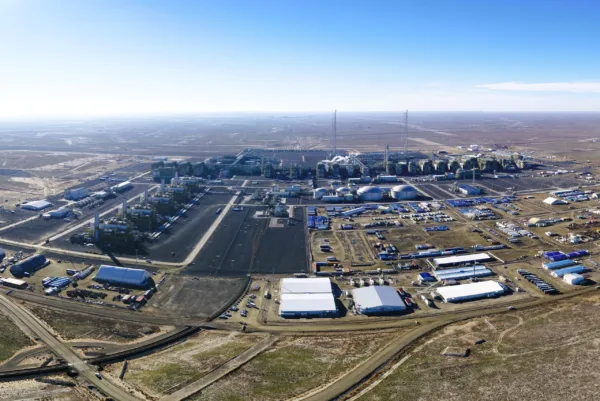
Total capital expenditures rose to 17.3 billion dollars in 2025, up from 16.4 billion dollars the year prior, reflecting increased spending on legacy Hess assets, growth in the Permian, and select infrastructure and LNG projects. The company also expanded its affiliate capex in upstream joint ventures, such as TCO in Kazakhstan.
Chevron’s total debt climbed to 40.8 billion dollars by year-end, up from 24.5 billion dollars a year earlier. The debt-to-cash flow from operations ratio rose to 1.2x, while the net debt-to-CFFO metric reached 1.0x, signaling a shift toward more leveraged funding of shareholder returns and portfolio expansion.
While liquidity remains strong and Chevron’s dividend history now extends to 39 consecutive years of increases, the company is clearly betting that cash flow will stabilize in 2026. A prolonged downcycle or extended cost pressures could test this high-return model.
How is Chevron positioning for growth in lithium, LNG, and power infrastructure?
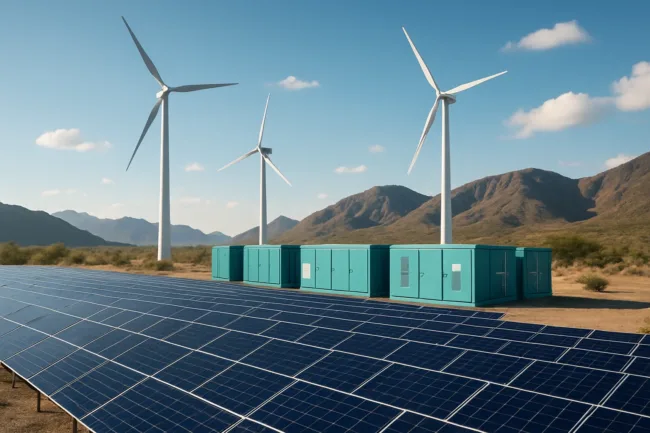
Chevron made several forward-looking investments in 2025 that signal a diversified but disciplined growth pivot. In the lithium sector, the company acquired approximately 135,000 net acres in the Smackover Formation spanning Northeast Texas and Southwest Arkansas. This is Chevron’s first major move into direct lithium extraction and reflects a desire to enter the battery materials supply chain in a scalable and resource-rich region.
In the power space, Chevron unveiled a plan to develop generation infrastructure tailored to hyperscale data centers. The first project is now underway in West Texas, aimed at delivering reliable gas-fired power to energy-intensive facilities. With rising demand from AI, cloud computing, and industrial automation, this could become a lucrative adjacency for Chevron’s gas portfolio.
On the LNG front, Chevron reached a final investment decision on the Leviathan expansion project in Israel, which will increase capacity to 2.1 billion cubic feet per day. In Australia, it greenlit a backfill development that will connect the Geryon and Eurytion fields to the Gorgon LNG infrastructure, securing long-term supply for both domestic and export markets.
These investments reflect a deliberate strategy to grow future-facing assets while remaining within the company’s historical operating envelope.
What risks and execution challenges could shape Chevron’s 2026 outlook?
Chevron enters 2026 facing several challenges. The primary risk is that oil and gas prices remain lower for longer, straining cash flow and reducing capital flexibility. The recent drop in return on capital employed suggests Chevron may need to rebalance capex, buybacks, and debt service if commodity markets do not rebound.
The company’s balance sheet, while manageable, is now more exposed to rate and liquidity pressures due to increased debt. Any disruption in Guyana or political volatility in Venezuela and Nigeria, where Chevron continues to explore and operate, could also impact production stability.
Operational execution will be critical. With multiple ramp-ups ongoing and integration of Hess still settling, Chevron must sustain production reliability while achieving its cost-reduction goals. The company achieved 1.5 billion dollars in structural cost cuts in 2025 and is targeting up to 4 billion dollars by the end of 2026.
Investor scrutiny will remain high, particularly around whether Chevron can maintain its high shareholder payouts without compromising long-term reinvestment discipline.
How are institutional investors likely to interpret Chevron’s 2025 performance and 2026 setup?
Chevron’s stock has underperformed relative to peers such as ExxonMobil and ConocoPhillips over the past quarter, reflecting investor concerns around execution risk and ROCE dilution from the Hess acquisition. Institutional sentiment appears split between appreciation for Chevron’s long-cycle asset quality and caution over near-term earnings leverage.
Analysts will be watching closely for signs of margin expansion, particularly in upstream operations. If Brent prices recover even modestly, Chevron could re-rate quickly due to its strong production base and fixed-cost leverage. But if prices remain subdued, its generous shareholder return model and balance sheet capacity may come under pressure.
Heading into 2026, Chevron has arguably built one of the most balanced portfolios in the sector, combining deepwater, shale, LNG, and transition-aligned bets in power and lithium. The challenge will be to convert that balance into sustainable value without overextending capital discipline.
Key takeaways on what Chevron’s 2025 earnings tell us about its portfolio, capital strategy, and sector position
- Chevron reported Q4 2025 earnings of $2.8 billion, with adjusted earnings of $3.0 billion, down from $3.6 billion year-over-year.
- Full-year 2025 net income dropped to $12.3 billion from $17.7 billion in 2024, as lower oil prices and foreign currency effects cut into margins.
- Record production of 4,045 MBOED in Q4 was driven by Permian growth, Gulf of Mexico ramp-ups, and the Hess acquisition.
- Return on capital employed (ROCE) declined to 6.6% from 10.1%, reflecting dilution from Hess integration and lower realizations.
- Downstream earnings rebounded sharply, with the U.S. segment posting a $230 million profit versus a $348 million loss in Q4 2024.
- Chevron returned $27.1 billion to shareholders through dividends, buybacks, and Hess-related stock purchases, maintaining strong payout discipline.
- Total debt rose to $40.8 billion, pushing the debt-to-CFFO ratio to 1.2x, raising questions about capital flexibility heading into 2026.
- New energies bets in lithium and data center power signal a pivot to long-cycle infrastructure plays outside core upstream.
- Final investment decisions on Hammerhead, Leviathan expansion, and Australia backfill gas reinforce global gas exposure.
- Investor sentiment remains cautious, with attention focused on cash flow resilience and post-Hess integration execution in 2026.
Discover more from Business-News-Today.com
Subscribe to get the latest posts sent to your email.