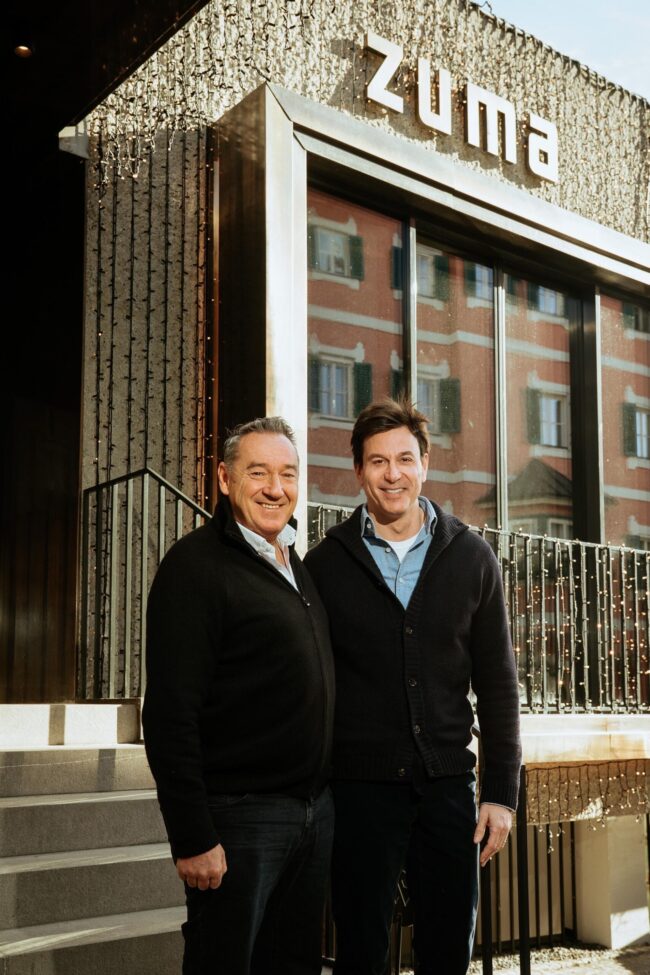
Mercedes-AMG PETRONAS F1 Team and Azumi Ltd., the parent company behind the upscale Zuma restaurant brand, have announced a multi-year global collaboration that will integrate high-end dining and lifestyle experiences across the Formula One calendar. The move positions Zuma as the exclusive Lifestyle & Dining Curator for the team, marking a new convergence of elite sport and luxury hospitality.
This partnership represents the first time a globally recognized hospitality brand has embedded itself directly into the operating ecosystem of a Formula One team. The collaboration spans Grand Prix events, club experiences in marquee locations like Miami and Las Vegas, and co-hosted events across the cultural calendar, reflecting a broader shift in how F1 teams are evolving their off-track brand activations.

How does Zuma’s collaboration with Mercedes-AMG PETRONAS F1 Team reshape the future of lifestyle branding in motorsport?
Zuma’s new role within the Mercedes-AMG PETRONAS F1 Team goes far beyond logo placement or hospitality catering. The Japanese-inspired restaurant group will curate dining and lifestyle experiences at select Grand Prix locations, including Monaco, Silverstone, Madrid, and Abu Dhabi. The agreement extends to premium fan engagement zones like the Mercedes-AMG PETRONAS F1 Team Miami Club and Las Vegas Club, signaling a deeper integration into the team’s guest experience and brand-building architecture.
What makes this collaboration structurally significant is the redefinition of the hospitality layer in sports marketing. Rather than serving as an ancillary sponsor, Zuma is being woven into the cultural identity of one of the most commercially powerful F1 teams. This elevates the concept of luxury brand partnerships from adjacent perks to core experiential differentiators in how teams host partners, celebrities, and VIP fans.
The deal coincides with Zuma’s 25th anniversary celebrations, giving Azumi Ltd. an ideal platform to reposition the restaurant group not just as a high-end dining brand but as a curator of global cultural moments. This aligns with the strategic vision of Mercedes-AMG PETRONAS F1 Team, which has expanded its footprint in elite lifestyle circles through fashion, music, and now gastronomy.
Why is this alliance between a restaurant brand and an F1 team strategically relevant now?
The luxury sport-marketing landscape has shifted post-Drive to Survive. Formula One is no longer just a motorsport—it is an entertainment and lifestyle platform, with races in Miami, Vegas, and Abu Dhabi doubling as cultural festivals. Hospitality is no longer confined to paddocks and pit lanes. It is a fully-fledged brand theater, and Mercedes-AMG PETRONAS F1 Team appears intent on staying ahead of the curve.
By partnering with Zuma, Mercedes-AMG PETRONAS F1 Team is responding to three strategic imperatives: upgrading its off-track experience to match on-track excellence, enhancing brand alignment with younger, experience-driven luxury consumers, and unlocking new hospitality revenue streams. Formula One itself has grown its global fan base by nearly 40 percent since 2020, according to Nielsen Sports, and this fan evolution is driving demand for lifestyle extensions that blur the line between sport and social experience.
For Zuma, the deal provides high-visibility brand activations in some of the most televised and social media-driven moments of the F1 calendar. The opportunity to reach high-net-worth audiences at live events, private clubs, and curated gatherings under the Mercedes umbrella gives Zuma strategic leverage to scale its positioning in the luxury ecosystem.
What are the implications for other F1 teams, lifestyle brands, and global hospitality groups?
This collaboration could spark a new category of partnerships in Formula One, where non-traditional sectors such as luxury hospitality, fashion, wellness, and tech increasingly seek embedded roles within teams’ consumer-facing operations. Teams like Ferrari, Red Bull Racing, and McLaren have long entertained luxury sponsors, but few have architected partnerships with the degree of integration and experiential focus suggested by the Mercedes-Zuma deal.
From a competitive standpoint, this raises the bar for other teams’ partner activation strategies. Mercedes-AMG PETRONAS F1 Team is signaling that future sponsor relationships will be judged not only by financial contribution but also by experiential and cultural value-add.
For Azumi Ltd., this marks a strategic diversification. Instead of relying solely on brick-and-mortar expansion, the company is now leveraging the F1 partnership to enter new consumer moments and geographies through pop-ups, seasonal venues, and content-driven collaborations. As Sven Koch, Chief Executive Officer of Azumi Ltd., suggested in his remarks, the collaboration allows Zuma to shape how people “connect, celebrate, and experience excellence” far beyond the restaurant setting.
How does this partnership align with broader luxury consumer trends?
Luxury consumption has shifted from product acquisition to experience curation. Today’s affluent consumers, especially in younger demographics, value access over ownership, personalization over standardization, and emotional resonance over transactional luxury. The Zuma–Mercedes-AMG PETRONAS F1 Team collaboration is structurally aligned with these shifts.
The emphasis on “performance lifestyle” and curated experiences at high-stakes sporting events positions both brands to tap into cross-category loyalty. A guest engaging with Zuma at the Abu Dhabi Grand Prix may be equally receptive to branded merchandise, private chef events, or travel partnerships launched under the same collaboration framework.
Moreover, the partnership is geographically fluid. With planned activations across Europe, the Middle East, and the United States, the deal supports both companies’ global brand ambitions while adapting to regional luxury nuances—from the glitz of the Vegas Strip to the exclusivity of Monte Carlo.
Could this create a new monetization model for F1 teams beyond traditional sponsorship?
There is a latent monetization layer in lifestyle partnerships that remains underexplored in motorsports. While F1 teams generate substantial revenue from sponsors, prize money, and constructors’ standings, hospitality-led initiatives open new avenues for direct-to-consumer engagement, brand licensing, co-hosted events, and premium membership models.
Zuma’s activation within Mercedes-AMG PETRONAS F1 Team properties hints at a hospitality-commerce flywheel: restaurant-curated lounges, curated event experiences, and branded retail tie-ins can all contribute to incremental revenue while enhancing brand equity. This is especially relevant as teams look to future-proof their commercial models in an era where fan expectations are rapidly evolving.
How execution complexity, brand consistency risks, and global delivery challenges could test this partnership
While the alignment of brand values between Mercedes-AMG PETRONAS F1 Team and Zuma appears strong—precision, globalism, exclusivity—the operational complexity of delivering consistent luxury experiences across different F1 venues cannot be understated.
Maintaining Zuma’s high standards of service, presentation, and ambiance in temporary or co-hosted environments may prove challenging, particularly at circuits with limited infrastructure or in regions with differing regulatory constraints. Moreover, the success of the partnership will likely depend on more than visibility—it will hinge on how effectively both parties can translate cultural positioning into revenue, loyalty, and long-term brand equity.
Mercedes-AMG PETRONAS F1 Team has historically emphasized excellence in both engineering and presentation. This collaboration may test how far that standard can extend into lifestyle domains without diluting brand focus.
What milestones, expansion signals, and performance indicators will define the next phase of this partnership
While financial terms have not been disclosed, the activation roadmap suggests that Zuma’s integration into the Mercedes-AMG PETRONAS F1 Team will scale up through the 2026 and 2027 seasons. Upcoming races in Madrid and Abu Dhabi will be key testbeds for experiential success, as will the exclusive Miami and Las Vegas club integrations.
If this collaboration proves successful, it could redefine the strategic role of hospitality in sport, inviting other restaurant groups, fashion houses, and cultural brands to follow suit. Equally, institutional sponsors and legacy partners may begin to evaluate how embedded experiential value contributes to their ROI metrics.
The real signal to watch: whether F1 teams begin allocating internal headcount, budget, and strategic planning cycles not just to racing operations and sponsorships—but to curated experience development as a standalone business vertical.
What are the strategic, commercial, and brand implications of the Mercedes-AMG PETRONAS F1 Team–Zuma partnership?
- Mercedes-AMG PETRONAS F1 Team has signed Zuma as its official Lifestyle & Dining Curator in a first-of-its-kind global partnership
- The deal embeds Zuma across multiple Grand Prix events, Mercedes F1 clubs, and curated cultural activations
- Azumi Ltd. is leveraging the deal to reposition Zuma as a cultural curator during its 25th anniversary campaign
- The collaboration redefines hospitality in motorsport, shifting from auxiliary service to core brand experience
- The deal offers Mercedes new monetization levers through high-end experiential engagement and potential brand extensions
- F1’s transformation into a global lifestyle platform makes this partnership structurally relevant now
- Competitor teams may face pressure to match the depth and integration of such lifestyle partnerships
- Operational delivery at global scale will be a critical challenge for Zuma across varied F1 venues
- The success of this alliance may set a precedent for future embedded brand roles in sports beyond motorsport
- This could lead to the emergence of “experiential brand verticals” within elite sports organizations as standalone revenue streams
Discover more from Business-News-Today.com
Subscribe to get the latest posts sent to your email.