




Textron Inc. has unveiled the 2027 model year of its E-Z-GO Liberty vehicle, a major redesign aimed at blending automotive-grade comfort with electric utility in the golf car and personal transport segment. The new Liberty incorporates infotainment features, lithium-powered propulsion, and federal low-speed vehicle compliance, signaling Textron’s push to reposition E-Z-GO at the intersection of neighborhood mobility and smart recreation.
Why is Textron introducing a premium LSV-compliant E-Z-GO Liberty with lithium power in 2026?
The 2027 Liberty marks a generational overhaul for Textron Inc.’s Augusta-based E-Z-GO division, moving the product from its niche roots as a golf car to a versatile low-speed vehicle platform capable of serving both lifestyle and utility use cases. Textron’s decision to equip the Liberty with Samsung SDI lithium battery technology and federal motor vehicle safety standard (FMVSS) compliance expands its addressable market across gated communities, resort towns, and municipalities permitting low-speed vehicles (LSVs) on public roads.
In terms of functionality, the Liberty blends high-end automotive features—such as an optional 10-inch ECOXGEAR touchscreen infotainment system, integrated IntelliScreen diagnostics, and street-legal LED lighting systems—with performance enhancements drawn from the ELiTE lithium platform. With selectable drive modes and smartphone charging pads now available, the 2027 Liberty presents more like a digital cockpit than a legacy golf cart.
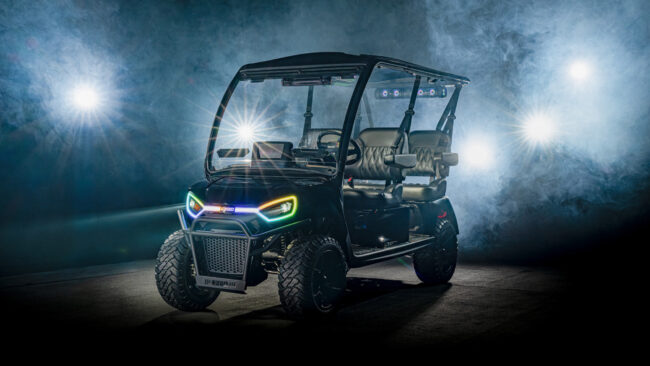
Textron is betting that buyers in both the recreational and light-duty transport segments are willing to pay for premium comfort, configurability, and street-readiness. The inclusion of features like an electronic push-to-start, dedicated cupholders for all passengers, high-definition backup camera integration, and a full suite of customizable lighting options suggests Textron is anticipating crossover adoption from the electric side-by-side and compact urban mobility spaces.
How does the 2027 Liberty reflect Textron’s strategy to defend and expand E-Z-GO’s mobility footprint?
E-Z-GO, which has been under Textron ownership since 1960, has faced growing pressure from newer entrants and power-sports brands crowding into the premium electric golf car segment. By leading with a four-seat, lithium-powered, feature-rich platform like the Liberty, Textron is signaling a shift toward platform differentiation via comfort and compliance rather than price.
This shift aligns with Textron’s broader strategy of vertical integration within specialized vehicles, visible in its industrial and defense product lines. With Liberty’s re-engineered steel frame and body panels designed for longevity and regulatory conformity, Textron appears to be aiming for defensible differentiation based on safety, longevity, and modularity. The welded frame design and IntelliBrake feature, which provides automatic hill holding and electronic service brake engagement, could make the Liberty particularly attractive for buyers in sloped or high-traffic communities.
By making the Liberty LSV-ready—capped at a federally compliant 25 miles per hour and approved for roads with a 35 mph limit—Textron is asserting E-Z-GO’s relevance in a fast-evolving mobility space where regulatory frameworks increasingly shape commercial viability.
What are the commercial implications of the Liberty’s battery platform and street-legal certification?
One of the Liberty’s most strategic upgrades is the use of Samsung SDI lithium battery systems, part of the exclusive ELiTE platform. These batteries are maintenance-free and backed by an eight-year warranty, which directly challenges the perception of golf cars and light EVs as high-maintenance or short-lifecycle products. For fleet operators and municipalities, reduced downtime and simplified charging logistics could lower total cost of ownership, improving procurement prospects.
The decision to certify the Liberty as a street-legal LSV under FMVSS 500 and SAE J2358 standards not only enhances versatility but also opens doors to public-private partnerships where cities require zero-emissions short-range vehicles for patrol, maintenance, or last-mile shuttle applications. For Textron, this expands E-Z-GO’s channel mix beyond traditional golf and recreation dealerships to government, campus, and fleet buyers.
Crucially, this also positions the Liberty within the growing micro-mobility and low-carbon vehicle movement—a space being cultivated by regional infrastructure grants and climate-forward policy tools. With its safety features, configurable storage (trunk, frunk, underseat), and street-legal LED visibility, the Liberty could act as a testbed for Textron’s deeper mobility ambitions.
What execution risks or market headwinds could affect Liberty’s commercial performance?
Despite the Liberty’s expanded feature set and compliance credentials, Textron will need to manage two execution variables: pricing elasticity and dealer education. The premium trims—equipped with 3-point seat belts, color-customizable LED headlight accents, and infotainment systems—are likely to carry a significant price bump, potentially placing the Liberty above many competitors in the standard golf or side-by-side segment.
Dealer readiness will also be key. While E-Z-GO’s traditional dealership network is well-versed in fleet sales and recreational users, upselling high-tech electric platforms with LSV compliance may require new go-to-market strategies, including municipal sales reps, fleet financing options, and technical support for firmware updates and diagnostics.
Additionally, integration of features like wireless Apple CarPlay, Android Auto, and IntelliScreen vehicle tuning brings software lifecycle management into focus. Textron will need to build robust update and support channels to avoid customer frustration as systems age or mobile platforms evolve.
From a competitive standpoint, other brands like Club Car and Polaris GEM may follow suit with LSV-capable lithium platforms, putting pressure on E-Z-GO to sustain its technology and regulatory lead.
What does this launch signal about Textron’s long-term position in mobility electrification?
While Textron Inc. remains more widely known for Bell helicopters and Cessna aircraft, the relaunch of the Liberty under its specialized vehicles business signals a commitment to differentiated electrification. Unlike electric SUVs or scooters, the LSV and PTV (personal transport vehicle) category remains lightly regulated but increasingly monetized, especially in climate-conscious urban enclaves and mobility-restricted communities.
Textron’s approach—offering a feature-rich, road-ready vehicle with modular storage, electronic governance of speed profiles, and an industrial-grade chassis—suggests the company sees value in small-format electrification outside traditional automotive frameworks. Should adoption materialize across non-golf segments, the Liberty could provide Textron with a beachhead into broader neighborhood mobility and even cargo transport variants in the future.
The 2027 Liberty will be available through E-Z-GO dealers beginning summer 2026.
What are the key takeaways from Textron’s E-Z-GO Liberty 2027 launch for investors and competitors?
- Textron Inc. has launched the 2027 E-Z-GO Liberty with a full redesign, adding LSV road legality and next-gen lithium battery power.
- The Liberty integrates a 10-inch touchscreen, Apple CarPlay, and IntelliScreen vehicle diagnostics in premium trims.
- Samsung SDI lithium battery technology offers improved range, no maintenance, and fast charging with an 8-year warranty.
- Certified to FMVSS 500 and SAE J2358 standards, the Liberty is street-legal at up to 25 mph on roads with ≤35 mph limits.
- New steel frame, IntelliBrake safety features, and expanded storage aim to serve both lifestyle and municipal users.
- Premium trims include three-point seatbelts, LED headlight personalization, push-to-start, and high-end audio integration.
- Execution risk includes price sensitivity and dealer readiness for LSV upsell and software support.
- The Liberty positions E-Z-GO against competitors like Club Car and Polaris GEM in the premium electric PTV and LSV market.
- Textron is signaling longer-term commitment to compact, street-legal electrification beyond its aviation and defense portfolio.
- The Liberty could emerge as a test case for regulatory-led expansion in micro-mobility infrastructure adoption.
Discover more from Business-News-Today.com
Subscribe to get the latest posts sent to your email.