

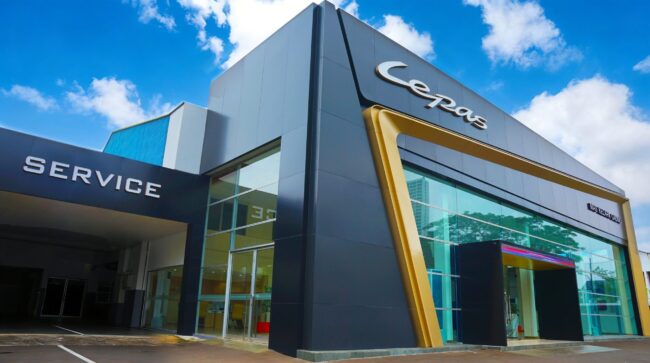
LEPAS, the new energy vehicle (NEV) brand developed by Chery Group, has opened its first-ever physical showroom in Jakarta, Indonesia, marking a strategic step in the brand’s global expansion less than a year after its formal launch. This move signals not just a sales milestone, but the operational maturity of a full-stack NEV brand proposition aimed at international markets.
How does LEPAS’s Jakarta showroom signal deeper market intent beyond brand visibility?
The decision to launch the first-ever LEPAS showroom in Indonesia, rather than in its home market of China or in an established EV ecosystem like Europe, underlines the strategic calculus driving Chery Group’s NEV rollout. LEPAS has chosen Jakarta not as a footnote but as a frontline market, reflecting both regulatory opportunity and demographic demand in Southeast Asia.
Indonesia’s NEV ecosystem is evolving quickly, propelled by government mandates, battery ecosystem investments, and the emergence of local manufacturing partnerships. LEPAS’s decision to invest in physical infrastructure at this early stage demonstrates a willingness to localize brand operations rather than rely solely on exports or joint ventures. By building a flagship experience center in MAS Kelapa Gading, LEPAS has effectively embedded its customer experience, dealer operations, and brand narrative in the region’s most populous market.

Beyond symbolism, the showroom integrates AI-powered features such as the AiMOGA robot for guided tours, reinforcing LEPAS’s effort to position itself as an NEV brand that leads with digital-native experiences. While this may appear cosmetic at first glance, it also aligns with broader trends in EV retail where immersive brand centers are becoming central to differentiation in a software-defined vehicle era.
Why does LEPAS’s retail strategy reflect a shift in how Chinese NEV brands expand overseas?
Unlike past waves of Chinese automotive expansion that leaned heavily on export volumes or badge-engineered distribution in developing economies, LEPAS is deploying a brand-first, infrastructure-led model typically reserved for premium or tech-driven mobility entrants. This strategy puts LEPAS in closer alignment with how companies like NIO, XPeng, and BYD are now framing their overseas push—not merely selling cars, but exporting a lifestyle and ecosystem.
The showroom’s unveiling comes after a series of rapid brand-building milestones across 2025: a presence at GIIAS in Indonesia, a European debut in Italy, distribution deals in the United Arab Emirates and Kuwait, and dealer partnerships in South Africa. These are not legacy automotive regions for China, suggesting LEPAS is triangulating emerging market demand rather than crowding into the hyper-competitive U.S. or Western European EV segments prematurely.
Chery Group’s choice to carve out LEPAS as an independent NEV brand also supports this decentralized expansion logic. It allows for regional branding flexibility, digital-first retail architecture, and differentiated go-to-market models that are harder to implement under a legacy brand umbrella.
What are the operational and execution risks for LEPAS in scaling this model?
While showroom launches and brand ceremonies generate positive optics, LEPAS now faces the harder task of scaling a physical-digital hybrid retail network in price-sensitive and infrastructure-variable markets. Indonesia, despite its NEV ambitions, has wide disparities in charging infrastructure, regulatory alignment across provinces, and consumer familiarity with non-Japanese automotive brands.
Moreover, the LEPAS L8—a flagship vehicle positioned at the premium end of the segment—will likely face price compression from both Chinese peers and Japanese incumbents. The long-term success of LEPAS’s expansion will depend on whether its upstream innovation narrative (intelligent design, robotics, connected features) can translate into real-world service quality, uptime, and post-sales support in decentralized geographies.
The appointment of Zeng Shuo as President Director of LEPAS Indonesia further indicates an intent to localize operations with strong leadership continuity. His remarks at the launch emphasized brand sustainability via consistent service quality and network depth, hinting at longer-term investments in dealer capability and supply chain localization.
How does LEPAS compare to other Chinese NEV brands expanding globally?
While BYD continues to dominate on the strength of scale and vertical integration, LEPAS appears to be modeling its global expansion playbook more closely on NIO’s experiential focus and XPeng’s intelligent vehicle features. However, it is differentiating by entering emerging markets first with a premium-lite offering, rather than chasing market share in already mature EV markets.
This approach allows LEPAS to build strategic moats early, especially in Southeast Asia, where consumer preference is still fluid and national policies remain favorable to joint ventures, SKD/CKD manufacturing, and import subsidies for EV pioneers. It also allows Chery Group to potentially back-integrate battery and energy infrastructure support in partnership with local governments or conglomerates.
Looking ahead, LEPAS’s real test will be its ability to transition from ribbon-cutting milestones to recurring revenue, delivery execution, and network resilience in unpredictable regulatory environments. As NEV brands increasingly blur the line between automotive and consumer electronics, those who scale both infrastructure and intimacy with end-users will outperform.
What does the Jakarta launch mean for LEPAS’s NEV expansion strategy?
- LEPAS opened its first-ever showroom in Jakarta, underscoring a full-stack entry strategy into Southeast Asia’s NEV market.
- The company is emphasizing a physical-digital hybrid retail model, with AI-guided visitor experiences and lifestyle-focused branding.
- The move marks LEPAS’s operational transition from global brand-building to local market embedding and service execution.
- Strategic selection of Indonesia reflects both NEV policy momentum and consumer readiness in emerging Southeast Asian markets.
- The showroom launch follows a global brand rollout across Indonesia, Italy, the United Arab Emirates, Kuwait, and South Africa.
- LEPAS is differentiating from legacy Chinese exports by localizing brand architecture and building experiential centers rather than relying on third-party dealerships.
- Key execution risks include NEV infrastructure gaps, price competition from incumbent brands, and demand conversion for a premium product in price-sensitive regions.
- LEPAS’s approach aligns more with premium NEV brands like NIO than mass-market players, albeit in lower-competition geographies.
- Future growth will depend on expanding localized service networks, scaling charging support, and maintaining product delivery standards.
- The Jakarta showroom sets a precedent for LEPAS’s regional strategy, which could later be replicated in other fast-growing EV markets with similar infrastructure maturity.
Discover more from Business-News-Today.com
Subscribe to get the latest posts sent to your email.