


Microsoft Corporation on January 15, 2026, unveiled the “Microsoft Elevate for Educators” program alongside a broader suite of artificial intelligence-powered tools in Microsoft 365 tailored for the education sector. The new initiative targets schools, teachers, and education systems with community resources, credentials, and embedded Copilot features designed to integrate AI into both teaching and learning workflows.
Timed ahead of the Bett UK 2026 education technology conference, the announcements reflect Microsoft Corporation’s strategy to consolidate its role as a global education partner. The company is betting that demand for secure, education-specific generative AI applications will create new long-term platform lock-in, while positioning it as a champion of “responsible AI” in school settings increasingly concerned with data privacy, safety, and pedagogical integrity.
The launch introduces several distinct layers of support: professional development courses in over 13 languages, global educator community networks, AI-powered lesson planning and feedback assistants, and new AI credentials co-developed with the International Society for Technology in Education (ISTE) and ASCD. Taken together, the initiative signals Microsoft Corporation’s commitment to shaping not just how AI is used in classrooms, but who gets to define the standards for responsible adoption.
How is Microsoft positioning itself as the platform of choice for AI integration in global education?
The strategic play here is not about selling more Microsoft 365 Education licenses—it is about embedding Microsoft Corporation’s AI ecosystem deep within the operational, pedagogical, and career development layers of education systems worldwide. With “Elevate for Educators,” Microsoft is effectively building a multi-tiered moat.
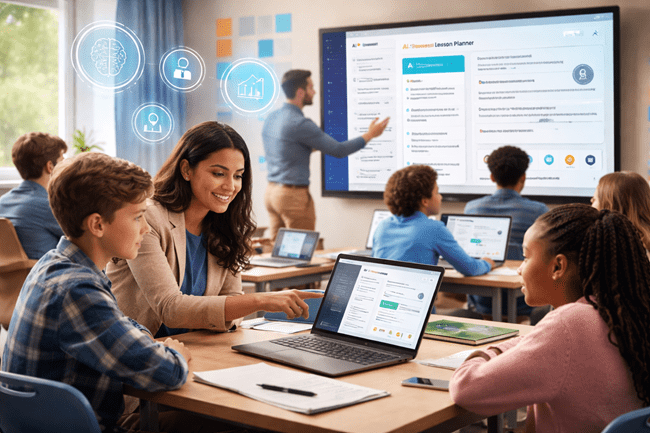
At the platform level, Microsoft is expanding its secure Copilot capabilities to offer education-specific workflows such as “Teach in the Microsoft 365 Copilot app,” which helps educators auto-generate standards-aligned lesson plans, adjust for different reading levels, and personalize instruction using AI tools. These tools are already available to Microsoft 365 Education customers at no additional cost.
At the institutional level, the company has launched “Microsoft Elevate Schools,” a community recognition system for school districts and ministries of education that support professional growth and AI adoption. This adds a new form of soft credentialing that could appeal to national and regional school networks seeking to demonstrate alignment with AI literacy goals.
At the educator level, Microsoft is offering globally accessible professional development courses and credentials that are not just vendor-specific certifications but are co-branded with global standards bodies. The new Microsoft Certified Instructional Technologist and Coach designation, set to roll out in the coming months, reinforces this credibility. These moves may influence future procurement decisions, particularly in developing markets where educator capacity building often determines technology adoption.
What are the new AI-powered tools and agents launched alongside the program?
Alongside the Microsoft Elevate for Educators program, Microsoft Corporation introduced a slate of new AI features purpose-built for education customers. These include:
Teach in the Microsoft 365 Copilot App
This tool allows teachers to plan lessons, generate classroom activities, and tailor instruction to various student profiles. It integrates directly with Microsoft Word and Teams and is designed to give educators more time by reducing prep and grading burdens.
Microsoft Learning Zone
A free, AI-powered learning app and the first Copilot+ PC experience targeted at educators. It allows them to create adaptive, personalized learning activities on the fly. This ties directly into Microsoft’s hardware ecosystem, giving it a potential edge against Chromebooks in blended classrooms.
Study and Learn Agent (Preview)
Expected to launch in preview later this month, this agent provides students with an AI-powered learning assistant to support critical thinking, confidence building, and independent study. Microsoft is framing this as an inclusive tool for students with diverse learning needs.
LinkedIn and Microsoft 365 Premium student bundle
As a short-term promotional offer, Microsoft is offering eligible college students 12 months of free Microsoft 365 Premium and LinkedIn Premium Career subscriptions. This includes access to productivity apps with built-in Copilot capabilities and AI agents such as Researcher and Analyst, suggesting a long-term push to influence student platform preferences before workforce entry.
What does this mean for competitors like Google, Apple, and education-focused AI startups?
Microsoft Corporation’s integration strategy stands in sharp contrast to fragmented AI adoption across competitor ecosystems. Google LLC’s AI push in education has centered around Workspace for Education and ChromeOS, but has not yet revealed a credentialing and professional development platform at Microsoft’s scale. Apple Inc. has remained largely device-centric, relying on hardware engagement rather than pedagogical ecosystems.
EdTech startups offering AI-powered lesson planning, grading automation, or student feedback tools may now find themselves under pressure. Microsoft is bundling these capabilities into existing platforms and offering them at no additional cost for Microsoft 365 Education customers, raising the bar for startups whose tools may now appear redundant or overpriced in comparison.
By anchoring its offering in educator trust, standards alignment, and international recognition, Microsoft is also signaling to ministries of education and procurement agencies that it understands the politics of AI in classrooms. This soft power could matter more than features in tightly regulated or unionized systems where AI remains contentious.
What execution risks or adoption hurdles could Microsoft face in education?
Despite its comprehensive rollout, Microsoft Corporation may face challenges in ensuring the tools are meaningfully adopted by teachers on the ground. Past deployments of EdTech platforms have often faltered not because of lack of features, but because of training, device constraints, curriculum mismatch, or local policy resistance.
AI in education also raises unique ethical questions. How much of a lesson should be machine-generated? How do educators maintain control over pedagogy while benefiting from AI support? Microsoft’s decision to co-develop its new credential with ISTE and ASCD appears to be a hedge against these concerns, but the actual effectiveness of such standards will depend on how they are implemented in real classrooms.
There is also the broader geopolitical question of how global AI education platforms are received in regions with data localization rules or rising digital sovereignty agendas. Microsoft Corporation will need to demonstrate its compliance with such frameworks if it aims to scale Elevate for Educators beyond English-speaking or U.S.-aligned markets.
What are the key takeaways on what this development means for Microsoft, its competitors, and the education sector?
- Microsoft Corporation has launched Elevate for Educators to position itself as a long-term AI partner for schools and teachers globally.
- The company is bundling free AI-powered lesson planning, assessment, and personalized learning tools into Microsoft 365 Education.
- A new professional credential developed with ISTE and ASCD strengthens Microsoft’s standards-based approach to AI in education.
- Competitors like Google LLC and EdTech startups may find themselves squeezed by Microsoft’s platform-scale, no-cost integration strategy.
- Microsoft’s institutional play includes creating year-round educator communities and global school recognition systems to embed network effects.
- The launch aligns with Microsoft’s broader Copilot expansion and reflects a shift toward embedding AI deeper into professional development ecosystems.
- Risks remain around actual classroom adoption, regulatory acceptance in non-U.S. markets, and the ethics of AI-generated instruction.
- Student-facing AI tools like Study and Learn Agent and free LinkedIn bundles suggest Microsoft is also targeting long-term brand affinity before workforce entry.
Discover more from Business-News-Today.com
Subscribe to get the latest posts sent to your email.