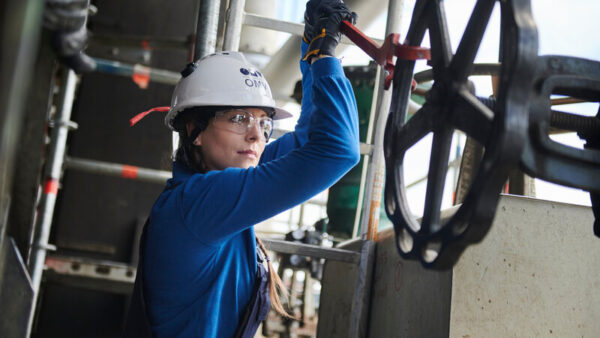


The United Kingdom’s Department for Energy Security and Net Zero has confirmed that the country’s latest Contracts for Difference (AR7) offshore wind auction has catalysed £3.4 billion in private investment, unlocking major new manufacturing capacity and port development. The announcement follows the allocation of £204 million in public funds through the government’s Clean Industry Bonus incentive, designed to prioritise domestic supply chains. The package is projected to support up to 7,000 industrial jobs, with Scotland alone securing up to £1.1 billion in related commitments.
How does the AR7 auction reshape the economics of British offshore wind manufacturing?
Unlike previous procurement rounds, AR7 marked a policy pivot toward integrated industrial development. The Clean Industry Bonus (CIB) – a first-of-its-kind incentive for the UK – offered targeted public co-funding to offshore wind developers that commit to procuring from British suppliers. According to the Department, this £204 million injection leveraged a 17-fold return in private capital, focusing not just on gigawatts but gigafactories, ports, and skilled jobs.
This reorientation moves the UK closer to emulating the “manufacture-where-you-build” models seen in Denmark and the United States. Rather than relying on imported components, developers winning contracts under AR7 will now build key infrastructure elements – such as monopile foundations, blades, cabling, and substations – within British territory. Ports like Nigg and Aberdeen are among the first beneficiaries, with planned expansions aimed at supporting staging, logistics, and fabrication activities.
From a procurement standpoint, AR7 locked in 8.4 gigawatts of offshore wind capacity, enough to power over 12 million homes. But its greater legacy may lie in shifting the sector’s cost-benefit equation beyond pure levelised cost of electricity (LCOE) metrics toward long-term industrial multipliers.

Why is this being positioned as a turning point for UK energy and job strategy?
The policy messaging from Prime Minister Keir Starmer and Energy Secretary Ed Miliband has been direct: clean power must also mean industrial revival. The 7,000 job figure attached to the announcement is not a projection of long-term wind farm operation, but of near-term buildout in heavy industry. That includes electricians, welders, engineers, and logistics workers—occupations that once anchored coal and shipbuilding towns now being targeted for reindustrialisation through energy transition investments.
Crucially, Scotland emerged as a core focus. With up to £1.1 billion of the £3.4 billion earmarked for Scottish ports and supply chains, the narrative of offshore wind serving national cohesion—rather than purely metropolitan green goals—was amplified. The strategy echoes the Scottish Government’s own just transition principles, though the initiative here originates from Westminster.
Miliband’s framing of the announcement as a “reversal of decades of industrial decline” signals a broader ambition: to make clean energy politically durable by embedding it within national employment narratives. The government’s overarching Clean Energy Mission claims a projected 400,000 job creation figure by 2030, with offshore wind targeted to support a quarter of that total.
How competitive was AR7 compared to past auctions, and what did it signal to developers?
AR7’s results land at a critical juncture for global offshore wind, which has faced inflationary headwinds, permitting delays, and financing gaps in multiple markets. Recent auction disappointments in the United States and parts of Europe had cast doubt on the sector’s ability to scale at reasonable cost.
Against that backdrop, the UK’s record 8.4 gigawatt capacity procurement not only surpassed expectations but did so at a time when component and construction costs remain elevated. This signals a restoration of confidence—driven in part by the stability offered by the Contracts for Difference model and, now, the CIB’s added incentive structure.
The broader financial implications include a significant reduction in perceived risk for developers like Ørsted, ScottishPower Renewables, and SSE Renewables. With access to long-term fixed-price power agreements and a new industrial bonus, these firms gain dual visibility: revenue certainty from CfDs and cost sharing on local content buildout.
For institutional investors, especially infrastructure funds and pension-backed capital vehicles, AR7 suggests that the UK is moving closer to replicating the stable, vertically integrated frameworks seen in Scandinavian energy ecosystems. The bonus model also hints at a slow but deliberate tilt toward a sovereign renewables industrial policy, aligning more closely with the U.S. Inflation Reduction Act and EU Green Deal dynamics.
What are the execution risks and challenges for delivering on these industrial promises?
While the £3.4 billion headline figure reflects developer intent, the actual disbursement of Clean Industry Bonus funds remains contingent on successful procurement execution. The Department noted that final CIB allocations will be determined in line with project progress, meaning delays or underperformance could reduce the economic ripple effects.
Moreover, while the jobs estimate includes both newly created and sustained positions, the durability of these roles beyond the construction phase remains uncertain. Many of the industrial roles generated by offshore wind are tied to the capex cycle; unless port and fabrication capacity is continuously renewed through successive auctions, job pipelines could face discontinuities.
Another key risk lies in balancing local content rules with project economics. Developers must now manage potential cost premiums associated with British-made components—especially if supply constraints, labour shortages, or inflationary pressures persist. This trade-off between domestic industrial policy and global price competitiveness will define whether the AR7 model scales or stalls.
What does this mean for the future of the UK’s offshore wind sector and broader energy mix?
Strategically, the AR7 outcome advances several long-term UK energy policy goals. First, it anchors the 2030 clean power target within a clear industrial delivery mechanism. Second, it signals that the country’s renewables buildout will be accompanied by a repatriation of supply chain capabilities.
As electricity demand is projected to double by 2050, the UK’s energy strategy is shifting from binary capacity targets to more sophisticated supply-demand alignment. Offshore wind, solar, onshore wind, nuclear (e.g., Sizewell C), and CCUS projects are all being tasked not just with delivering power, but with rebuilding industrial corridors, retraining legacy workforces, and reducing import dependence.
The auction’s success also gives cover for Labour’s clean energy policy to move more assertively. With international partners watching closely—especially ahead of COP29—this £3.4 billion surge allows Britain to position itself as a clean energy exporter of both electrons and industrial models.
From an industry lens, AR7 may ultimately prove more than just a large auction. It could become the blueprint for embedding supply chain revitalisation into every future renewables tender, regardless of technology.
What are the key takeaways from the AR7 auction and clean industry bonus announcement?
- The UK government’s AR7 offshore wind auction secured 8.4 GW of capacity, the largest single procurement in European offshore wind history.
- A £204 million public investment via the Clean Industry Bonus unlocked £3.4 billion in private capital for domestic supply chain and port development.
- Up to 7,000 industrial jobs will be supported across the UK, including 2,400 in Scotland and major expansions at ports such as Nigg and Aberdeen.
- The bonus model marks a strategic shift toward embedding industrial policy within clean energy procurement mechanisms.
- Scotland alone could see up to £1.1 billion in supply chain benefits, reinforcing its role in the UK’s reindustrialisation agenda.
- Execution risks remain tied to project procurement milestones, supply chain readiness, and sustained auction volume post-AR7.
- The outcome signals growing investor confidence in the UK’s offshore wind policy framework amid global headwinds.
- AR7 may become a template for future renewables auctions that tie capacity awards to domestic manufacturing and job creation outcomes.
Share this:
Discover more from Business-News-Today.com
Subscribe to get the latest posts sent to your email.