Pixi Beauty has officially launched its Spring 2026 collection, “Glow, Reimagined,” a strategic move that compresses skin-first color and essential actives into a curated range of hybrid products. Released on January 2, 2026, the collection is designed for consumers seeking real-life radiance through simplified routines and fewer steps. By aligning with a growing demand for multifunctional beauty products, Pixi Beauty is repositioning itself as a hybrid brand that delivers both performance and convenience across skincare and complexion categories.
This latest launch reflects broader shifts in the beauty industry, where wellness-aligned formulations, user-driven ingredient transparency, and therapeutic elegance are overtaking complex multi-step regimens. Pixi Beauty’s decision to anchor the launch around vitamin C, niacinamide, ceramides, and barrier-supportive actives underlines its pivot toward dermocosmetic credibility.
What does Pixi Beauty’s Spring 2026 launch reveal about the shift from complex regimens to simplified skincare hybrids?
Consumer data has made one thing clear: long-winded, multi-step beauty rituals are losing traction. According to a 2025 consumer survey of 3,900 U.S. beauty buyers cited by Pixi Beauty, 93 percent of respondents said they actively look for ways to simplify their routine without compromising results. Another 67 percent noted that they consistently purchase multi-functional products to streamline their application process. The implications for the skincare and cosmetics category are profound. As step-heavy routines fall out of favor, brands like Pixi Beauty are racing to fill the demand for hybrid essentials that consolidate glow, hydration, and coverage into fewer yet more intelligent products.
Petra Strand, founder of Pixi Beauty, contextualized the brand’s pivot by acknowledging that while the glow moment remains highly coveted, consumers are no longer willing to trade time for results. The new Spring 2026 range, therefore, eliminates unnecessary layering and reframes glow as a side effect of optimized, real-life-friendly formulation design. Pixi Beauty’s thesis is clear: in a post-serum, post-contour era, glow should come effortlessly through skin-first color and functionally elegant skincare.
How do the new Pixi Beauty formulations integrate skincare science into color innovation?
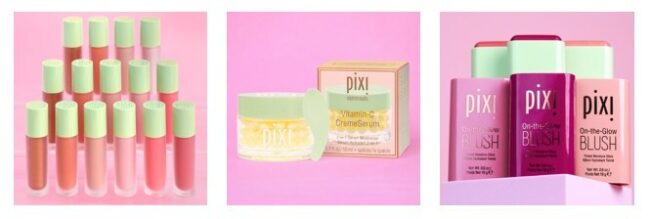
The cornerstone of Pixi Beauty’s Spring 2026 strategy lies in its tightly edited product stories that combine active ingredients typically associated with traditional skincare routines into formats that also deliver color, finish, or skin tint. The Vitamin C CremeSerum, a notable new entrant, introduces brightening beads suspended in a niacinamide-rich serum base. This format not only simplifies the morning routine but also directly appeals to users familiar with antioxidant layering, now delivered in a single step.
LiquidGlow, a serum-format blush available in six adaptable shades, merges squalane and calendula oil into a lightweight texture that deposits pigment while hydrating the skin. The blush market has recently seen innovation spikes led by brands such as Rare Beauty and Glossier, yet Pixi Beauty’s addition to this category is differentiated by its lean into barrier comfort and skincare-grade absorption.
The expanded On-the-Glow Blush lineup, now including Mauve, Cassis, and Chantilly, brings ginseng, aloe vera, and fruit extracts into a creamy stick format intended for multi-use across cheeks and lips. By keeping color payoff soft and buildable, Pixi Beauty ensures that the skin’s natural finish remains the hero, not the pigment.
GradualGlow introduces a new take on self-tanning serums, embedding hyaluronic acid and coconut oil into a daily-use, DHA-based formula that is positioned more as a skincare companion than a traditional tanner. Unlike products in this category that rely on occlusive agents and synthetic fragrance, GradualGlow emphasizes subtlety, comfort, and slow build-up over time. It does not contain sunscreen, reinforcing its cosmetic intent and leaving UV protection to dedicated SPF layers.
Finally, the Antioxidant Collection expansion adds the Superberry Cleansing Whip, Antioxidant Mist, and AntioxifEYE Mask Goggles, all centered around superberries, blueberry extract, ceramide NP, and camellia. These formulations appear designed to elevate the brand’s antioxidant credibility and establish a foothold in the daily defense and environmental stressor protection conversation.
Why is Pixi Beauty doubling down on dermocosmetic signals in a crowded hybrid skincare market?
Pixi Beauty has always leaned into botanical and skin-nourishing narratives, but this latest strategy veers toward clinically-inspired positioning. As consumers increasingly seek formulas that deliver therapeutic benefits in elegant, sensorial textures, brands are being forced to hybridize or risk irrelevance. Pixi Beauty appears to be moving closer to the dermocosmetic lane without surrendering its accessible price point or founder-led identity.
Brands like Typology, Drunk Elephant, and The Inkey List have captured share by promoting active-led regimens, but they often require some level of skin literacy. Pixi Beauty’s formulations offer similar ingredient profiles but simplify the usage narrative, allowing users to skip the education barrier. The use of recognizable actives like vitamin C, niacinamide, squalane, ferulic acid, and ceramides demonstrates that Pixi Beauty is intentionally playing in the science-forward ingredient space. However, the choice of formats such as creamy sticks, beads-in-serum, and mistable antioxidants speaks to a consumer who wants results but not the friction of regimen planning.
Strategically, this also distances Pixi Beauty from one-dimensional color brands or overly minimalist skincare brands that risk being perceived as underpowered. Instead, it situates the company in a rare middle ground where efficacy, sensorial pleasure, and lifestyle-driven formulation can coexist.
What are the commercial implications and execution risks for Pixi Beauty as it expands its hybrid product strategy?
Pixi Beauty’s success will depend not just on ingredient lists or packaging aesthetics but on its ability to scale formulations, educate consumers, and control perception across price points and retail channels. One key risk lies in hybrid fatigue. With almost every emerging brand claiming to offer skincare with color benefits, consumer skepticism around such marketing has increased. Pixi Beauty must avoid becoming another name in the growing list of brands that overpromise multifunctionality without backing it with performance and proof.
Another execution risk stems from its dual-channel distribution strategy. Pixi Beauty is present on its own e-commerce platform and in retail environments ranging from mass drugstore to specialty beauty chains. While this breadth supports volume, it also challenges the consistency of brand messaging and education. Maintaining differentiation at shelf level when surrounded by noise from high-growth competitors will be difficult without deeper investment in consumer storytelling and trial strategies.
From a financial and operational perspective, the shift toward active-heavy formulations may require tighter control over supply chain and quality testing. Ingredients like niacinamide and vitamin C are notoriously unstable unless formulated carefully. Pixi Beauty’s long-term credibility may rest on how well it can translate the science of its actives into shelf-stable, consistently performing products.
The opportunity, however, is significant. If executed well, Pixi Beauty could evolve into a category-defining hybrid brand that democratizes dermocosmetic-grade results in lifestyle-led formats, especially if it maintains its balance between accessibility and formulation integrity.
Key takeaways on what Pixi Beauty’s Spring 2026 collection means for hybrid skincare, color, and brand strategy
- Pixi Beauty’s “Glow, Reimagined” collection aims to simplify routines through hybrid products featuring proven actives like vitamin C and niacinamide.
- The launch reflects rising consumer demand for functionally minimalist beauty, where skincare and color coexist in fewer steps.
- New SKUs like Vitamin C CremeSerum and LiquidGlow blur the lines between treatment and pigment, aligning Pixi with clinically inspired but emotionally resonant brands.
- The collection supports a broader industry pivot toward “skin-first color,” a category also targeted by competitors like Glossier, Saie, and Tower 28.
- With enhanced antioxidant offerings and a focus on barrier care, Pixi is subtly moving closer to dermocosmetic positioning while retaining its botanical DNA.
- Execution risks include hybrid product fatigue, brand dilution across retail channels, and the need for clinical substantiation of efficacy claims.
- Success could reposition Pixi as a market leader in clean, simplified, high-performance beauty routines built for everyday real life.
Discover more from Business-News-Today.com
Subscribe to get the latest posts sent to your email.