
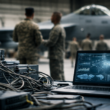




VisionWave Holdings, Inc. (NASDAQ: VWAV; NASDAQ: VWAVW) has completed its acquisition of Solar Drone Ltd., materially expanding its autonomous systems portfolio across defense, security, and critical infrastructure markets. The transaction strengthens VisionWave’s position in AI-enabled aerial autonomy at a time when governments and infrastructure operators are accelerating adoption of persistent, low-intervention robotic platforms to address security risks, labor constraints, and operational resilience challenges. Rather than a peripheral technology add-on, the deal reinforces VisionWave’s broader ambition to build a multi-domain autonomy platform capable of operating across air, ground, and sensor-fusion environments.
Solar Drone Ltd. becomes a wholly owned subsidiary following the completion of the share purchase agreement with BladeRanger Ltd. The acquisition, valued at approximately $21.6 million, was executed through the issuance of VisionWave common stock and pre-funded warrants, aligning the acquired business with VisionWave’s long-term equity performance. From a strategic perspective, the structure reflects a deliberate balance between conserving cash and securing differentiated autonomy capabilities that can be scaled across multiple mission-critical end markets.
Why VisionWave Holdings is prioritizing persistent autonomous aerial platforms within its multi-domain defense technology roadmap
VisionWave’s acquisition strategy reflects a growing emphasis on persistent autonomy rather than short-duration or manually intensive drone operations. Solar Drone’s platforms are designed for extended endurance with minimal human oversight, a capability increasingly valued in defense and security environments where continuity of surveillance and operational reliability matter more than speed or payload size. By integrating Solar Drone’s technology, VisionWave advances its ability to deliver systems that remain operational over long periods without frequent intervention.
In defense applications, persistent autonomous aerial platforms enable continuous perimeter monitoring, base security, and reconnaissance while reducing manpower requirements and exposure to risk. These capabilities align closely with modernization priorities among military and security agencies seeking scalable solutions that integrate seamlessly with existing sensor and analytics frameworks. VisionWave’s management has indicated, through indirect attribution in its announcement, that Solar Drone strengthens the company’s path toward deployable, mission-ready autonomy rather than experimental or pilot-only systems.
How Solar Drone Ltd.’s endurance-focused autonomy aligns with evolving military and homeland security procurement priorities
Defense and homeland security agencies are increasingly favoring autonomous systems that can operate reliably in contested or remote environments with limited operator input. Solar Drone’s platforms are engineered to support long-duration missions, making them suitable for surveillance, reconnaissance, and situational awareness tasks where persistent coverage is essential. When combined with VisionWave’s AI-driven sensing and analytics technologies, these systems can contribute to layered defense architectures that enhance detection and response capabilities.
Homeland security use cases mirror these requirements, particularly in border monitoring, port security, and protection of critical national assets. Autonomous aerial systems capable of sustained operation reduce the need for continuous human oversight while improving coverage consistency. The acquisition allows VisionWave to present a more integrated offering to these customers, positioning itself as a provider of operational autonomy rather than isolated hardware components.
What the acquisition reveals about VisionWave Holdings’ expansion strategy across critical infrastructure automation markets
Beyond defense, the Solar Drone acquisition underscores VisionWave’s intent to deepen its presence in critical infrastructure automation. Energy assets, transportation networks, and industrial facilities increasingly rely on automation to maintain reliability amid aging infrastructure and heightened climate-related risks. Autonomous aerial systems offer a compelling solution for inspection, monitoring, and maintenance tasks that are otherwise labor-intensive or hazardous.
Solar Drone’s technology complements VisionWave’s existing portfolio by enabling aerial inspection and monitoring across large, distributed assets such as utility-scale solar installations and transmission corridors. As infrastructure operators face pressure to improve uptime and reduce operational costs, demand for autonomous monitoring solutions continues to grow. The acquisition positions VisionWave to address this demand with a broader, more cohesive platform that integrates aerial autonomy with AI-based analytics and robotics.
How the $21.6 million equity-based transaction impacts VisionWave Holdings’ financial positioning and shareholder considerations
The stock-based structure of the Solar Drone acquisition introduces dilution, a factor investors typically weigh carefully in growth-stage technology companies. However, equity-financed transactions remain common in sectors where intellectual property and engineering talent are central to long-term value creation. By preserving cash, VisionWave retains flexibility to invest in research, integration, and potential follow-on acquisitions that support its autonomy roadmap.
Market reaction following the announcement reflected measured optimism, with VWAV shares trading higher as investors assessed the strategic logic behind the deal. Sentiment appears driven less by near-term financial impact and more by the potential for Solar Drone to accelerate VisionWave’s revenue opportunities in defense and infrastructure markets. The presence of publicly traded warrants under NASDAQ: VWAVW also adds a leveraged exposure element that tends to attract speculative interest during periods of positive momentum.
Why execution and platform integration will define whether the Solar Drone acquisition creates durable value
While the acquisition price is modest relative to large defense transactions, the success of the deal will depend heavily on execution. VisionWave must integrate Solar Drone’s engineering teams, autonomy software, and operational processes into its broader organization without disrupting development timelines or customer engagements. Effective integration can unlock synergies across product development and go-to-market efforts, while misalignment could dilute the strategic benefits of the transaction.
In autonomy-focused acquisitions, software compatibility and data integration often present greater challenges than hardware alignment. VisionWave’s ability to unify control systems, AI models, and analytics across its expanded platform will influence how quickly it can deliver differentiated solutions. Investors are likely to monitor updates on integration milestones and early customer deployments as indicators of whether the company can translate technological capability into operational traction.
How VisionWave Holdings is differentiating itself amid intensifying competition in defense and infrastructure robotics
The market for defense robotics and autonomous systems is becoming increasingly competitive, with established defense contractors and specialized startups pursuing overlapping opportunities. VisionWave’s approach appears focused on persistence, autonomy, and infrastructure relevance rather than direct competition with large weapons platforms. This positioning allows the company to address niche but growing demand for systems that enhance situational awareness and operational efficiency without requiring massive procurement cycles.
By emphasizing modular, autonomous platforms that integrate with existing systems, VisionWave may benefit from shorter sales cycles and incremental deployment opportunities. The Solar Drone acquisition strengthens this positioning by adding endurance-focused aerial capabilities that complement VisionWave’s existing technologies. As agencies seek adaptable solutions that can evolve with mission requirements, this flexibility could become a meaningful differentiator.
What the Solar Drone acquisition signals about VisionWave’s broader acquisition and partnership philosophy
The transaction suggests that VisionWave is pursuing a selective, capability-driven acquisition strategy rather than large, transformational deals. By targeting Solar Drone, the company fills a specific gap in its autonomy stack while leveraging its existing AI and sensing expertise. This approach aligns with broader trends in defense and industrial technology, where ecosystem development and interoperability often matter more than vertical integration.
As VisionWave integrates Solar Drone and engages customers across the United States, Europe, and other strategic regions, its expanded platform could attract partners seeking to embed autonomous capabilities into larger systems. Potential collaborations may include joint development initiatives or pilot programs that validate the technology in real-world environments, further strengthening VisionWave’s market position.
Why investor sentiment toward autonomy-focused Nasdaq listings adds context to VisionWave’s strategic timing
Investor sentiment toward autonomous systems companies has fluctuated alongside broader market volatility, but defense and critical infrastructure applications tend to be viewed as more resilient than consumer or logistics robotics. VisionWave’s increasing exposure to these markets may enhance its perceived stability relative to peers focused solely on commercial use cases.
Market participants are likely to watch for evidence of customer adoption, contract discussions, and pilot deployments following the Solar Drone acquisition. Positive execution updates could reinforce confidence in VisionWave’s strategy, while delays may temper enthusiasm. For now, the acquisition shifts the narrative from platform assembly to delivery and commercialization.
How the Solar Drone acquisition reshapes VisionWave Holdings’ role in mission-critical autonomous systems
The acquisition of Solar Drone Ltd. represents a strategic step in VisionWave Holdings’ effort to build an integrated autonomy platform serving defense and critical infrastructure customers. By combining endurance-focused aerial systems with its existing AI-driven technologies, VisionWave aims to address operational challenges where persistence, reliability, and scalability are essential. The deal reflects confidence that autonomous systems will play an expanding role in safeguarding infrastructure and enhancing security operations.
Whether this confidence translates into sustained shareholder value will depend on VisionWave’s ability to execute, integrate, and commercialize its expanded capabilities. At this stage, the Solar Drone acquisition reinforces VisionWave’s positioning as a focused autonomy player rather than a diversified technology conglomerate, setting clear expectations for how the company intends to compete in evolving defense and infrastructure markets.
Discover more from Business-News-Today.com
Subscribe to get the latest posts sent to your email.