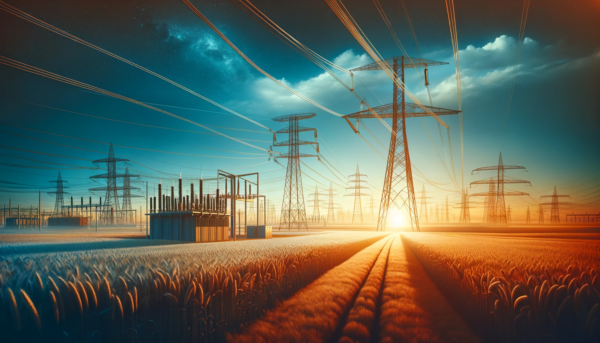
FirstEnergy Corporation (NYSE: FE) has launched a major $28 million transmission infrastructure project aimed at improving electric service reliability and capacity for thousands of homes and businesses across Lehigh and Berks Counties in Pennsylvania. The initiative, spearheaded by its subsidiary Mid-Atlantic Interstate Transmission (MAIT), will rebuild a 15-mile high-voltage power line and modernize four substations, signaling a critical push to support population growth and storm resilience in one of Met-Ed’s fastest-growing service territories.
Construction began in August 2025 and is expected to conclude by November 2027. The project forms a core component of the company’s long-range Energize365 modernization program, which allocates $28 billion in grid investment through 2029.

Why is FirstEnergy investing in transmission upgrades across Lehigh and Berks Counties?
FirstEnergy Corporation’s decision to prioritize the Allentown–Lyons–South Hamburg 69-kilovolt (kV) Line Rebuild Project is directly tied to evolving demand dynamics and mounting grid reliability expectations in southeastern Pennsylvania. With development pressures growing and climate-related weather events becoming more disruptive, the need for hardened transmission infrastructure has become both operationally and politically non-negotiable.
The upgraded line will replace aging infrastructure that no longer meets the performance or safety expectations of today’s grid. New steel poles, higher-capacity wires, and weather-resilient hardware are expected to increase the system’s ability to reroute power during outages and reduce the overall duration of service disruptions. According to FirstEnergy’s transmission president, Mark Mroczynski, this investment reflects a broader strategy to build “a stronger, more flexible grid” that can sustain not only extreme conditions but also expanding residential and industrial demand profiles.
This project is not isolated. It aligns with regional and national trends where utilities are pivoting from reactive maintenance to proactive grid hardening, especially in areas with historical service vulnerabilities. For FirstEnergy, which services over 592,000 Met-Ed customers in eastern Pennsylvania alone, this rebuild offers a controlled environment to demonstrate transmission modernization at a regional scale.
How will the transmission line rebuild impact outage prevention and recovery times?
Grid reliability has become a defining performance metric for utilities, particularly as customer tolerance for outages declines and regulators demand improved performance. This project targets both frequency and duration of outages, addressing systemic vulnerabilities that allow minor faults to cascade into larger blackouts.
By upgrading from legacy infrastructure to modern conductor systems, the rebuilt line will operate more like a multi-lane highway than a rural road, as FirstEnergy analogizes. Higher-capacity wires and reengineered substations will allow more load to flow during peak conditions, reduce chances of overload, and enable quicker rerouting of electricity in the event of faults.
Equally significant is the digitalization of these systems. While not explicitly referenced in the company’s release, similar grid projects often include embedded sensors and monitoring tools that feed into advanced outage detection and sectionalizing capabilities. This allows utilities to isolate faults quickly and dispatch repair crews more effectively—a shift that regulators in Pennsylvania and other states have increasingly supported through performance-based ratemaking mechanisms.
How does the project align with FirstEnergy’s broader Energize365 strategy?
The $28 million earmarked for this regional project is a microcosm of the company’s much larger $28 billion Energize365 strategy. Spread across a five-year timeline, Energize365 is FirstEnergy’s commitment to building a smarter, more secure, and more responsive electric grid. This includes not only hardening infrastructure but also integrating distributed energy resources, enhancing cybersecurity, and automating switching and control systems.
Projects like the Lehigh–Berks line rebuild serve as proof points for the capital allocation discipline within Energize365. These regional upgrades offer visible reliability gains, community impact, and support for economic development—especially when targeted in high-growth corridors with aging infrastructure.
Importantly, these capital projects can also be rate-based, allowing for a regulated return on investment. This makes them strategically attractive within FirstEnergy’s utility business model, even as the company navigates broader pressures from the energy transition and rising investor scrutiny of grid resilience and reliability.
What are the local and economic development implications of this transmission project?
Beyond utility-grade infrastructure, the project has tangible economic development implications. In Richmond Township, dozens of new utility poles and high-strength conductors have already been installed along Fleetwood Lyons Road—an area likely positioned for future commercial and residential development.
High-reliability infrastructure is a prerequisite for attracting businesses, particularly in manufacturing, logistics, and warehousing sectors that require consistent, high-capacity electric service. Grid modernization in rural and semi-urban pockets of Berks and Lehigh Counties also supports state-level goals around equitable development and industrial diversification outside of metropolitan cores.
This plays into a broader theme emerging across the United States: infrastructure as an enabler of rural and second-tier city revitalization. By reducing downtime, increasing grid flexibility, and enhancing capacity, FirstEnergy’s project enhances the region’s attractiveness to long-term investors, developers, and industrial tenants.
What could go wrong during the execution of the project?
While the scale of this project is relatively modest, the execution risks are not negligible. Extended timelines—spanning nearly two years—introduce exposure to material cost inflation, labor availability constraints, and permitting hurdles. Environmental assessments, seasonal work delays, and stakeholder engagement in transmission corridors can all stretch project delivery schedules.
Another layer of risk relates to interdependencies with upstream or downstream substations. Coordinating upgrades across four facilities while maintaining reliability throughout the construction window will require precision planning and operational discipline.
However, FirstEnergy has indicated that it will use a phased approach, with critical components already under construction and visible progress underway. Institutional investors may view this as a signal of project management maturity, particularly in light of the utility’s ongoing reputational rebuilding efforts following past regulatory controversies.
What are the key takeaways from FirstEnergy’s Pennsylvania grid investment strategy?
- FirstEnergy Corporation is investing $28 million to modernize a 15-mile transmission line and upgrade four substations in southeastern Pennsylvania.
- The project strengthens grid reliability and supports regional growth in Lehigh and Berks Counties—part of its $28 billion Energize365 investment program.
- Enhanced infrastructure will improve outage prevention, accelerate recovery times, and reduce the impact of severe weather or system faults.
- This localized investment supports larger regulatory and political pressures to harden the grid and accommodate future energy demand.
- Execution risk exists due to the project’s multi-year timeline, environmental coordination, and required substation upgrades.
- Strategically, the investment aligns with rate-based capital expenditure models, offering both community impact and shareholder value.
- FirstEnergy’s infrastructure modernization in Pennsylvania could serve as a blueprint for similar regional investments across its service areas.
- The project bolsters southeastern Pennsylvania’s competitiveness in attracting new commercial and residential development through improved power reliability.
Discover more from Business-News-Today.com
Subscribe to get the latest posts sent to your email.