




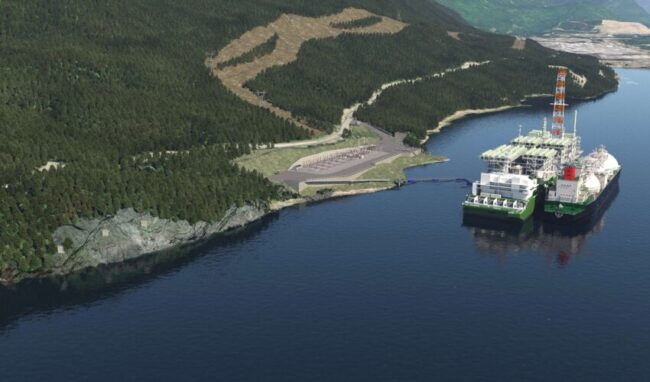
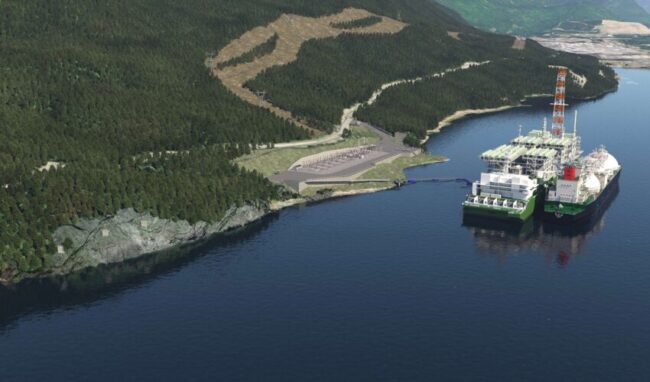
Ovintiv Inc. (NYSE: OVV; TSX: OVV) has entered into a 12-year liquefaction agreement with a subsidiary of Pembina Pipeline Corporation (TSX: PPL; NYSE: PBA) to secure 0.5 million tonnes per annum (mtpa) of liquefaction capacity at the proposed Cedar LNG facility in Kitimat, British Columbia. The agreement gives Ovintiv long-term access to Asia-facing LNG export infrastructure and supports a broader strategy to monetize Montney gas assets through higher-margin, international markets.
Scheduled to begin upon the start of commercial operations in late 2028, the agreement includes both transportation and liquefaction services provided by Pembina. It positions Ovintiv to benefit from Canada’s western LNG corridor, offering one of the shortest shipping distances to Asia from any North American gas basin.
Why is Ovintiv’s Cedar LNG deal a strategic bet on global gas diversification?
Ovintiv’s commitment to Cedar LNG is a targeted bet on long-cycle price resilience, access flexibility, and emission-advantaged export capacity. Unlike legacy pipeline arrangements or U.S. Gulf LNG contracts, this deal inserts Ovintiv into a cleaner, politically resilient, and logistically efficient LNG export chain.
Cedar LNG offers a Pacific-facing outlet that shortens delivery time to key Asian buyers. With LNG demand in Japan, South Korea, and Southeast Asia projected to rise throughout the 2030s, securing 12-year capacity provides margin visibility and de-risks dependence on North American price benchmarks like AECO or Henry Hub. At 0.5 mtpa, the contracted volume is relatively small, but its strategic duration and pricing structure add optionality to Ovintiv’s broader gas portfolio.
Moreover, Ovintiv’s alignment with Pembina Pipeline Corporation signals confidence in the FLNG project’s progress toward final investment decision (FID), expected in 2026. As more producers compete for limited west coast egress, early movers like Ovintiv gain both market signal credibility and potential negotiating leverage downstream.
How does Indigenous ownership and Pembina’s role reshape Cedar LNG’s risk and opportunity?
Cedar LNG is a joint venture between Pembina Pipeline Corporation and the Haisla Nation, who hold a majority equity stake in what is widely recognized as the world’s first Indigenous majority-owned LNG project. Located in Kitimat, British Columbia, within Haisla traditional territory, the project’s governance model is unlike any other LNG terminal in the Americas.
Indigenous equity is not just symbolic—it changes the environmental, regulatory, and financing calculus. Having the Haisla Nation as majority owners embeds local legitimacy into the project’s DNA, strengthening social license and potentially accelerating permitting and environmental reviews. This structure also ensures revenue sharing and long-term regional economic participation, addressing long-standing criticisms of extractive energy projects in First Nations territories.
Operationally, Pembina brings midstream execution strength, having already established logistics and pipeline interconnects across the region. Pembina’s participation also serves as a de facto infrastructure guarantor, reinforcing investor confidence amid global LNG capital hesitancy.
Why Cedar LNG is emerging as the most climate-aligned LNG project in North America
Environmental performance is a major differentiator. Cedar LNG is designed as a floating LNG facility that will source 100% renewable electricity from British Columbia’s hydro-powered grid. This gives it one of the lowest carbon intensities of any LNG export project globally, a fact that is likely to matter more as destination countries ramp up scrutiny over lifecycle emissions.
With global policy moving toward Scope 3 accounting and climate-aligned trade frameworks, LNG with cleaner upstream and midstream credentials is likely to command preferential market access, if not outright pricing premiums. Ovintiv’s decision to align with this specific project—not just any LNG terminal—is consistent with capital allocation disciplines favoring sustainability-linked offtake.
Moreover, Cedar LNG’s design includes a short, approximately eight-kilometre pipeline connecting to the Coastal GasLink system. This limits terrestrial disruption, further reinforcing its low-emissions profile. For institutional ESG investors who continue to avoid traditional hydrocarbons, projects like Cedar LNG may offer a pathway back to supporting transitional gas infrastructure.
How does this expand Ovintiv’s monetization channels for Montney gas?
The Montney formation remains one of North America’s most prolific gas basins, and Ovintiv is one of its largest producers. However, takeaway constraints and seasonal price volatility in domestic markets continue to erode margins. By securing export-linked offtake, Ovintiv is effectively creating a premium corridor that is partially insulated from North American congestion.
The ability to export up to 0.5 mtpa through a liquefaction pathway tied to global indices gives Ovintiv a new lever for cash flow smoothing. It also enhances portfolio flexibility—allowing the company to dynamically allocate production based on pricing differentials between domestic and global hubs.
This export pathway could also help balance Ovintiv’s long-term emissions intensity goals. Selling into LNG markets with lower net carbon intensity and greater regulatory alignment may allow the company to maintain output levels while meeting sustainability targets.
What is the outlook for Canada’s west coast LNG buildout—and what could go wrong?
While the fundamentals are strong, Cedar LNG is still in pre-FID phase. Construction has not yet begun, and capital costs remain subject to global supply chain volatility. Any delay in Coastal GasLink commissioning, marine terminal development, or environmental clearance could impact the project timeline.
The project’s advantage lies in its floating design, which minimizes land use conflict and accelerates construction, but FLNG platforms still require precision engineering and complex coordination. Global LNG capacity remains tight, with Asian buyers continuing to sign long-term deals years ahead of delivery. That urgency may work in Cedar’s favor, but only if FID is secured in 2026 as planned.
Beyond technical risks, British Columbia’s regulatory environment remains politically fluid. While Indigenous majority ownership offers a buffer against local opposition, broader provincial or federal policies on emissions, energy exports, or marine traffic could still shift the project landscape.
What could this mean for Ovintiv’s valuation and peer positioning?
Investor response to Ovintiv’s announcement has been muted in the short term, reflecting the long-dated nature of the deal. However, LNG-linked growth potential is increasingly viewed as a differentiator for Canadian gas producers. Peers such as ARC Resources Ltd. and Tourmaline Oil Corporation have pursued similar strategies, but Cedar LNG’s early-stage capacity commitments remain limited—suggesting future scarcity and rising competition for space.
Should Cedar LNG reach FID on schedule and deliver operational capacity by 2028, Ovintiv may see valuation upside tied to export-margin resilience, ESG alignment, and forward visibility on gas-linked free cash flow. As global investors look for transitional energy stories with cleaner infrastructure and long-term market access, Ovintiv’s positioning through Cedar LNG could attract renewed institutional interest.
Key takeaways on what Ovintiv’s Cedar LNG deal means for the company and Canadian LNG strategy
- Ovintiv signed a 12-year liquefaction and transport deal with Pembina Pipeline Corporation for 0.5 mtpa at Cedar LNG, beginning in 2028.
- Cedar LNG is a floating terminal developed by Pembina and the Haisla Nation, making it the world’s first Indigenous majority-owned LNG project.
- The project offers one of the cleanest environmental profiles in global LNG due to renewable electricity sourcing and compact pipeline design.
- Ovintiv gains long-term exposure to Asian LNG markets, diversifying away from North American pipeline congestion and basis risk.
- The agreement supports Montney monetization through higher-margin export channels and aligns with ESG-oriented capital strategies.
- Cedar LNG remains in pre-FID stage, with risks tied to execution, regulatory shifts, and global LNG market conditions.
- Competitive pressure is mounting among Canadian gas producers to secure similar offtake deals as LNG capacity remains limited.
- Institutional investors may view Ovintiv’s positioning favorably if Cedar LNG proceeds on schedule and delivers on climate and economic performance.
Discover more from Business-News-Today.com
Subscribe to get the latest posts sent to your email.


