


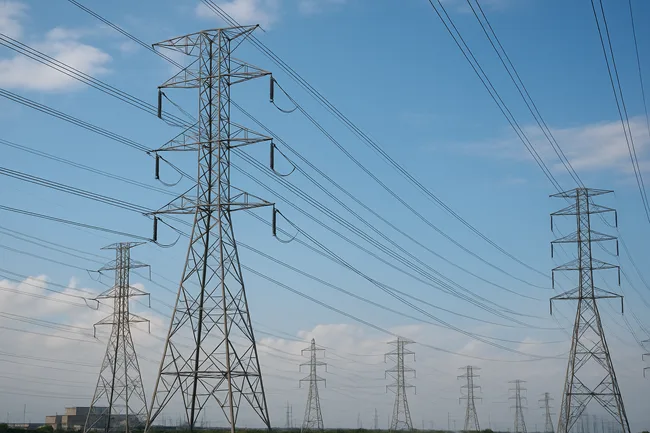
Georgia Power, a unit of Southern Company, has confirmed plans to construct a 35-mile 500 kV transmission line connecting the Ashley Park Substation in Fayette County to Plant Wansley in Heard County, as part of its newly approved 2025 Integrated Resource Plan (IRP). The project forms a cornerstone of the utility’s broader 10-year roadmap to modernize over 1,000 miles of transmission infrastructure across Georgia—supporting forecasted electrical load growth of 8,500 MW by 2030.
The Ashley Park–Wansley line will deliver enhanced transmission capacity across South Metro Atlanta, with the build scheduled to begin in 2027 and completion expected by Q2 2028. The line is designed to alleviate existing constraints, reduce system-wide outages, and accommodate new natural gas and battery energy storage systems at Plant Wansley.
Approved by the Georgia Public Service Commission (PSC) in July 2025, the IRP represents a comprehensive plan to meet the state’s growing energy needs while ensuring long-term reliability, resiliency, and affordability for residents and businesses.
How will the Ashley Park–Wansley 500 kV line support growing energy demand?
The Ashley Park–Wansley transmission project is one of the first major builds under Georgia Power’s new transmission investment cycle and is directly tied to the company’s Integrated Resource Plan approved earlier this year. The high-voltage 500 kV line will connect Ashley Park Substation, located just north of Fayetteville, to Plant Wansley, a key generation site near Roopville.
Running across Fayette, Coweta, Fulton, and Heard counties, the 35-mile line will serve a dual role: improving energy flow across Georgia’s increasingly stressed grid and enabling new generation capacity to come online in the form of battery energy storage systems (BESS) and cleaner-burning natural gas assets.
Preliminary survey work is already underway, with right-of-way clearing and grading expected to begin in Q1 2027. Full construction is scheduled for Q3 2027, with energization targeted for Q2 2028.
According to Georgia Power’s transmission leadership, the project is designed to strengthen system resilience in high-demand corridors and improve operational efficiency by relieving known congestion points in the current infrastructure.
What does Georgia Power’s 10-year transmission strategy include?
Under the terms of the 2025 IRP, Georgia Power has received regulatory clearance to build out more than 1,000 miles of new transmission lines across the state. This includes both high-voltage backbones such as the Ashley Park–Wansley corridor and targeted upgrades to substations, conductors, and smart grid systems.
The approved plan also mandates integration of Grid Enhancing Technologies (GETs) to optimize existing line performance and unlock greater transfer capability. Georgia Power will meet semi-annually with PSC Public Interest Advocacy Staff to review the transmission buildout, assess project benefits and costs, and evaluate alternatives.
This ongoing oversight ensures that investments align with system-level priorities such as reliability, cost-effectiveness, and renewable integration. The 2025 IRP also requires Georgia Power to establish a formal evaluation process for GETs and storage alternatives to defer or complement traditional infrastructure expansion.
How does the IRP position Georgia for future load growth?
Georgia Power has forecasted a significant increase in electrical demand, projecting nearly 8,500 MW of load growth by 2030. This includes a 2,600 MW increase in peak demand relative to projections made in the 2023 IRP Update.
The utility attributes this rise to population growth, industrial expansion, and broader electrification trends across transportation and manufacturing. In response, the IRP outlines a coordinated generation and transmission strategy designed to preserve grid reliability while accommodating new demand centers.
In addition to quarterly Large Load Economic Development Reports, Georgia Power will conduct annual updates to its load forecast and maintain regulatory visibility into emerging growth trends. These processes aim to ensure the infrastructure pipeline remains responsive to Georgia’s dynamic energy landscape.
What generation upgrades are included in the 2025 IRP?
The 2025 IRP includes significant reinvestments across Georgia Power’s existing generation portfolio. At Plant Vogtle, the company plans to upgrade Units 1 and 2 to deliver an additional 54 MW of nuclear capacity, following the completion of the Vogtle Units 3 and 4 expansion in 2024.
At Plant McIntosh, Georgia Power will add 268 MW of natural gas capacity through turbine upgrades. Meanwhile, legacy coal and gas facilities—including Plants Bowen and Scherer—will see extended operational life through 2034, with environmental retrofits and new natural gas co-firing systems aimed at improving efficiency and regulatory compliance.
On the hydroelectric front, modernization plans are moving forward at Tallulah, Yonah, Bartlett’s Ferry, and North Highlands dams. These projects are expected to extend facility life by up to 40 years while preserving zero-emissions generation capacity.
How does the plan support renewable energy and battery storage?
Georgia Power’s approved plan allows for the procurement of up to 4,000 MW of new renewable resources by 2035, with an initial 1,100 MW set to be sourced through competitive solicitations. This will grow the company’s total renewable portfolio to approximately 11,000 MW over the next decade.
Battery storage remains a major strategic focus, with more than 1,500 MW of BESS capacity planned in upcoming IRP cycles. The Ashley Park–Wansley transmission line, in particular, is designed to support BESS installations at Plant Wansley as part of an integrated transmission-generation-storage system.
These efforts align with broader decarbonization goals while ensuring system flexibility amid variable solar and wind resource contributions.
What new programs are included for customers and communities?
In addition to generation and transmission investments, Georgia Power’s IRP includes a portfolio of demand-side management programs. These range from energy efficiency initiatives to demand response tools that help shift consumption during peak periods.
New offerings include a solar-plus-storage option for residential and small business customers, a distributed energy resource-enabled demand response program for large accounts, and an Electric Transportation “Vehicle-to-Everything” pilot in collaboration with school systems.
Programs like Energy Assistance for Savings and Efficiency (EASE) and HopeWorks will also be expanded, targeting affordability and resiliency for vulnerable customer segments.
The IRP also introduces new tools such as a residential online energy audit and dedicated support from energy experts—part of Georgia Power’s push to give customers more insight into usage and cost-saving opportunities.
How will Georgia Power manage community impact from new transmission projects?
Georgia Power emphasized that its transmission siting and construction process is designed to be “flexible, transparent, and community-focused.” For the Ashley Park–Wansley line, the company has already launched stakeholder outreach including mailers, maps, community meetings, and landowner engagement sessions.
The utility has committed to minimizing disruption during right-of-way acquisition and construction, and says it will maintain open lines of communication with affected residents and businesses. The timeline includes continued updates through 2026 ahead of construction start in 2027.
Project maps and updates are available through a dedicated project website and direct mail outreach as work progresses.
What are the key takeaways from Georgia Power’s Ashley Park–Wansley project and 2025 IRP?
- Georgia Power will build a 35-mile 500 kV transmission line from Ashley Park to Plant Wansley, with completion expected by Q2 2028.
- The project is part of a 10-year transmission roadmap approved under the 2025 Integrated Resource Plan, which includes over 1,000 miles of new lines statewide.
- The IRP supports 8,500 MW of projected load growth and incorporates upgrades across nuclear, gas, coal, hydro, and battery energy storage systems.
- New customer programs include solar+storage pilots, expanded energy efficiency tools, and community-focused outreach around new grid projects.
- Transmission work will be phased with landowner notifications, clearing, and construction beginning in 2027 after multi-year planning and community input.
Discover more from Business-News-Today.com
Subscribe to get the latest posts sent to your email.