




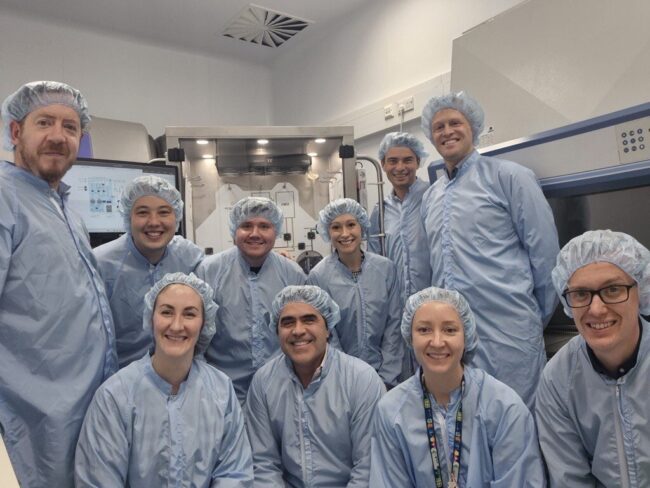
Biorep Technologies, Inc., a U.S.-based specialist in advanced cell and tissue isolation systems, has announced a critical development for its PRISM platform with the successful independent execution of a human pancreatic islet isolation. This marks the first instance of the PRISM system being deployed outside of its originating institution and was performed by the Scottish National Blood Transfusion Service in collaboration with Leiden University Medical Center. The milestone is being highlighted as a pivotal step in validating the system’s reproducibility in external laboratory environments, signaling Biorep’s readiness for broader international adoption across clinical research institutions.
The successful islet isolation outside Biorep’s own test network is being positioned as early proof that the PRISM system can consistently deliver standardized results in independent settings. According to Biorep Technologies Chief Executive Officer Felipe Echeverri, this milestone reinforces the firm’s strategic focus on creating automated, reliable, and scalable solutions that simplify highly complex cell and tissue workflows. The development may also accelerate interest among academic and translational research institutions seeking viable replacements for soon-to-be-phased-out legacy equipment.

Why laboratories are actively searching for alternatives to the COBE 2991 system
Biorep’s announcement arrives at a critical inflection point in islet research. Laboratories that have historically relied on the COBE 2991 cell separator are preparing for its discontinuation at the end of 2025. The medical research community has been actively evaluating alternatives that not only match but improve upon the performance, safety, and reproducibility of the decades-old device. The PRISM system has emerged as one of the most promising contenders in this transition, offering a closed, automated, and modular laboratory platform designed specifically for tissue collection, buffer exchange, and islet purification.
Unlike its predecessors, the PRISM system enables consistent outcomes under sterile conditions, which reduces reliance on highly specialized technicians and mitigates facility-dependent variability. For research centers constrained by workforce shortages or outdated infrastructure, the system promises a scalable, modern replacement that aligns with regulatory demands and reproducibility standards. Biorep is aiming to position PRISM not just as a stopgap, but as the foundation for next-generation cell isolation platforms in regenerative medicine, diabetes research, and emerging cell therapies.
How Biorep scaled PRISM from LUMC innovation to global deployment
The PRISM system was originally conceived and developed at Leiden University Medical Center and subsequently licensed to Biorep Technologies for further development. Since then, Biorep’s engineering teams have redesigned the system to support mass production and deployment in a variety of laboratory settings. The platform has been optimized not only for pancreatic islet isolation, but also for potential expansion into other areas such as hepatocyte applications and autologous cell processing.
By maintaining a closed and sterile configuration, the PRISM system allows for the automation of tissue handling, washing, and processing steps that traditionally required manual intervention. This capability significantly enhances workflow repeatability and operator safety while reducing contamination risk. The architecture of PRISM also supports data collection, enabling research labs to standardize results and facilitate audit trails—an increasingly important feature in regulated clinical environments.
The company has stated that the success at the Scottish National Blood Transfusion Service is only the beginning of a wider series of collaborations and evaluations. The ongoing partnership with SNBTS and Leiden University Medical Center will continue into 2026, with results scheduled for presentation at the European Pancreas and Islet Transplant Association’s next conference. This public visibility is expected to generate greater interest from European and North American academic institutions exploring lab automation upgrades.
Could PRISM define the next 30 years of islet isolation innovation?
Biorep’s latest achievement builds upon a growing body of peer-reviewed evidence supporting the PRISM system’s impact. Preliminary findings from the platform’s initial use were first documented by Doppenberg and colleagues in the Transplantation journal in 2022, where PRISM was described as one of the most important advancements in islet isolation science in over three decades. The ability to replicate these results in a separate institution adds meaningful credibility to Biorep’s commercial roadmap.
The PRISM system’s architecture is also designed for forward compatibility. Biorep has confirmed that it is working on additional protocols and software enhancements that could expand the system’s applications into new cell types, including those relevant for oncology and liver disease research. This adaptability is critical as laboratories across the globe transition toward multipurpose platforms capable of supporting both research and clinical-grade production environments.
For Biorep, the broader opportunity lies in transforming isolated success stories into institutional standards. As the market for automated isolation systems continues to grow, driven by the increasing complexity of cell therapies and precision medicine, the ability to offer a plug-and-play research-grade platform could establish Biorep as a leading player in laboratory automation. The firm’s 30-year legacy in cell isolation tools adds to its credibility among labs seeking both performance and continuity in equipment partnerships.
What to expect next as Biorep advances its PRISM evaluation roadmap
With the phase-out of legacy isolation tools already underway, research networks are expected to expedite procurement decisions over the coming year. Institutions that previously operated under the limitations of manual, open-system devices are now demanding platforms that offer not just sterility but scalability. The PRISM system’s successful demonstration at the Scottish National Blood Transfusion Service could serve as a strong reference point for other institutions evaluating platform modernization.
Biorep has indicated that the PRISM platform’s evaluation framework will expand to include additional geographies and applications throughout 2026. Market watchers expect the company to announce further research partnerships, particularly with North American transplant centers and diabetes-focused research hubs. Analysts also believe the PRISM system’s modular design could facilitate rapid customization for disease-specific protocols, opening new commercial pathways for Biorep across academic medical centers and cell therapy consortia.
While no commercial pricing details or reimbursement pathways have yet been publicly disclosed, the product’s research-use-only designation suggests that near-term adoption will be centered on preclinical and academic deployments. However, the growing convergence between research-grade platforms and clinical-grade manufacturing systems could position PRISM as a foundational layer in future Good Manufacturing Practice-compliant environments.
How are research institutions evaluating Biorep’s laboratory strategy as automation reshapes islet isolation workflows?
Although Biorep Technologies is not a publicly traded company and therefore does not provide stock-based disclosures, institutional sentiment within the scientific community appears cautiously optimistic. Researchers tracking the evolution of islet isolation platforms have pointed to the importance of reproducibility, cross-site standardization, and automation readiness—all areas where PRISM is showing competitive differentiation.
The collaboration with SNBTS and LUMC also underscores a shift toward multi-institutional validation in platform development, mirroring trends seen in pharmaceutical and device trials. By prioritizing early-stage academic validation ahead of aggressive commercialization, Biorep appears to be taking a measured, evidence-based route toward global platform acceptance. This strategy may help the firm avoid the pitfalls that have historically challenged medtech startups entering regulated laboratory and cell therapy environments.
As visibility increases through conference presentations and peer-reviewed studies, Biorep will likely face mounting demand to scale production and formalize regional distribution channels. Analysts expect 2026 to be a decisive year in determining whether the PRISM system can transition from a promising research platform into a default standard in pancreatic islet isolation and beyond.
What are the key takeaways from Biorep’s first independent PRISM system milestone?
- Biorep Technologies confirmed the first independent use of its PRISM system for pancreatic islet isolation, conducted by the Scottish National Blood Transfusion Service in collaboration with Leiden University Medical Center.
- This successful deployment marks the first time the PRISM system has been validated outside of its original institution, reinforcing its reproducibility in real-world lab settings.
- The PRISM platform is positioned as a next-generation replacement for the COBE 2991 cell separator, which will be phased out by the end of 2025.
- Unlike traditional open systems, PRISM offers a closed, automated, and modular lab setup designed to deliver sterile, reproducible outcomes with minimal operator dependence.
- Biorep’s engineering upgrades to the original LUMC-developed system have enabled large-scale deployment and application expansion beyond islet workflows.
- The company is collaborating with SNBTS and LUMC on an extended evaluation program, with findings expected to be presented at EPITA 2026.
- Peer-reviewed support for PRISM dates back to a 2022 Transplantation study, which many researchers called the most important islet isolation advancement in 30 years.
- Future PRISM protocols are under development for autologous islet and hepatocyte applications, supporting Biorep’s broader ambitions in regenerative medicine.
- Analysts expect growing institutional interest in PRISM as research labs modernize infrastructure to align with automation and reproducibility requirements.
- Although Biorep is not publicly listed, scientific sentiment around PRISM’s reproducibility and modular design suggests rising academic and translational demand heading into 2026.
Discover more from Business-News-Today.com
Subscribe to get the latest posts sent to your email.
