




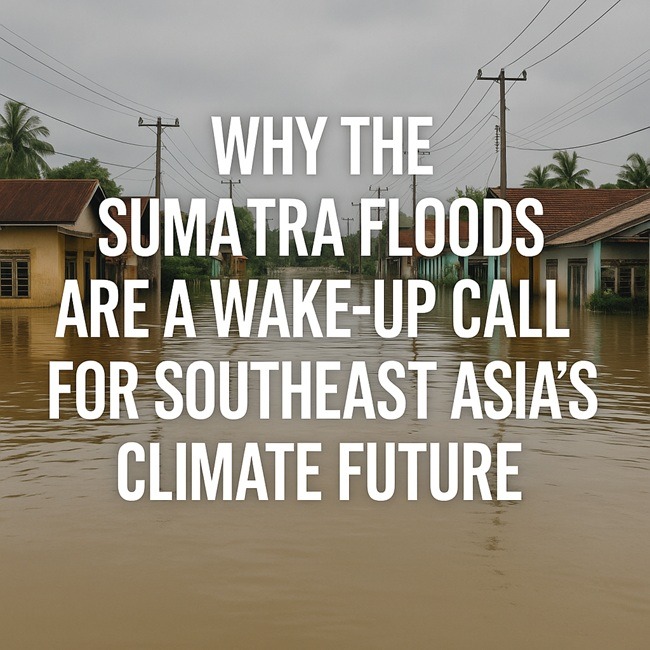
What began as another episode of seasonal monsoon rainfall has quickly escalated into one of Southeast Asia’s deadliest climate-linked disasters in recent memory. Across Indonesia’s Sumatra island, torrential rains and Cyclone Senyar have triggered catastrophic floods and landslides, pushing the confirmed death toll to 174 and displacing over 23,000 people. Entire villages have been swept away or buried under debris, with infrastructure systems overwhelmed and rescue teams struggling to reach remote areas.
The provinces of North Sumatra, Aceh, and West Sumatra have been hit hardest, with rivers bursting their banks and hillsides collapsing under the weight of weeks-long downpours. Indonesia’s National Disaster Mitigation Agency reported that North Sumatra alone has recorded at least 116 fatalities, with 35 deaths in Aceh and another 23 in West Sumatra. Communication lines remain cut in several districts, and with more rain forecast, the toll is likely to rise.
How a perfect storm of rain, terrain and cyclone turned deadly
The sequence of devastation began with days of heavy monsoon rainfall, a seasonal pattern that has become more erratic and intense in recent years. The situation was made drastically worse by Cyclone Senyar, which swept through the Strait of Malacca and dumped massive volumes of water across Sumatra’s western and northern zones. The rainfall led to flash floods, river surges, and hillside collapses in densely populated and ecologically fragile regions.
In the upland districts of North Sumatra, saturated soils gave way to landslides that buried homes and entire stretches of roadway. Flash floods swept through low-lying villages with little warning, leaving families with seconds to escape. Many communities remain stranded, with bridges destroyed and roads either submerged or blocked by debris. In multiple districts, the only way to deliver aid has been by air or foot.
Local authorities reported over 3,200 buildings submerged or destroyed in North Sumatra. In West Sumatra, the number of affected homes has exceeded 17,000. Thousands of residents are now living in temporary shelters with limited access to clean water and sanitation. Humanitarian groups warn that without adequate medical support, disease outbreaks may follow in the wake of the floods.
Why environmental degradation is amplifying disaster risks in Indonesia
The Sumatra floods are not just a product of extreme weather, they are the result of a broader ecological and planning failure. Experts have long warned that deforestation, illegal mining, and uncontrolled urban sprawl are turning natural hazards into full-blown humanitarian disasters. Indonesia’s fragile hillsides and floodplains have been increasingly stripped of forest cover, reducing the land’s ability to absorb water and resist erosion.
The consequences are becoming more frequent and deadly. In 2024, a smaller-scale flood and landslide in Sumatra killed 26 people. Since then, little progress has been made in implementing mitigation strategies such as hillside reforestation, watershed zoning, or resilient infrastructure design.
Environmental scientists say the situation is worsened by poor enforcement of land-use regulations, particularly in remote regions where oversight is minimal. The presence of homes and roads in known risk zones is increasing, despite multiple warnings from disaster agencies. The lack of investment in early-warning systems and flood-resistant infrastructure has further left rural populations dangerously exposed.
How President Prabowo Subianto’s administration is managing the crisis
President Prabowo Subianto, who assumed office in late 2024, has deployed the Indonesian National Armed Forces and disaster response agencies to lead emergency operations. The Ministry of Social Affairs has activated relief funds and is coordinating efforts with local governments to provide temporary shelter, food, and health care to thousands of displaced residents. Helicopters and amphibious vehicles are being used to reach areas cut off by collapsed bridges and landslides.
National search and rescue teams, working alongside the Indonesian Red Cross and civil defense units, are retrieving bodies, clearing roads, and attempting to locate the missing. Medical aid stations have been established in Aceh and North Sumatra to treat injuries and prevent potential disease outbreaks from poor sanitation in crowded camps.
Despite these efforts, logistical bottlenecks persist. Many areas remain inaccessible by road, and air operations are limited by bad weather. Volunteer networks and non-governmental organizations have stepped in to fill the gaps, with international partners offering support as the scale of the disaster becomes clearer.
Why Sumatra’s tragedy is a warning for Southeast Asia’s climate future
This latest catastrophe adds to a growing list of climate-fueled disasters in Southeast Asia, where monsoons are becoming more erratic and tropical cyclones more intense. The Intergovernmental Panel on Climate Change has warned that the region faces rising rainfall variability and extreme weather as global temperatures increase.
Sumatra’s experience reveals how climate volatility interacts with human vulnerability. Poorly regulated land development, lack of ecological buffers like forests and wetlands, and under-resourced public infrastructure all multiply the risk of catastrophic outcomes. Experts argue that Indonesia must treat this event not as a seasonal anomaly, but as a climate adaptation wake-up call.
Policy reforms are needed to mandate zoning restrictions in landslide-prone zones, strengthen reforestation efforts, and upgrade water management systems. Disaster preparedness must become central to rural planning, with community-based early-warning networks and training programs that can reach even the most remote areas. Without these changes, future disasters may cause even greater human and economic losses.
How international aid is mobilising for the Sumatra disaster and what it means for the region’s recovery timeline
International aid offers have started arriving, with countries like Japan, Australia, and Singapore pledging logistical and financial support. Relief organizations such as Médecins Sans Frontières and the Red Cross have deployed mobile clinics and emergency response units. Meanwhile, regional coordination is under discussion through the Association of Southeast Asian Nations, as similar weather disturbances threaten parts of Malaysia and Thailand.
The scale of need remains overwhelming. Clean water, food, tents, medicine, and trauma support are urgently required. With more rain forecast and rivers still running high, time is critical. Recovery efforts must now pivot from emergency response to medium-term rebuilding and ultimately to building back with climate resilience in mind.
The tragedy in Sumatra may well be the first major disaster test of President Prabowo Subianto’s administration. How it is handled in the coming weeks could define not only local recovery, but Indonesia’s national credibility on climate resilience and disaster management.
What are the most urgent lessons from the Sumatra floods and landslides disaster?
The disaster in Sumatra has laid bare systemic weaknesses in infrastructure, environmental management, and emergency response. The loss of more than 170 lives is a human tragedy, but it is also a policy failure — one that could recur if the underlying causes are not addressed.
Here are the most pressing takeaways from this unfolding crisis:
- The official death toll from floods and landslides in Indonesia’s Sumatra has reached 174, with dozens more still missing and more than 23,000 displaced.
- The disaster was intensified by Cyclone Senyar, which brought unprecedented rainfall and triggered deadly flash floods and landslides in North Sumatra, Aceh, and West Sumatra.
- Local infrastructure suffered heavy damage, including the collapse of bridges and roads, which has hampered rescue and relief operations.
- Environmental degradation, particularly deforestation and illegal land use, made the region more susceptible to flooding and soil instability.
- President Prabowo Subianto has mobilized national armed forces, search and rescue teams, and emergency medical units, but logistical challenges remain in reaching the worst-hit areas.
- International aid and regional cooperation have begun to flow in, but rebuilding will require longer-term investments in climate adaptation and infrastructure.
- Experts warn that unless Indonesia adopts stronger land-use planning, ecological restoration, and disaster preparedness, the next monsoon could trigger even deadlier consequences.
Discover more from Business-News-Today.com
Subscribe to get the latest posts sent to your email.