


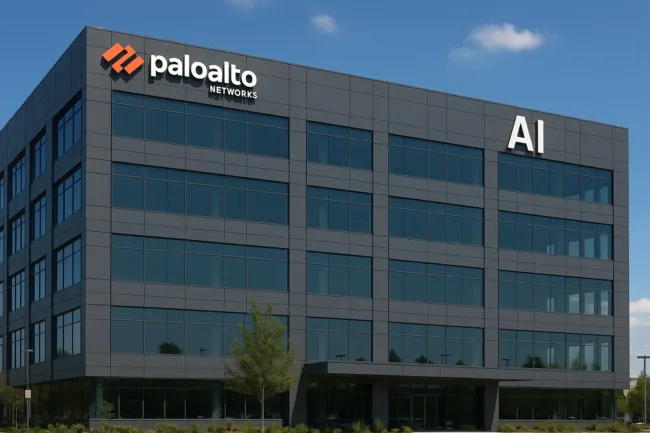
Palo Alto Networks (NASDAQ: PANW) has signed a definitive agreement to acquire Chronosphere, a next-generation observability platform designed for hyperscale and AI-native workloads, in a $3.35 billion transaction. The deal, structured as a combination of cash and replacement equity awards, is expected to close in the second half of fiscal year 2026, pending regulatory approvals and customary closing conditions.
The acquisition represents a significant strategic expansion for Palo Alto Networks as it deepens its investment into the convergence of observability and cybersecurity at the infrastructure level. The transaction is aimed at transforming the Cortex AgentiX platform into a real-time agentic remediation system capable of handling petabyte-scale workloads across distributed digital environments.
How does Chronosphere strengthen Palo Alto Networks’ AI observability and automation strategy?
Chronosphere has earned recognition for building a cloud-native observability architecture that is optimized for cost-efficiency, scale, and telemetry precision. The company’s technology is already used by several leading enterprises developing large language models, indicating its maturity and performance under demanding AI-centric workloads. The planned integration with Palo Alto Networks’ Cortex AgentiX platform will elevate the use of observability data from passive dashboards to real-time, autonomous response mechanisms.
Nikesh Arora, Chairman and Chief Executive Officer of Palo Alto Networks, stated that the foundational requirement for every modern AI data center is constant uptime and resilience. He said these capabilities demand real-time, always-on observability at the right cost. Arora noted that Chronosphere was designed from the outset for these demands, which is why it has been selected by some of the most advanced AI-native and cloud-first organizations globally. He added that the integration of Chronosphere with the AgentiX platform will redefine observability by embedding autonomous agentic remediation capabilities directly into the monitoring fabric.
Why does Chronosphere’s architecture matter for hyperscale and LLM-driven observability?
Chronosphere brings to the table a high-performance telemetry pipeline and ingestion engine that can manage some of the world’s largest digital environments. The integration with Palo Alto Networks is expected to create a unified platform that detects, investigates, and remediates performance or security anomalies automatically. This will allow enterprise customers to not only monitor operations at scale but also to close the loop between detection and resolution with minimal human intervention.
Martin Mao, Co-founder and Chief Executive Officer of Chronosphere, commented that the firm was founded to deliver scalable resiliency for the most demanding digital organizations. He described Palo Alto Networks as a perfect strategic partner that would allow Chronosphere’s disruptive observability platform to be paired with the industry’s top cybersecurity technologies. Mao added that this combination would accelerate their ability to address some of the most complex data and infrastructure challenges currently facing enterprise customers.
What makes this observability platform a leader in petabyte-scale telemetry performance?
Chronosphere has been named a Leader in the 2025 Gartner Magic Quadrant for Observability Platforms. Its architecture enables intelligent routing, transformation, and optimization of telemetry data, making high-volume ingestion economically viable across industries. These innovations are expected to bring significant cost efficiencies to customers when combined with Palo Alto Networks’ security stack, especially in sectors such as financial services, healthcare, telecommunications, and AI infrastructure.
Palo Alto Networks has stated that the combined platform will support agentic remediation by deploying AI agents across the massive data volumes processed by Chronosphere. This will allow enterprises to proactively detect degradation or failure, diagnose root causes using AI models, and remediate issues in real time. This approach represents a shift from observability as a monitoring function to observability as an automated operational engine.
How much ARR is Chronosphere generating and what growth trends support this valuation?
Chronosphere’s platform is purpose-built for high-throughput ingestion and low-latency telemetry routing, two requirements that have become increasingly critical for AI-native environments where even minor downtime or performance lag can translate into cascading operational costs. With AI workloads and distributed systems expanding rapidly, industry analysts believe that traditional observability tools may no longer suffice for enterprise customers seeking real-time visibility and automated correction.
Chronosphere’s revenue trajectory also reflects its relevance in this evolving market. As of the end of September 2025, the company reported more than $160 million in annual recurring revenue, with triple-digit growth year-over-year. Although Palo Alto Networks has not provided a specific timeline for revenue contribution post-close, the acquisition is expected to enhance its product depth and expand its total addressable market. Details of how Chronosphere’s revenue will be reported or monetized through upsell channels are expected during future earnings calls.
What role will this acquisition play in expanding Palo Alto Networks’ platformization model?
The deal announcement comes ahead of Palo Alto Networks’ Q1 fiscal year 2026 earnings call, scheduled for November 19, 2025, where management will provide more insight into the financial and operational integration roadmap. This move follows a pattern of acquisitions by Palo Alto Networks aimed at consolidating adjacencies around security operations, cloud workload protection, and AI infrastructure management. The addition of Chronosphere positions Palo Alto Networks to offer a unified platform where observability, cybersecurity, and AI-driven response converge.
Analysts believe that the acquisition positions Palo Alto Networks favorably in the ongoing race to dominate the AI observability landscape. With traditional observability players such as Datadog, New Relic, and Splunk facing mounting pressure to innovate around AI workloads, Palo Alto Networks is now positioned to challenge their offerings with a security-first observability stack capable of autonomous decision-making.
What should institutional investors and market watchers track after the deal announcement?
From an investor standpoint, the announcement is likely to reinforce sentiment around Palo Alto Networks’ platformization strategy. Institutional investors are expected to closely monitor integration milestones, pricing tier adjustments, and upselling traction in AI-native verticals. Chronosphere’s customer base and existing deployments within large AI model developers give Palo Alto Networks an early advantage in cross-selling higher-value security observability solutions.
The structure of the $3.35 billion deal, which includes a blend of cash and equity replacement awards, is also seen as a flexible approach to balancing capital allocation and dilution. While the price tag may appear aggressive, the growth potential and technology maturity of Chronosphere are expected to justify the valuation, particularly as customers demand unified AI observability and cybersecurity stacks.
How could this reshape the enterprise model for autonomous operations and cloud resilience?
Future updates on the integration and go-to-market strategy for Chronosphere will be provided during Palo Alto Networks’ subsequent financial disclosures. Investors will likely track metrics related to ARR expansion, cross-sell conversions, and time-to-market for integrated AgentiX–Chronosphere bundles. Regulatory clearance is also a potential variable, given Chronosphere’s recognition in the Gartner Magic Quadrant and its strategic significance in the high-growth AI observability category.
As the cybersecurity and observability sectors continue to intersect under the influence of AI-driven automation, the acquisition of Chronosphere may signal a broader industry shift toward end-to-end, autonomous infrastructure stacks. By embedding observability data directly into security remediation loops, Palo Alto Networks is setting a precedent for what AI operations could look like in enterprise environments moving forward.
This acquisition also serves as a response to growing enterprise demand for solutions that can ingest, correlate, and act upon vast volumes of data in near real time. Observability and security are no longer separate operational silos but have become deeply interlinked domains that require integrated intelligence and automation.
What strategic outcomes could this unlock for Palo Alto Networks’ AI and cloud-native customers?
The outlook for Palo Alto Networks, as it prepares to onboard Chronosphere’s technology and team, includes not just expanded capabilities in infrastructure monitoring but a transformation in how the enterprise approaches digital resilience. For many customers, this could mean lower operational risk, faster incident resolution, and more predictive insight into AI workload behaviors.
Chronosphere’s architecture, paired with Palo Alto Networks’ security ecosystem, offers a blueprint for scalable and intelligent infrastructure operations—one where visibility, performance, and protection work in unison through AI agents and real-time telemetry flows.
What are the most important takeaways from Palo Alto Networks’ $3.35 billion Chronosphere acquisition announcement?
- Palo Alto Networks has agreed to acquire Chronosphere in a transaction valued at 3.35 billion dollars, combining cash and replacement equity awards.
- The deal aims to integrate Chronosphere’s hyperscale observability platform with the Cortex AgentiX system to enable real‑time autonomous remediation.
- Chronosphere is positioned as a leader in the 2025 Gartner Magic Quadrant for Observability Platforms, highlighting its technical maturity and commercial traction.
- The platform currently generates more than 160 million dollars in annual recurring revenue and is growing at triple‑digit rates year over year.
- Palo Alto Networks expects the combination to address the growing need for cost‑efficient, high‑throughput telemetry pipelines in AI‑native and cloud‑native environments.
- The unified platform is expected to deliver deeper visibility across security and observability data while reducing operational overhead for enterprises.
- Integration milestones, regulatory progress, and go‑to‑market strategy details are expected during Palo Alto Networks’ Q1 fiscal year 2026 earnings call.
- Analysts believe the move solidifies Palo Alto Networks’ platformization strategy and reinforces its competitive positioning against observability incumbents such as Datadog, New Relic, and Splunk.
- Investors will track revenue contribution timelines, cross‑sell potential, pricing evolution, and adoption rates among AI‑intensive verticals.
- The acquisition signals a broader industry shift toward autonomous infrastructure operations, where observability and cybersecurity operate as a single AI‑driven ecosystem.
Discover more from Business-News-Today.com
Subscribe to get the latest posts sent to your email.