



What makes AlSiC a rising star in power module materials for electrification infrastructure?
Aluminium-silicon-carbide, commonly known as AlSiC, is quietly emerging as one of the most critical materials enabling the next phase of global electrification. Although not new to the industry, AlSiC is gaining renewed relevance in power module packaging, electric vehicle inverters, high-speed rail systems, and grid-scale infrastructure. As modern electrification pushes the limits of thermal management, weight efficiency, and mechanical reliability, materials like AlSiC are increasingly in the spotlight—not as speculative technologies, but as proven industrial solutions now scaling in importance.
At its core, AlSiC is a metal matrix composite, made from an aluminium alloy matrix reinforced with silicon carbide particles. This unique composition gives it a blend of high thermal conductivity—often between 170 and 200 watts per meter-kelvin—and a tunable coefficient of thermal expansion. The ability to tailor the expansion coefficient is particularly valuable because it allows AlSiC to match that of semiconductor materials like silicon or gallium arsenide, reducing stress during thermal cycling and enhancing device longevity. The material is also significantly lighter than traditional copper-molybdenum or copper-tungsten alloys, offering weight savings that are particularly important in electric vehicles and aerospace systems.
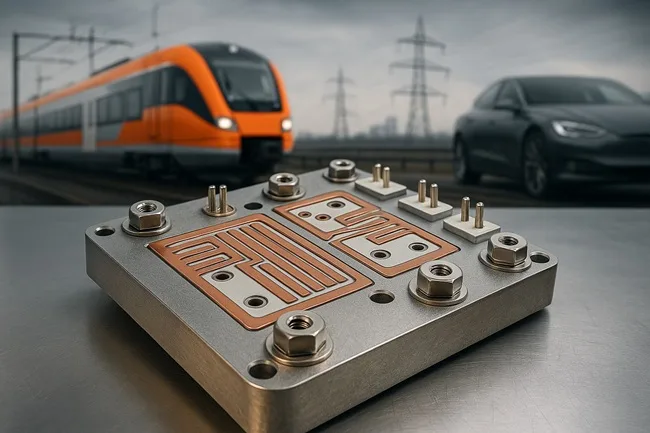
In application terms, AlSiC’s role spans substrates, housings, and heat spreaders for power modules. These are not the kinds of components that make consumer-facing headlines, but they are essential for ensuring that modern power electronics can operate safely and efficiently in increasingly compact and demanding systems. As power module designs become more integrated and switching frequencies increase, thermal management and mechanical reliability have become deal-breakers. AlSiC, with its hybrid profile of conductivity, mechanical strength, and lightweight structure, is perfectly suited to this transition.
Why is the timing right for AlSiC to scale in high-reliability electrification systems?
The industry context could not be more favorable. Over the past decade, power electronics have undergone a quiet revolution. Silicon carbide and gallium nitride devices are being increasingly adopted in place of traditional silicon in high-power and high-frequency applications. With those changes come new thermal and mechanical challenges, especially in sectors like electric rail, heavy-duty electric vehicles, and smart grid infrastructure.
CPS Technologies Corporation (NASDAQ: CPSH), one of the best-known AlSiC suppliers in the United States, recently won a $15.5 million contract with a multinational semiconductor customer to deliver advanced power module components. These are slated to support high-speed rail, energy, and grid infrastructure systems, reflecting exactly the sectors where AlSiC is most needed. The company’s AlSiC product line has been highlighted as a key growth vector, and CPS Technologies Corporation is also expanding into a larger manufacturing facility to meet projected demand.
What makes AlSiC suitable for these sectors is not just its thermal conductivity or weight profile. It is the material’s reliability under harsh operating conditions. High-speed trains, industrial converters, and EV traction systems operate under high vibration, frequent temperature swings, and space-constrained environments. Any material used in these systems must survive both electrically and structurally over years of operation. AlSiC’s microstructure and mechanical integrity give it the reliability edge that many conventional materials struggle to match.
In parallel, global policy is driving investment in electrification. From the United States Department of Energy’s grid modernization programs to the European Union’s push for carbon-neutral rail, the demand for power modules with high reliability and low lifecycle costs is rising. In this environment, the conversation around electrification is shifting. It is no longer just about the silicon or the battery chemistry; it is about the packaging, the thermal path, and the materials that allow power to flow efficiently and safely.
What challenges must AlSiC overcome to achieve broader market adoption?
While AlSiC’s technical merits are clear, the material faces certain headwinds that could limit or delay mass adoption. One of the primary issues is cost. AlSiC is not a drop-in replacement for aluminum or copper-based housings. The production methods—especially near-net-shape infiltration of aluminum into a silicon carbide preform—require specialized tooling and high process control. This adds upfront costs, making it more suitable for mature designs or high-value systems where performance justifies the expense.
Tooling and manufacturing scale are critical barriers. For example, in automotive power electronics, cost and scalability drive adoption decisions. Even if AlSiC outperforms traditional materials, original equipment manufacturers must balance material excellence with procurement economics. In contrast, sectors like rail and aerospace, where reliability and lifecycle performance take precedence over volume cost, may adopt AlSiC more readily.
Another consideration is competition from ceramic materials and other metal matrix composites. In some applications, ceramic substrates such as aluminum nitride or silicon nitride offer acceptable thermal and mechanical properties at lower costs. While they may lack the mechanical strength or CTE tunability of AlSiC, they remain viable contenders for many applications and are already well-established in the supply chain.
Quality assurance, particularly in automotive or aerospace settings, is another hurdle. Because AlSiC parts often serve as structural and thermal pathways in mission-critical systems, consistent material properties and long-term fatigue resistance are non-negotiable. This places pressure on manufacturers to ensure process repeatability, material characterization, and high-volume reliability.
How might AlSiC adoption unfold in the electrification value chain?
In the short to medium term, AlSiC is likely to expand its footprint in sectors that demand a mix of thermal performance, mechanical reliability, and lightweight construction. These include railway traction systems, grid-scale converters, hybrid and electric aircraft, and high-voltage electric vehicle inverters. As the design cycles in these sectors are longer and more performance-driven than cost-driven, AlSiC’s premium positioning is more defensible.
From a supply-chain perspective, companies that have invested early in AlSiC process capabilities may see significant growth opportunities. These suppliers are likely to benefit from long-term contracts as customers look to lock in access to critical materials that can support high-power module integration. There is also a potential for vertical integration, as module designers begin to incorporate housing materials into co-design strategies for better system optimization.
Over time, cost pressures may drive innovation in AlSiC processing, such as additive manufacturing, hybrid composites, or low-cost infiltration processes. If these efforts succeed, the material could migrate into mid-tier automotive applications or consumer-grade power electronics. That would require a concerted push across manufacturing, design standardization, and certification—initiatives that may be catalyzed by industry consortia or public-private electrification efforts.
What is also emerging is a new narrative around “material stack innovation” in electrification. While much investor attention has been focused on batteries or semiconductors, materials like AlSiC are enabling the interfaces and pathways that allow energy to move efficiently. This growing awareness could place companies with material IP and integration capability into a new class of high-value infrastructure enablers.
Why are industry stakeholders and investors starting to pay closer attention to AlSiC’s role in electrification?
AlSiC’s trajectory reflects a broader shift in how infrastructure and electrification technologies are evaluated. As systems become more compact, powerful, and interconnected, the packaging and substrate layers are no longer just mechanical supports—they are central to system performance. This places AlSiC at the heart of the conversation for a growing set of electrification applications.
For investors, the companies supplying these materials, even if small-cap or privately held, may represent under-the-radar plays on the electrification trend. Their growth will not be driven by consumer hype but by long-cycle demand, program wins in rail or energy, and adoption by Tier-1 module integrators.
For OEMs and engineering teams, the choice of substrate or housing material can make the difference between passing thermal validation or facing redesign delays. As design margins tighten and power densities climb, the advantages of AlSiC are becoming harder to ignore.
Ultimately, while AlSiC may not dominate the materials conversation like lithium or silicon carbide, it occupies a critical position within the electrification stack. The next 24 to 36 months could determine whether it remains a high-performance niche or becomes a foundational material in the infrastructure of the low-carbon economy.
Discover more from Business-News-Today.com
Subscribe to get the latest posts sent to your email.