Fermi America has finalized two pivotal agreements with the City of Amarillo and Carson County, setting the groundwork for its 11 gigawatt (GW) hybrid energy campus in the Texas Panhandle. The partnerships secure long-term water rights and a ten-year property tax abatement, marking a crucial step in turning its multi-billion-dollar “HyperGrid” concept into operational reality. The move not only accelerates Fermi America’s infrastructure rollout but also positions Amarillo as one of the nation’s most strategically aligned regions for powering artificial intelligence workloads.
The Texas Panhandle, long associated with agriculture and energy, is being reimagined as a future data-power corridor. For Amarillo city officials and Carson County commissioners, this partnership is less about short-term incentives and more about positioning the region at the center of America’s AI infrastructure map. For Fermi America’s investors, it demonstrates that the company—recently listed on Nasdaq under ticker FRMI—is executing on tangible milestones far sooner than skeptics expected.
Why Fermi America’s water and tax partnerships represent a crucial foundation for its 11 GW AI energy grid
At the core of Fermi America’s announcement lies a dual arrangement that resolves two of the most complex prerequisites for any hyperscale infrastructure project in Texas: guaranteed water access and a structured local tax framework. Under the new 20-year water-supply agreement, the City of Amarillo will provide Fermi America with up to 2.5 million gallons per day (MGD) at a rate set at twice the local taxpayer price. The agreement also allows expansion to 10 MGD as future phases of the project come online.
Water is a critical, often overlooked resource for data-center and energy operations. It underpins site preparation, cooling, and long-term maintenance of turbine and heat-exchange systems. For a region already challenged by drought cycles, Amarillo’s willingness to formalize this supply indicates confidence that the project’s industrial returns outweigh environmental risks. The rate premium further suggests the city views the arrangement not as a subsidy but as a high-value economic partnership.
Meanwhile, Carson County approved a ten-year tax abatement and created a reinvestment zone encompassing Fermi America’s project area. The phased structure reduces early-stage capital pressure but ensures tax revenue rises with the project’s expansion. According to local commissioners, this setup preserves community accountability while incentivizing Fermi America to meet its promised job-creation and infrastructure-investment targets.
Industry observers note that this combination of local tax support and premium-rate water allocation is an unusually balanced model in the energy-tech sector—one that could become a template for AI-infrastructure development across the U.S. Southwest.
How Fermi America’s “HyperGrid” blends nuclear, solar, gas, and storage to meet AI-driven power demand
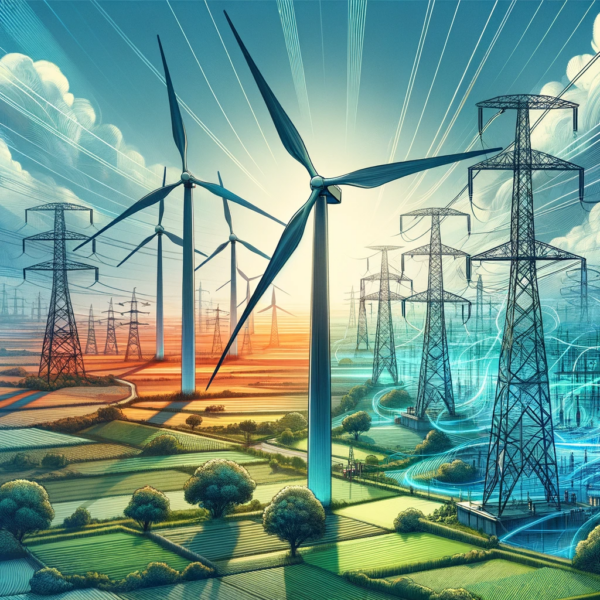
Beyond the municipal details, the strategic scope of Fermi America’s plan sets it apart from typical data-center expansions. The 11 GW “HyperGrid” project is envisioned as a multi-source energy ecosystem combining advanced nuclear technology, natural-gas turbines, large-scale solar fields, and battery storage systems—all integrated into a single AI-optimized grid architecture.
The company had earlier signed an MOU with Hyundai Engineering & Construction to co-develop the nuclear component, expected to include Westinghouse AP1000 reactors. These will be paired with natural-gas assets and high-capacity batteries to ensure stable base-load generation. The resulting hybrid configuration aims to provide low-cost, carbon-reduced electricity to power data-center clusters supporting AI, high-performance computing, and industrial automation.
By securing both water and tax frameworks early, Fermi America is de-risking the most expensive civil-engineering phases of its build-out. Analysts at MarketWatch noted that such front-loaded groundwork typically increases project bankability, allowing institutional financiers to evaluate debt-facility options with greater confidence. The company’s IPO in late September 2025 raised roughly $682 million, a figure that provides sufficient liquidity for site development, permitting, and engineering design before major construction begins in 2026.
Energy strategists have described the initiative as a turning point for regional diversification. Texas has long been synonymous with oil and gas; now, through projects like Fermi America’s, it is becoming a proving ground for hybridized energy infrastructure purpose-built for digital workloads.
What economic and community outcomes Amarillo and Carson County expect from the Fermi America partnerships
Local leaders have emphasized that the deal extends beyond immediate fiscal incentives. Amarillo city officials pointed out that infrastructure associated with the water-supply agreement—pipelines, reservoirs, and treatment facilities—will also strengthen the city’s long-term water resilience. Even if AI demand plateaus, those assets remain within municipal control.
Carson County’s leadership took a similar view. The reinvestment zone allows the county to direct a portion of future tax revenue toward road improvements, emergency services, and broadband expansion—investments that align with regional modernization goals. In their public meeting, commissioners reportedly described the collaboration as “a generational opportunity to anchor Amarillo’s role in the 21st-century energy economy.”
For Fermi America, such alignment mitigates regulatory risk. By embedding community reinvestment into the tax framework, the company avoids the public opposition that has hindered large-scale energy projects elsewhere in Texas. Economists following the case noted that this “shared upside” model could become a best-practice blueprint for future AI-energy partnerships.
How investors and analysts interpret Fermi America’s progress amid the broader AI-infrastructure boom
On Wall Street, Fermi America’s shares have climbed steadily since its Nasdaq debut, trading near $29 as of late October 2025. The company’s valuation now hovers just under $3 billion, reflecting enthusiasm for its unique blend of energy infrastructure and data-center strategy. Analysts covering the newly listed stock maintain a cautiously bullish stance, with price targets ranging between $27 and $37 per share.
Institutional sentiment has been influenced by two factors: visibility and execution. The water-rights and tax-abatement deals provide tangible validation for a project that, until recently, existed largely as a concept. This visibility reduces perceived risk for early institutional investors seeking exposure to AI-linked infrastructure plays. Hedge-fund data show that several energy-transition funds have initiated small positions in FRMI since mid-October, suggesting growing confidence that the project will achieve financial close on its first phase by 2026.
Still, market analysts caution that Fermi America’s ambitions come with substantial capital intensity. Building out 11 GW of capacity—particularly with nuclear assets—will require multi-tranche financing, regulatory coordination with the Department of Energy, and potentially complex environmental assessments. Those factors explain why investor optimism remains tempered by the recognition that the company’s revenue generation is several years away.
Nevertheless, sentiment across the sector is upbeat. AI-focused infrastructure stocks have consistently outperformed broader indices in 2025, buoyed by expectations that demand for clean, high-density computing power will remain robust throughout the decade. In that context, Fermi America’s execution milestones are viewed as leading indicators of where investor capital is flowing next.
Why local and federal collaboration could redefine energy and data-center economics across the Southwest
From a policy standpoint, the Amarillo–Carson County–Fermi America alignment mirrors a broader national shift toward regional partnerships that blend private innovation with municipal flexibility. Similar structures are emerging in Arizona, New Mexico, and Oklahoma, where local governments are granting adaptive incentives to attract AI-infrastructure developers without committing open-ended subsidies.
Experts in energy regulation argue that this decentralized approach could outcompete federal-level industrial policy by tailoring benefits to local resource profiles. Amarillo’s water-supply flexibility and Carson County’s phased tax relief illustrate how municipal agencies can safeguard public resources while enabling large-scale innovation.
For Fermi America, these early relationships will likely ease subsequent permitting for grid interconnections, transmission upgrades, and nuclear component siting. Should the first 1 GW phase prove successful, subsequent phases could attract co-investment from hyperscale cloud providers or AI chipmakers eager to secure long-term power offtake agreements.
The strategic geography also matters: Amarillo sits at a logistical crossroads linking major fiber and transmission corridors that serve Dallas, Denver, and Phoenix. By anchoring operations there, Fermi America could establish a “central node” for AI power distribution across the American interior—a potentially transformative advantage as compute-intensive models scale beyond coastal hubs.
What experts say about the long-term implications for energy, AI, and investor confidence
Energy-sector commentators view Fermi America’s agreements as more than a regional headline—they see them as a preview of the new industrial compact emerging around AI. By combining stable baseload generation with next-gen computing infrastructure, the company is betting that power, not hardware, will become the defining bottleneck of the AI era.
Industry experts suggest that this model, if successful, could recalibrate how utilities, municipalities, and technology firms negotiate value creation. Instead of traditional data-center leases, future deals may involve vertically integrated energy-to-compute ecosystems. Investors following the space highlight that early movers like Fermi America could capture a structural advantage as AI workloads double every two years.
In the short term, the partnerships reduce execution risk and send a clear signal to markets that the company’s ambitious 11 GW roadmap is achievable. Over the longer horizon, they cement Amarillo’s status as a testbed for the convergence of energy security, digital infrastructure, and public-private investment.
For Fermi America, the path ahead remains capital-heavy but increasingly credible. With its first GW of water rights secured and its tax structure formalized, the company is no longer just pitching an idea—it’s building the foundation for an AI-powered industrial future rising from the heart of Texas.
Discover more from Business-News-Today.com
Subscribe to get the latest posts sent to your email.