



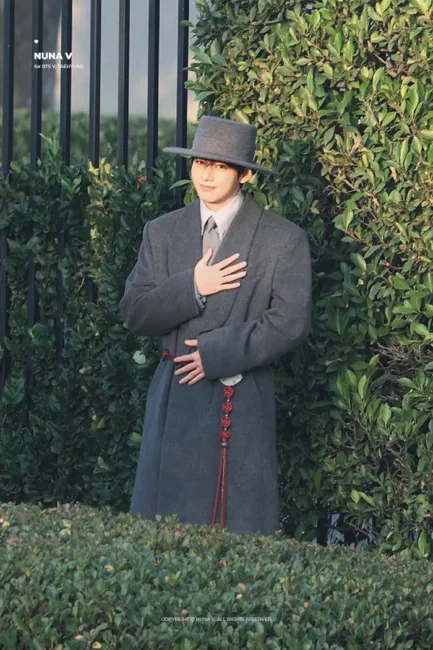
When V of BTS—better known as Kim Taehyung—stepped onto the red carpet at Vogue World 2025 Hollywood, fashion history quietly unfolded. The singer arrived at Paramount Pictures Studios in Los Angeles wearing a custom gray ensemble widely identified as the work of JayBaek Couture, a Seoul-based luxury house celebrated for modern interpretations of Korean tradition. The look, featuring hanbok-inspired drape, a crimson woven belt, and traditional norigae charms, instantly became the night’s cultural talking point.
The October 26 appearance marked a symbolic convergence of pop culture, craftsmanship, and heritage. V was widely reported to be the first K-pop artist ever to attend Vogue World, joining Hollywood luminaries such as Dakota Johnson and Elle Fanning in an event blending film, art, and fashion performance. His quiet confidence on the carpet signaled a deeper shift—the ascension of Korean heritage design from regional acclaim to global recognition.
Why was V’s Vogue World debut considered a landmark for Korean fashion and soft power?
V’s participation went far beyond celebrity attendance. For Korea’s creative industries, it embodied a new phase of soft-power fashion diplomacy. Over the past decade, the global “Hallyu” wave has transformed music, cinema, and beauty into billion-dollar exports. Fashion was the final frontier, and V’s presence on one of the world’s most exclusive red carpets gave that frontier a human face.
The look balanced opposing ideas—heritage and futurism, simplicity and opulence. Reports from fashion outlets described the long gray overcoat layered over a relaxed suit, cinched by the crimson belt and offset by subtle silver jewelry. Fans noted the inclusion of a vintage pocket watch said to date back to Korea’s Gojong era, a symbolic bridge between dynastic elegance and modern celebrity. Whether or not the timepiece truly hailed from the 1900s, the styling resonated deeply with audiences attuned to historical nuance.
By integrating traditional motifs into a sleek modern silhouette, JayBaek Couture and V created a visual manifesto: Korean identity can coexist with, and even elevate, global luxury aesthetics. The gesture reframed what representation looks like—not a costume, but a conversation.
How does the hanbok influence translate into contemporary menswear design?
The hanbok, Korea’s traditional garment, has always emphasized balance—fluid lines, proportional harmony, and color symbolism tied to Confucian ideals. In V’s Vogue World look, those principles emerged through tailoring rather than ornamentation. The gentle pleats of the trousers echoed the hanbok’s flowing baji, while the coat’s extended lapel suggested the elegant sweep of a durumagi, the outer robe once worn by scholars and royals.
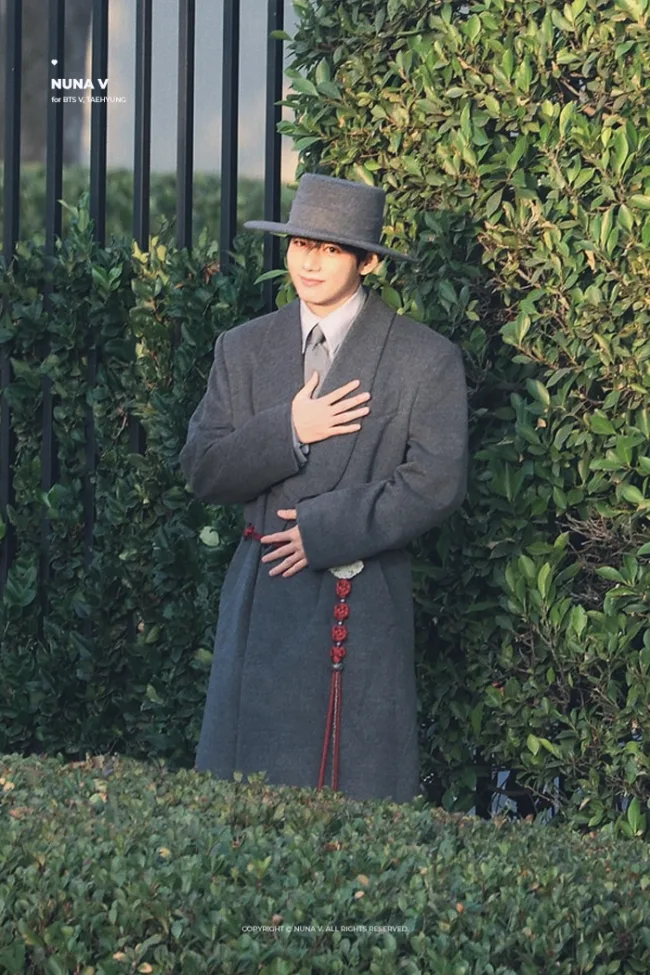
Yet the cut remained decisively contemporary. The gray tone modernized the aesthetic, avoiding the pastel palette typical of ceremonial hanbok. The crisp structure and minimalist accessories aligned it with Western sartorial codes, allowing it to communicate fluently in both languages of style.
Fashion historians see this as part of a global “heritage futurism” movement—designers worldwide revisiting cultural garments through modern construction. For Korean couture, V’s outfit became a textbook example of how to adapt ancestral design logic to red-carpet relevance.
How did Vogue World 2025 become the stage for this cultural crossover?
Vogue World: Hollywood 2025 was conceived as a hybrid spectacle uniting fashion, cinema, and live performance. Set against the storied backlot of Paramount Studios, it paid homage to the Golden Age of film while celebrating modern diversity in storytelling. Each attendee represented a chapter in that narrative—actors, athletes, and musicians embodying distinct creative worlds.
Amid that mosaic, V’s understated gray silhouette stood out precisely because it wasn’t designed to shout. His composure contrasted with the theatrical costumes surrounding him, proving that cultural authenticity can command attention without excess. When global fashion houses are increasingly accused of tokenism, this quiet assertion of identity felt refreshing.
Observers described his presence as “modern Korean royalty in Hollywood.” That phrase captured not only the visual impression but also the symbolism of a Korean artist redefining red-carpet language in front of the world’s most influential style gatekeepers.
What does this moment reveal about the business of cultural luxury?
From a business perspective, V’s Vogue World debut demonstrated how celebrity visibility can accelerate market legitimacy for local designers. Within hours, global search interest for “JayBaek Couture” spiked across fashion capitals, with media outlets dissecting every detail of the ensemble. For a couture house operating primarily within Asia, such exposure equals millions in earned media value.
It also underscores the evolving economics of luxury. Today’s consumers—especially Millennials and Gen Z—seek authenticity and narrative, not just brand prestige. A suit rooted in cultural storytelling can compete with a logo-stamped tuxedo because it offers emotional connection. That shift favors designers from heritage-rich regions like Korea, India, and Japan, where craftsmanship carries intrinsic cultural context.
For Seoul’s fashion ecosystem, this could catalyze investment and collaboration. Expect luxury conglomerates to scout Korean ateliers for capsule collections or co-branded projects. V’s appearance didn’t just celebrate one designer; it validated a creative economy.
How are K-pop and high fashion increasingly intertwined?
K-pop idols have long served as fashion’s unofficial ambassadors. From BTS and Blackpink to NewJeans, their partnerships with global houses have redefined marketing dynamics. But V’s Vogue World outing felt different—it wasn’t about endorsing a European label; it was about championing a Korean one.
That distinction matters. When cultural figures use their influence to elevate domestic craftsmanship, they help diversify luxury’s power structure. V’s approach mirrors that of other global icons—think Rihanna spotlighting Caribbean designers or Zendaya promoting Black American creators. It’s representation with agency, not dependency.
This evolution suggests a future where Korean artists don’t merely model for Western brands but co-author fashion narratives. As K-pop continues expanding its footprint, heritage-infused collaborations could become a dominant trend.
Why does BTS V’s heritage-driven Vogue World look signal a turning point for fashion, authenticity, and identity economics?
From an editorial standpoint, the impact extends beyond fabric and form. It represents a recalibration of global aesthetics. Fashion’s center of gravity is shifting toward authenticity, and V’s choice exemplified that shift with surgical precision.
For the artist himself, it reaffirmed his position as BTS’s resident style visionary—known for understated elegance rather than spectacle. For Korean luxury design, it proved that cultural heritage can anchor modern relevance. For the industry, it illustrated that inclusion works best when it’s lived, not performed.
This alignment between art, heritage, and commerce is the new frontier of identity economics. Countries that can package cultural authenticity within aspirational design will dominate the next decade of luxury consumption. Korea, already exporting its sound and screen, is now exporting its soul through design.
What could come next for V and Korean couture?
Analysts expect the momentum to continue. JayBaek Couture’s visibility after Vogue World 2025 positions it for international collaborations or limited-edition retail showcases. V, meanwhile, may expand his fashion footprint beyond ambassadorships into creative direction or capsule co-design.
The broader takeaway is that global fashion weeks are no longer monocultural. As audiences diversify, so will the aesthetics of prestige. Moments like V’s debut set the tone for future red carpets—where cultural pride becomes the new luxury code, and heritage replaces hype as the ultimate differentiator.
Key takeaways from BTS V’s Vogue World 2025 appearance
- V of BTS attended Vogue World 2025 Hollywood at Paramount Studios, Los Angeles, on October 26 2025, wearing a custom Korean-heritage suit widely attributed to JayBaek Couture.
- The ensemble fused hanbok-inspired tailoring with Western menswear, featuring a long gray coat, a red woven belt, and traditional norigae charms.
- His presence was widely reported as the first by a K-pop artist at Vogue World, highlighting Korea’s growing influence on global luxury fashion.
- The appearance generated massive visibility for Korean couture and reinforced fashion’s shift toward cultural authenticity and identity-driven storytelling.
- Industry experts interpret the moment as a blueprint for heritage futurism—where tradition, not trend, drives global appeal.
Discover more from Business-News-Today.com
Subscribe to get the latest posts sent to your email.