


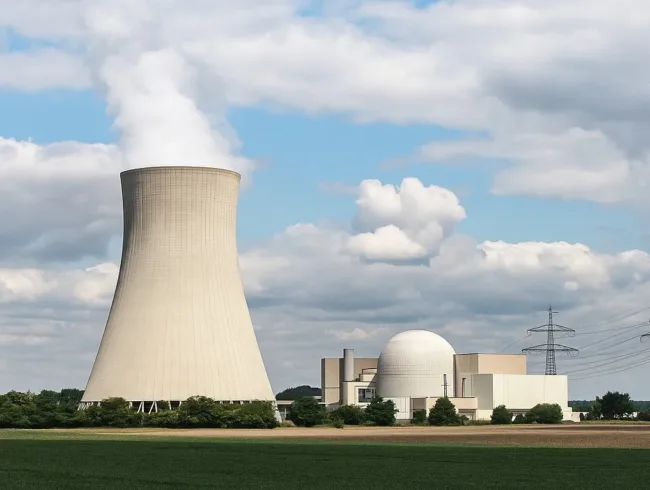
As the global energy transition accelerates, governments are grappling with a difficult tradeoff: how to maintain reliable, low-carbon electricity while scaling up intermittent renewables and waiting for next-generation nuclear technologies to become commercially viable. One answer gaining momentum across Europe, North America, and Asia is the strategic extension of existing nuclear power plant lifespans. From Sweden and the Netherlands to the United States and Japan, policymakers and utilities are revisiting earlier decommissioning timelines, pushing to keep reactors online for another 20 years or more.
But can lifetime extensions of aging nuclear reactors truly close the widening energy gap—especially when new builds remain delayed and next-gen small modular reactors are not yet ready for deployment at scale? And what are the safety, financial, and regulatory risks associated with relying on decades-old infrastructure as a bridge strategy? As nations shift from fossil fuel dependency toward decarbonized systems, the role of lifetime extensions may be more consequential than previously imagined.

What is driving the push to extend nuclear power plant lifetimes?
Across both developed and emerging economies, energy security and climate action are converging as twin imperatives. Nuclear power currently accounts for around 10 percent of global electricity generation, but it delivers nearly 20 percent in advanced economies where demand for stable baseload power remains high. In recent years, lifetime extensions have re-emerged as a cost-effective, near-term tool to preserve this capacity.
This policy pivot is most evident in Europe, where supply disruptions following the Russia–Ukraine war underscored vulnerabilities in gas dependency. The European Commission estimates that more than €240 billion will be needed by 2050 for both lifetime extensions and new large-scale nuclear reactors across the bloc. Countries such as France, Sweden, Belgium, and the Netherlands are all reevaluating past decisions to phase out nuclear power and are now implementing or proposing long-term extensions instead.
In Sweden, Vattenfall is pursuing extensions for its Forsmark and Ringhals reactors from 60 to 80 years, aiming to produce over 800 terawatt-hours of low-carbon electricity over their extended lifetimes. Similarly, the Netherlands has submitted legislation to allow Elektriciteits Produktiemaatschappij Zuid-Nederland B.V. to extend the operation of the Borssele Nuclear Power Station from 2033 to potentially 2054. In the United States, the Nuclear Regulatory Commission has already granted 80-year operating licenses to several plants, including Dominion Energy’s Surry and Turkey Point units.
Lifetime extensions offer an appealing combination of lower capital expenditure, grid stability, and emissions-free electricity—particularly in countries that lack the political consensus or financial appetite to initiate new nuclear builds in the near term.
What technical and regulatory challenges come with extending nuclear lifespans?
While the strategic logic behind lifetime extensions is compelling, the technical and regulatory path is complex. Extending a nuclear reactor’s life beyond its original design requires a comprehensive reassessment of core components such as pressure vessels, cooling systems, control instrumentation, and structural materials. Many reactors currently operating were designed for 40 years, with recent upgrades pushing that to 60 years. Moving beyond that to 80 years introduces new safety variables related to material fatigue, corrosion, and outdated control systems.
National nuclear safety regulators must perform rigorous assessments before approving such extensions. This includes detailed safety evaluations, probabilistic risk analyses, seismic readiness assessments, and operator competence verification. The extension process often mandates substantial investment in plant modernization, including digital control systems, post-Fukushima safety upgrades, and improvements to emergency response protocols.
Another critical issue is waste management. Extending reactor lifetimes inevitably increases the volume of spent nuclear fuel and low-level waste, requiring expanded storage solutions and long-term disposal strategies. While countries like Finland and Sweden are advancing deep geological repository plans, many others still rely on interim storage facilities with limited long-term certainty.
Financially, while refurbishing an existing plant is far less expensive than building a new one, the upfront capital outlay is not insignificant. Refurbishment costs can range from hundreds of millions to several billion dollars per unit, depending on the scope of work and plant condition. This raises questions about cost recovery mechanisms, particularly in deregulated markets where merchant generators may struggle to finance major upgrades without policy support or power purchase guarantees.
Can lifetime extensions really bridge the gap before next-generation reactors arrive?
The role of lifetime extensions is increasingly viewed as transitional. They are not a substitute for building new nuclear capacity, but they are an essential stopgap measure to prevent capacity shortfalls while next-gen technologies mature. In a world where energy demand is rising due to electrification, digitalization, and industrial growth, preserving existing nuclear capacity helps prevent backsliding into fossil fuel dependence.
The International Energy Agency has classified lifetime extensions as one of the most cost-effective sources of low-carbon electricity in the near term. While new gigawatt-scale reactors can take 10 to 15 years to build, a well-managed extension project can be completed within 3 to 5 years, assuming favorable regulatory and engineering conditions. In markets where new build timelines are slipping—such as the United Kingdom’s Hinkley Point C or the United States’ Vogtle Units 3 and 4—extensions provide an essential buffer.
However, lifetime extensions are inherently limited in scale and duration. Not every reactor can be safely extended beyond 60 or 80 years. Plants with significant material degradation, outdated designs, or poor economic performance may not justify further investment. Moreover, the value of extensions diminishes if they simply defer hard decisions about building the next generation of clean baseload assets.
The bridging effect of lifetime extensions will be most effective when paired with aggressive build-out of new technologies such as small modular reactors, advanced sodium or molten salt reactors, and green hydrogen electrolysis powered by nuclear heat. Without this dual-track strategy, extensions risk becoming an over-relied-upon patch rather than a foundation for long-term energy resilience.
How nuclear lifetime extensions are reshaping utility strategies, investor appetite, and national energy policy
For utilities, pursuing lifetime extensions is a strategic hedge against market volatility and regulatory inertia. Many power producers now see extensions as a way to secure low-carbon capacity with shorter lead times and lower risk profiles than new builds. However, successful execution demands strong asset condition monitoring, experienced operational teams, and disciplined project management.
From an investor standpoint, lifetime extensions offer predictable cash flows, often backed by long-term power purchase agreements or capacity payments. Infrastructure funds, sovereign wealth vehicles, and pension funds have shown growing interest in supporting refurbishment projects, especially in stable policy environments. That said, the regulatory risk of delays or non-approvals remains significant and must be priced into investment models.
Policy makers face the challenge of balancing public acceptance, safety assurance, and system reliability. Communication strategies around life extension must address public concerns over aging infrastructure and perceived safety risks. Countries with well-regarded regulators and strong public transparency mechanisms—such as Finland and Canada—have found it easier to gain support for extensions. Others may face opposition from anti-nuclear groups or skeptical stakeholders, particularly in jurisdictions where previous shutdowns were politically motivated.
Ultimately, lifetime extensions must be embedded within national energy planning frameworks. This includes clarity around decommissioning timelines, waste management obligations, and integration with renewable generation and storage.
What strategic inflection points will determine the future of nuclear life extension?
Several critical inflection points will shape the long-term viability of nuclear life extension as an energy strategy. One is whether national regulators begin approving 80-year or even 100-year licenses—a move that could dramatically shift investment dynamics. Another is whether governments provide financial mechanisms to de-risk extension investments, such as loan guarantees, contract-for-difference schemes, or inclusion under green taxonomy regulations.
Technology readiness is another key factor. The emergence of digital twins, predictive maintenance tools, and advanced materials could make extensions more viable for older plants. Likewise, the speed at which next-gen reactors and SMRs reach commercial deployment will determine how long legacy reactors must remain in service.
Equally important is societal acceptance. Public sentiment can shift rapidly in either direction depending on energy prices, climate concerns, and incidents elsewhere in the global fleet. Countries that proactively invest in safety culture, community engagement, and transparent regulation will have an edge in managing this perception risk.
In the broader context, lifetime extensions should be seen not as a fallback option, but as a strategic asset in a well-rounded energy transition portfolio. They are the low-hanging fruit that can preserve critical baseload capacity, reduce emissions, and buy time—if used wisely.
Share this:
Discover more from Business-News-Today.com
Subscribe to get the latest posts sent to your email.