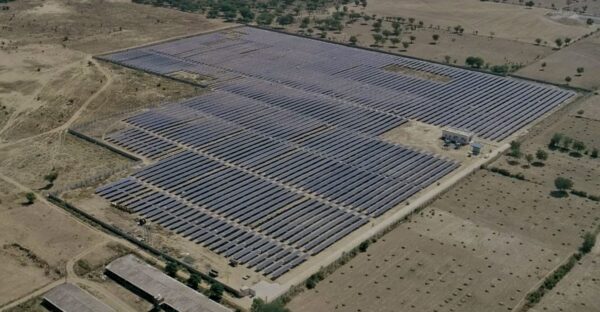




Why the Shanghai Electric–Econergy Parau Phase II solar project marks a pivotal shift in Romania’s clean energy infrastructure
Shanghai Electric Group Co., Ltd has signed a general contracting agreement for the 342 megawatt Parau Phase II photovoltaic project in Romania, deepening its footprint in one of Central and Eastern Europe’s most active renewable energy markets. The deal, finalized on October 1, 2025, brings the Chinese engineering conglomerate’s cumulative installed PV capacity in Romania to over 550 MW, underscoring its growing dominance in the region’s clean energy buildout.
The contract was awarded by Econergy Renewable Energy Ltd, an Israel-based independent power producer and developer with a robust pipeline in Romania. Together, the two companies are advancing what could become a cornerstone of Romania’s national energy transition strategy. The project also signals increasing confidence in Romania’s ability to attract large-scale, foreign-led infrastructure investment in solar—an area where neighboring EU countries have struggled with permitting and grid access issues.
Shanghai Electric characterized the Parau Phase II agreement as its fourth Romanian solar contract, following previously completed projects including Parau Phase I (91.4 MW), Schultu (56 MW), and Ovidiu (60 MW). These projects represent a systematic regional expansion, leveraging Shanghai Electric’s global EPC and OEM capabilities while adapting to European market expectations around sustainability, compliance, and delivery.
How Romania is becoming a solar energy hotspot in Central and Eastern Europe amid EU green transition goals
Romania has quickly become a standout player in Europe’s solar energy landscape. With the EU’s Fit-for-55 and Green Deal programs exerting policy pressure to cut carbon emissions and accelerate renewable uptake, the Romanian government has opened its regulatory framework to attract utility-scale solar investments. The country’s grid capacity, land availability, and competitive labor costs offer a favorable environment for foreign EPCs, especially those like Shanghai Electric that are seeking beachhead markets in Europe outside the saturated Western economies.
Projects like Parau Phase II are part of a broader reorientation in Romania’s energy strategy. Traditionally reliant on coal and gas, the country is rapidly shifting toward decentralized, renewable generation—solar, in particular, due to its shorter development cycle and modular scalability. In addition, Romania’s access to EU resilience funds and green infrastructure subsidies has made it financially viable for developers to take on multi-hundred-megawatt installations with confidence.
Parau Phase II alone is expected to significantly enhance the country’s solar generation portfolio, which until recently was largely composed of sub-100 MW facilities. The project is expected to generate clean electricity for tens of thousands of households and mitigate thousands of tonnes of CO₂ annually, in line with Romania’s commitments under the Paris Agreement and EU-level climate obligations.
How the Shanghai Electric and Econergy partnership signals a new EPC delivery model for cross-border solar expansion
While the engineering, procurement, and construction (EPC) model has been heavily commoditized in mature markets, the Shanghai Electric–Econergy partnership brings renewed attention to the role of vertical integration and international joint delivery. Shanghai Electric’s ability to serve as both an equipment manufacturer and EPC contractor—combined with Econergy’s local asset development, permitting, and market interface—makes this collaboration an example of efficient cross-border project execution in emerging European markets.
For Shanghai Electric, the Parau Phase II deal is not merely another EPC contract. It is a demonstration of its capacity to align with global partners, deliver European-standard solar farms, and meet aggressive sustainability targets while managing cost, logistics, and compliance. For Econergy, working with a partner of Shanghai Electric’s scale and supply chain efficiency allows the company to rapidly scale its Romanian portfolio with predictable CAPEX and clearer timelines—an edge in a competitive IPP landscape.
This model of cooperation—pairing Chinese engineering and procurement scale with Western development expertise—may become a blueprint for future solar expansion in markets like Bulgaria, Serbia, and even Ukraine post-reconstruction.
What execution risks and regulatory hurdles could impact the success of Parau Phase II in Romania’s evolving solar market
Despite the optimism, Parau Phase II is not without execution risk. Romania’s energy infrastructure, while improving, still presents grid interconnection bottlenecks and evolving regulatory oversight. Large PV farms face potential curtailment due to intermittency issues and limited storage integration. This places pressure on project developers to include grid-stabilizing features such as advanced inverters, reactive power support, and future-ready hybrid configurations (e.g., storage plus solar).
Supply chain challenges also loom large. While Shanghai Electric’s vertical integration helps mitigate risks associated with module availability and logistics, regional inflation, currency fluctuations, and interest rate volatility may impact project economics. Additionally, local opposition to land use, environmental permits, and proximity to residential areas could result in delays, although this has not been flagged specifically for Parau Phase II to date.
Moreover, Romania’s regulatory environment is in transition. With the rollout of the Contracts for Difference (CfD) support scheme, PPAs, and ongoing reforms to the balancing market, projects commissioned in 2026 and beyond will need to be flexible enough to operate under new market conditions. Whether Parau Phase II can capture post-2025 incentive structures will be key to its long-term commercial viability.
How Parau Phase II could shape the future of large-scale solar and grid infrastructure development in Romania
Parau Phase II could become a flagship symbol of Romania’s transition from fossil-fuel dependency to a green-powered grid. If delivered on time and within budget, it may unlock further foreign investment, catalyze domestic solar manufacturing interest, and accelerate job creation in engineering, maintenance, and ancillary sectors. The project may also encourage co-investment in battery energy storage systems (BESS) and hybrid renewable portfolios—a direction being promoted by the EU’s Trans-European Energy Networks (TEN-E) strategy.
From a reputational standpoint, this project boosts Romania’s image as an investable clean energy destination. The country is increasingly viewed by developers and infrastructure funds as a “next frontier” after Poland and Hungary, with grid scale, labor, and political alignment that rival Western Europe. Projects like Parau Phase II provide proof points that bankable, giga-scale clean energy infrastructure is not only possible but economically rational in Romania.
Why Shanghai Electric’s latest Romanian solar deal could set a blueprint for utility-scale PV growth across Eastern Europe
From a strategic and journalistic lens, the Parau Phase II agreement is more than a project milestone—it is a signal. It shows how state-owned industrial giants like Shanghai Electric are localizing value creation in high-growth European energy markets. It also demonstrates how Romanian solar is evolving from boutique installations to scalable, grid-relevant generation assets.
This could usher in a new wave of cross-border EPC collaborations, where Eastern Europe becomes the testing ground for efficient, high-yield solar systems built on international cooperation. The success of Parau Phase II may also influence investor appetite, prompting project finance groups, green bond issuers, and infrastructure funds to enter Romania’s market earlier and more decisively.
In essence, Parau Phase II is where geopolitical, environmental, and industrial trends intersect—and where the future of Europe’s energy mix is quietly being constructed, one megawatt at a time.
What are the key takeaways from Shanghai Electric’s 342 MW Parau Phase II solar agreement with Econergy in Romania
- Shanghai Electric signed a general contracting agreement with Econergy for a 342 MW PV project in Romania, its fourth solar venture in the country.
- The Parau Phase II project brings Shanghai Electric’s total Romanian solar footprint to over 550 MW, reflecting its broader European strategy.
- Romania is emerging as a solar growth hub, driven by EU climate targets, regulatory reforms, and rising investor interest in large-scale PV infrastructure.
- The project exemplifies a cross-border delivery model, combining Chinese EPC capabilities with local development expertise from Econergy.
- Potential risks include supply chain disruptions, grid connection delays, and evolving market rules under Romania’s ongoing energy reforms.
- If successful, the project could accelerate broader adoption of renewables, storage solutions, and foreign-led infrastructure in Eastern Europe.
Discover more from Business-News-Today.com
Subscribe to get the latest posts sent to your email.