

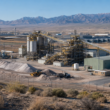


Avira Resources Limited (ASX: AVW) has significantly deepened its exposure to Western Australia’s gold sector through the acquisition of mineral rights—excluding pegmatites—at the Mt Cattlin Gold Project. Located within the Ravensthorpe Greenstone Belt and adjacent to Rio Tinto Lithium’s Mt Cattlin Mine, this high-grade, shallow gold asset presents a potentially transformative opportunity for the junior explorer. Accompanying the acquisition, Avira has launched a capital raise of AUD 2.5 million to fast-track exploration and support broader portfolio growth.
The strategic move, announced on 20 October 2025, reflects a shift in focus for Avira from base and battery metals to high-grade precious metals with near-surface development potential. While the company’s primary assets previously included the Tangadee Project in Western Australia and the Puolalaki polymetallic prospect in Sweden, Mt Cattlin represents a pivot toward scalable open-pit gold with logistical and infrastructure advantages.
What makes the Mt Cattlin Gold Project a high-priority exploration opportunity for Avira?
Mt Cattlin lies 4 kilometres north of Ravensthorpe and is positioned within tenement E74/401, which hosts two historically productive zones—Maori Queen and Sirdar. The project area was previously explored by Traka Resources (now Liberty Metals Ltd), which defined a JORC 2012-compliant Mineral Resource Estimate (MRE) of 22,940 ounces of gold at an average grade of 3.94 grams per tonne. Approximately 60 percent of this resource is classified as Indicated and 40 percent as Inferred.
Importantly, the project also boasts historic production of 23,006 tonnes at an average grade of 24.56 grams per tonne gold, underscoring the high-grade nature of the deposit. The mineralisation at Maori Queen is defined along a 150-metre strike and remains open along strike and at depth. Sirdar, the second key zone, shows similar open-ended potential with drilling confirming extensions below a pegmatite sill, where intercepts like 1.6 metres at 19.2 grams per tonne gold have been recorded.
Multiple untested geophysical anomalies, including aeromagnetic and IP signatures, align with known mineralisation trends and offer compelling vectors for step-out drilling.
How does this acquisition integrate into Avira’s broader growth roadmap?
The acquisition of Mt Cattlin supports Avira’s transition into a multi-asset, gold-forward junior explorer. Its current holdings in Western Australia include the Tangadee Project in the Ashburton region, which targets sediment-hosted and magmatic sulphide systems. The company also holds the Puolalaki Project in Sweden’s Gällivare mining district, known for its high-grade nickel-cobalt-gold mineralisation.
However, Mt Cattlin is unique in its ability to rapidly generate value through shallow drilling, resource reclassification, and potential development synergies with surrounding infrastructure. Located near existing haul roads and regional processing facilities, the project is suited for long-haul trucking scenarios and eventual toll treatment if resource scale is proven.
Geologically, the region is interpreted to host a large multi-phase intrusive complex, which may act as a feeder system for the gold-copper mineralisation observed not just at Sirdar and Maori Queen but also at peripheral prospects such as Plantagenet, Ellendale, and Revival.
What are the financial mechanics behind the Mt Cattlin acquisition and capital raise?
Avira has entered into a binding agreement to acquire 100 percent of Prowse Commodities Pty Ltd, the entity that holds rights to all mineral resources on E74/401 other than pegmatite-hosted lithium, which remains with Rio Tinto Lithium. The transaction will see Avira issue 25 million fully paid ordinary shares and 75 million performance rights to Prowse shareholders. Traka Resources, the former owner of the asset, will also receive 20 million shares and 20 million performance rights.
As part of the deal, Avira will grant Prowse shareholders a 1 percent net smelter return (NSR) royalty, which it may buy back for AUD 1 million.
To fund exploration, Avira has secured firm commitments to raise AUD 2.5 million via a two-tranche placement. The placement involves 250 million shares at AUD 0.01 per share. Tranche 1 includes 34.5 million shares issued under existing placement capacity, while Tranche 2 comprises 215.5 million shares—subject to shareholder approval.
The lead manager, CPS Capital Group, will receive a 6 percent fee (1 percent management, 5 percent placement) and 50 million options exercisable at AUD 0.015 by June 2027. Directors are also slated to receive 50 million options on similar terms, pending shareholder approval.
Post-placement and acquisition, Avira’s issued capital will expand to 525 million shares, with 290.9 million options and 95 million performance rights outstanding.
What is the near-term exploration strategy and how could it impact investor sentiment?
Avira has laid out a two-phase exploration program targeting both validation and expansion of existing resources. Phase 1, scheduled from Q4 2025 to Q3 2026, will focus on confirming and upgrading the JORC resource at Sirdar and Maori Queen. The company aims to reclassify a significant portion of Inferred ounces into the Indicated category through targeted core drilling and geophysical model refinement.
Phase 2, starting in Q4 2026, will involve a revised JORC Mineral Resource Estimate followed by aggressive step-out drilling into satellite targets. Notable among these is the Plantagenet prospect, where previous drilling intersected 4 metres at 15.07 grams per tonne gold including 1 metre at 57 grams per tonne. Ellendale returned 11 metres at 2.5 grams per tonne gold and Revival yielded high-grade intercepts with silver and copper credits.
These prospects lie within skarn-altered zones often associated with economic mineralisation near intrusive centres, further strengthening the regional scale of the project.
How are investors interpreting Avira Resources’ Mt Cattlin acquisition and $2.5 million capital raise amid dilution and exploration risk?
Shares of Avira Resources declined by 11.11 percent on the day of the announcement, closing at AUD 0.016 with over 12.6 million shares traded. The stock currently trades in the upper range of its 52-week band of AUD 0.006 to AUD 0.020 and does not yet generate earnings, carrying a zero price-to-earnings ratio.
Market sentiment appears cautiously optimistic. While the AUD 2.5 million placement brings necessary capital and institutional participation, dilution concerns are weighing on short-term sentiment. However, the presence of Rio Tinto Lithium as an immediate neighbour, along with the project’s historical grade profile, adds credibility to the long-term upside.
Analysts are likely to monitor upcoming drilling, revised MREs, and regulatory approvals before ascribing any premium. That said, Mt Cattlin could potentially reposition Avira as a high-grade gold developer with proximity to existing infrastructure and lithium-rich strategic ground.
What exploration milestones, resource updates, and regulatory approvals could define Avira Resources’ valuation trajectory through 2026?
Several key milestones will determine the narrative arc for Avira Resources through 2026. The completion of the Tranche 2 placement, confirmation drilling at Maori Queen and Sirdar, and a revised JORC Mineral Resource Estimate are expected to drive valuation re-rates.
Equally important will be how effectively Avira executes on its geological reinterpretation of the Mt Cattlin intrusive system. Success in this area could unlock a broader corridor of gold-copper mineralisation across multiple prospects, elevating the company beyond a single-project story.
Progress on permitting, tenement renewal (with E74/401 expiring in March 2026), and capital deployment efficiency will also influence institutional engagement.
If the next exploration phase materially increases the resource to above 50,000 ounces or validates continuity across multiple lodes, the asset may become viable for third-party processing partnerships or longer-term development scenarios.
Key takeaways: Why the Mt Cattlin gold acquisition could redefine Avira Resources’ trajectory
- Avira Resources Limited (ASX: AVW) is acquiring 100% of the gold and base metal mineral rights (excluding pegmatites) at the Mt Cattlin Gold Project in Western Australia’s Ravensthorpe Greenstone Belt, adjacent to Rio Tinto’s lithium operations.
- The acquisition includes a JORC 2012-compliant resource of 22,940 ounces at 3.94 g/t Au and follows historical production data of over 23,000 tonnes at 24.56 g/t Au, signalling high-grade potential.
- Avira will issue 25 million shares and 75 million performance rights to Prowse shareholders, along with 20 million shares and 20 million performance rights to Traka Resources, and grant a 1% NSR royalty with a $1 million buyout option.
- A two-tranche capital raise of AUD 2.5 million is underway, priced at AUD 0.01 per share, with institutional and director participation; the raise will fund exploration at both Mt Cattlin and Tangadee.
- The exploration strategy is split into two phases, with the first focused on resource upgrades at Maori Queen and Sirdar through targeted drilling, and the second aiming for expanded resource definition across peripheral targets like Plantagenet and Ellendale.
- Market response was mixed, with an 11.11% drop in share price on the announcement date, reflecting short-term dilution concerns but long-term interest in high-grade potential and proximity to Tier-1 infrastructure.
- Institutional sentiment is expected to hinge on successful execution of drilling, JORC reclassification, and potential for toll treatment or near-surface production scenarios.
- The Mt Cattlin project is seen as a catalyst-rich opportunity that could elevate Avira Resources from an early-stage explorer to a credible gold developer in Western Australia’s competitive junior mining landscape.
Discover more from Business-News-Today.com
Subscribe to get the latest posts sent to your email.