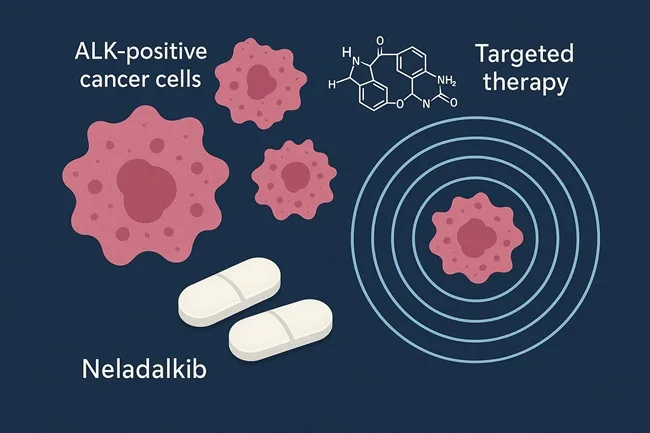
In a key clinical development from the European Society for Medical Oncology (ESMO) Congress 2025, American biotech firm Nuvalent, Inc. (Nasdaq: NUVL) unveiled encouraging preliminary results from its ongoing ALKOVE-1 Phase 1/2 trial, spotlighting its investigational ALK-selective inhibitor neladalkib in patients with advanced ALK-positive solid tumors outside of non-small cell lung cancer (NSCLC). The data, presented during a poster session in Berlin and released on October 18, 2025, revealed an objective response rate of 44% across a diverse set of tumor types, positioning neladalkib as a potential game-changer in a historically under-addressed segment of ALK-driven malignancies.
While the biotech company has previously focused its narrative around ALK-positive NSCLC, the expansion of neladalkib’s efficacy to non-NSCLC tumors signals a strategic broadening of clinical ambition. Nuvalent continues to enroll both adult and adolescent patients in the global Phase 2 segment of the trial, and topline data from the NSCLC pre-treated cohort remain on track for release by year-end 2025. Analysts see this dual-path strategy as both a derisking measure and a potentially differentiating move within a crowded ALK inhibitor market.
What early clinical activity did neladalkib demonstrate in non-NSCLC ALK-positive solid tumors?
As of the August 7, 2025 data cutoff, 34 patients with ALK-positive solid tumors other than NSCLC were response-evaluable across 14 tumor types. Of those, 32 patients received the 150 mg once-daily recommended Phase 2 dose. The population was a mix of ALK TKI-naïve individuals (38%, or 13 patients) and ALK TKI pre-treated patients (62%, or 21 patients), with 62% having previously undergone chemotherapy.
Overall, the objective response rate was 44%, with 15 of 34 patients showing clinical benefit. Among these responders, 9 out of 13 were ALK TKI-naïve and 6 out of 21 were pre-treated, suggesting potential across treatment backgrounds. Importantly, 80% of those who responded (12 out of 15) remained on treatment without disease progression at the time of the cutoff. These findings bolster Nuvalent’s assertion that neladalkib may address both first-line and refractory settings.
Nuvalent highlighted three illustrative case studies, each underlining the drug’s durability and brain-penetrant capability. One patient with an inflammatory myofibroblastic tumor and no prior TKI exposure demonstrated a partial response maintained for approximately 12 months. Another patient with peritoneal mesothelioma, who had previously received both chemotherapy and a TKI, showed an ongoing response for about 16 months. Perhaps most notably, a patient with adenocarcinoma of unknown origin, featuring both brain metastasis and the ALK V1180L resistance mutation, achieved a confirmed intracranial complete response sustained for 10 months. This patient had previously been treated with a TKI.
From a safety standpoint, neladalkib was generally well tolerated. Dose reduction was required in only 8.8% of cases, and no treatment-related discontinuations were reported. The safety profile remains consistent with the drug’s ALK-selective, TRK-sparing design, avoiding the CNS-related side effects often seen with dual TRK/ALK inhibitors.
How does this development fit into the competitive landscape for ALK-targeted therapies?
Nuvalent’s approach with neladalkib reflects an evolution in the ALK inhibitor landscape. First- and second-generation ALK TKIs, including crizotinib, ceritinib, and alectinib, have been instrumental in treating ALK-positive NSCLC. However, resistance mutations such as G1202R and limited CNS penetration have challenged long-term efficacy. Nuvalent designed neladalkib specifically to address these gaps, including activity against compound resistance mutations, brain metastases, and avoidance of TRK-associated CNS toxicities.
By expanding beyond NSCLC into a pan-solid tumor strategy, Nuvalent is pursuing a differentiated label that may extend neladalkib’s utility into niche, genomically defined subpopulations across oncology. Analysts believe this could pave the way for tumor-agnostic indications pending further data. Such positioning could help the drug carve out a unique segment in a space where multiple ALK inhibitors already exist but are largely constrained to NSCLC use.
At the same time, this direction raises expectations for broader genomic testing across cancer types to identify eligible ALK-positive patients, a trend that aligns with the rising use of next-generation sequencing panels in community and academic settings.
What does current investor sentiment suggest about Nuvalent’s prospects?
Following the data presentation, Nuvalent Inc. (NASDAQ: NUVL) traded at approximately USD 92.52, reflecting moderate upside on the day. Intraday price movements showed a high of USD 92.68 and a low of USD 80.00, signaling some volatility typical of biotech catalysts. The equity’s trading volume reached over 350,000 shares, indicating active investor interest.
Sentiment among institutional investors remains cautiously optimistic. The strong preliminary signal in a hard-to-treat population, combined with neladalkib’s design features, has been well-received. However, there is acknowledgment that the dataset remains early-stage and relatively small. Buy-side analysts appear to be waiting on the NSCLC pivotal readout before firming up valuation models or issuing rating upgrades.
As of its latest quarterly update, Nuvalent reported a cash position of approximately USD 1.0 billion, giving it a financial runway that extends into 2028. This liquidity strengthens its strategic position, allowing for continued investment in neladalkib and other pipeline candidates without immediate fundraising pressure.
What milestones should stakeholders track next for neladalkib and ALKOVE-1?
The next major readout for neladalkib is the topline data from TKI-pre-treated ALK-positive NSCLC patients, expected by the end of 2025. This pivotal data from the ALKOVE-1 trial will be a crucial validator for regulatory discussions and investor confidence.
In parallel, Nuvalent has already launched the ALKAZAR Phase 3 trial, a global randomized study enrolling approximately 450 TKI-naïve patients with advanced ALK-positive NSCLC. This trial pits neladalkib head-to-head against alectinib, with endpoints that include progression-free survival, intracranial response rate, overall survival, and safety. A successful outcome in ALKAZAR could position neladalkib as a potential front-line therapy, further enhancing its commercial profile.
Enrollment also continues in the non-NSCLC cohort of the ALKOVE-1 trial, where Nuvalent is collecting more data to support the case for pan-tumor utility. As more patients are treated and followed for longer durations, questions around durability, late-emerging adverse events, and resistance mechanisms will come into focus.
What are the broader implications for precision oncology and drug development?
Neladalkib’s early success reinforces several important trends in oncology drug development. First, the era of mutation-defined indications is expanding beyond NSCLC and melanoma into more histologically diverse cancers. Second, brain penetration and resistance mutation coverage are becoming standard expectations for targeted therapies, not aspirational features. Third, the FDA and other regulators are increasingly receptive to tissue-agnostic approvals when data is compelling, especially in ultra-rare, genomically defined segments.
Nuvalent’s pipeline beyond neladalkib also reflects this paradigm, with programs targeting ROS1 and HER2-altered cancers, suggesting the company is building toward a broader portfolio of resistance-overcoming, CNS-active kinase inhibitors.
What could Nuvalent’s neladalkib mean for the future of ALK‑positive cancer therapy and precision oncology in 2026 and beyond?
While much still depends on forthcoming pivotal data, Nuvalent appears well-positioned to challenge incumbents in the ALK space. If future readouts continue to confirm the drug’s efficacy in both NSCLC and non-NSCLC settings, neladalkib could emerge not only as a best-in-class inhibitor but also as a foundational agent in the evolving narrative of precision oncology.
From a stockwatch perspective, a cautious “Buy on data” thesis appears to be forming, with increased conviction likely once durability and survival endpoints are better understood. As a business journalist covering biotech trends, I view Nuvalent’s expanding clinical scope with neladalkib as a sign of ambition and confidence—though not without the usual development risks.
For now, the American biotech company has given both the market and the oncology field a compelling reason to watch closely.
What are the key takeaways from Nuvalent’s latest neladalkib trial data for ALK-positive solid tumors?
- Nuvalent Inc. (NASDAQ: NUVL) reported early results from its Phase 1/2 ALKOVE-1 trial for neladalkib in ALK-positive solid tumors beyond NSCLC, achieving a 44% objective response rate across 14 tumor types.
- Among 34 response-evaluable patients, 9 of 13 TKI-naïve and 6 of 21 TKI-pre-treated patients responded, with 80% of responders still on treatment without progression at the August 2025 data cutoff.
- Case studies included intracranial complete response in a patient with brain metastases, and long-duration partial responses in peritoneal mesothelioma and inflammatory myofibroblastic tumor.
- Neladalkib showed low toxicity, 8.8% dose reduction rate, and no treatment-related discontinuations, supporting its TRK-sparing, brain-penetrant design.
- Nuvalent is targeting topline NSCLC data by end-2025 and is actively enrolling a global Phase 3 trial (ALKAZAR) in TKI-naïve ALK-positive NSCLC.
- Institutional sentiment is cautiously optimistic, with the stock trading near USD 92 and investors watching for durability and survival signals in upcoming readouts.
- The American biotech company is positioning neladalkib as a potential best-in-class ALK inhibitor across a broad range of ALK-driven cancers, not just lung.
- Analysts believe Nuvalent’s financial runway through 2028 and multi-cohort strategy could help it secure long-term differentiation and commercial scale if the next data releases remain strong.
Discover more from Business-News-Today.com
Subscribe to get the latest posts sent to your email.