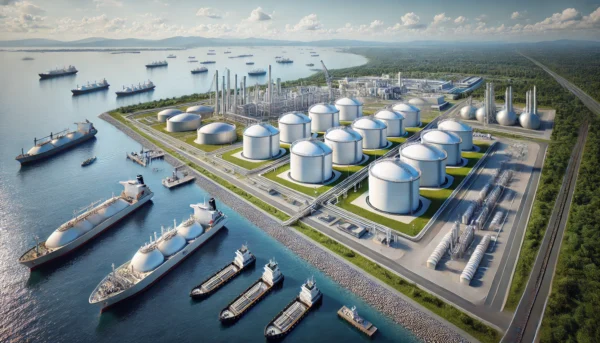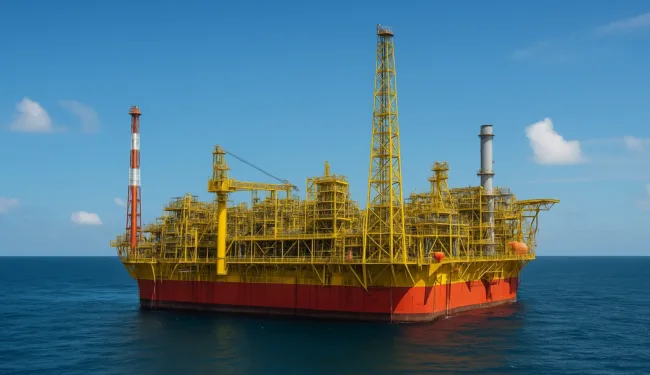



Kinetiko Energy Ltd (ASX: KKO) has signed a binding Joint Development Agreement with FFS Refiners (Pty) Ltd to begin commercializing shallow onshore gas fields in South Africa. The move marks the official launch of “Project Alpha,” a multi-phase liquified natural gas (LNG) development program designed to unlock domestic gas resources for small-scale LNG production, helping the country transition away from coal-fired power generation. The first phase of this project, Phase 1a, is now fully funded and ready to begin operations at the Brakfontein gas field.
With a market capitalization of approximately AUD 110 million and an estimated 6 trillion cubic feet (Tcf) of 2C contingent gas resources, Kinetiko Energy is positioning itself to be one of the few Australian explorers with a viable commercial pathway in South Africa. The pilot project is strategically located near legacy coal power infrastructure in Mpumalanga, enabling faster integration into South Africa’s baseload and industrial energy networks.
What does the joint development agreement between Kinetiko and FFS Refiners actually involve?
The Joint Development Agreement was executed on October 10, 2025, formalizing an earlier non-binding term sheet announced in July. The agreement involves three key parties: Kinetiko Energy, its South African subsidiary Afro Energy (Pty) Ltd, and FFS Refiners. Together, they will co-develop the Brakfontein gas wells under a structured multi-phase program that begins with field testing and culminates in scalable LNG production.
Phase 1a of Project Alpha will include the co-funded drilling of five new production wells, upgrades to existing wells, comprehensive gas testing, and submission of a production rights application. A dedicated JDA Steering Committee—comprising representatives from both Kinetiko and FFS—will oversee operational decisions, including the formulation of a long-term LNG business plan.
The total budget for Phase 1a is R64.3 million, or approximately AUD 5.7 million. The initial R20 million tranche will be funded 67.5% by Kinetiko and 32.5% by FFS. The remaining R44.3 million will be split equally. Kinetiko has already incurred significant costs toward its funding commitment, reflecting its operational leadership in the early stages of the joint venture.
How will Kinetiko’s Project Alpha transition from pilot testing to full-scale LNG production?
The multi-phase structure of Project Alpha reflects a strategic approach to de-risking LNG investment in emerging markets. Following Phase 1a, the partners will move into Phase 1b, which centers on constructing a cryobox LNG liquefaction plant with a capacity of 5,000 tonnes per annum. This small-scale proof of concept will be managed through a new special purpose vehicle (SPV), equally owned by Kinetiko and FFS, and will include gas handling, water supply, and power distribution infrastructure.
Phase 2 will focus on scaling up LNG production to 25,000 tonnes per annum across an expanded area within the production license. If successful, the final Phase 3 will extend the project to Kinetiko’s additional tenements beyond Brakfontein, targeting a liquefaction capacity of up to 125,000 tonnes per annum.
Operational responsibilities during Phase 1a will be led by Kinetiko Energy, which is tasked with executing agreed work programs, securing regulatory permits, and advising on engineering, construction, and LNG offtake contracts. FFS Refiners will contribute technical and marketing support and help coordinate downstream distribution channels for the produced LNG.
Why is this pilot LNG initiative seen as a strategic move for South Africa’s energy future?
South Africa has long depended on coal for its electricity supply, with a majority of power stations located in the same province where Kinetiko’s gas fields are situated. But with grid instability, rising power costs, and growing pressure to reduce emissions, the country is actively seeking dispatchable, lower-carbon alternatives to coal. Natural gas, particularly small-scale LNG, has emerged as a promising transitional fuel that can back up intermittent renewable sources while supporting industrial demand.
Project Alpha is aligned with this broader energy transition narrative. By monetizing previously stranded shallow gas assets, Kinetiko and FFS could help accelerate the deployment of modular gas solutions that are cost-effective, grid-independent, and environmentally superior to diesel or coal.
Kinetiko’s Executive Chairman Adam Sierakowski has emphasized the timing of the agreement, stating that the recent success in flow testing at Brakfontein has created the perfect foundation to move from exploration to commercialization. He also noted the long-term potential to scale the project into a fully integrated regional LNG supply chain, capable of supporting energy security and job creation across South Africa.
How does the LNG-focused strategy impact investor sentiment and stock performance?
As of the most recent update, Kinetiko Energy shares were trading at AUD 0.074, reflecting a modest 1.37% gain on the day. However, the company’s one-year return remains negative, with the stock down 25.25% year-over-year. Trading volumes are moderate, with about 65,800 shares exchanged in the most recent session, suggesting steady but cautious investor engagement.
Despite the lagging share price, analysts have pointed out that institutional sentiment appears to be warming. The formalization of the JDA and clear project execution roadmap are seen as critical milestones that could lead to a stock re-rating, particularly if the company successfully secures production rights and delivers proof-of-concept LNG output within the next 12 to 18 months.
Sector-wise, Kinetiko Energy ranks 46th out of 176 energy stocks on the ASX, placing it in the middle tier by market capitalization. However, its unique exposure to the underdeveloped South African LNG market and its world-class 2C resource base give it long-term optionality that many peer explorers lack.
What are the next catalysts investors should watch for in the Kinetiko–FFS gas development timeline?
Several milestones will determine the trajectory of Project Alpha in the coming quarters. These include the completion of the five new production wells at Brakfontein, flow rate certifications by an accredited gas consultant, regulatory approvals for production rights, and successful commissioning of the 5,000 tpa LNG cryobox facility under Phase 1b.
Progress on these fronts could enable Kinetiko Energy to attract additional strategic capital, potentially including sovereign funding, development finance institutions, or regional offtake partners. In the longer term, the company may explore partnerships for power generation, distributed energy platforms, or even LNG export in partnership with other regional players.
FFS Refiners, which brings more than five decades of experience in hydrocarbon solutions, views this collaboration as a key pillar of its diversification strategy. Its Managing Director Andrew Canning has highlighted the joint venture’s emphasis on “diligent preparation and collaboration,” noting that both teams share a long-term vision of sustainable energy delivery for Southern Africa.
Discover more from Business-News-Today.com
Subscribe to get the latest posts sent to your email.