Why is Qualcomm acquiring Arduino and how could this change its AI and IoT strategy in 2025?
Qualcomm Inc (NASDAQ: QCOM) has confirmed the acquisition of open-source electronics leader Arduino, in a move that underscores its expanding ambition to dominate the edge computing and embedded AI landscape. Announced on October 7, 2025, the acquisition is designed to merge Qualcomm’s advanced processor and connectivity portfolio with Arduino’s vast developer base of over 33 million users worldwide. While the deal value remains undisclosed, it is expected to significantly strengthen Qualcomm’s outreach beyond OEMs and into the grassroots developer community that powers the next generation of AI-enabled devices.
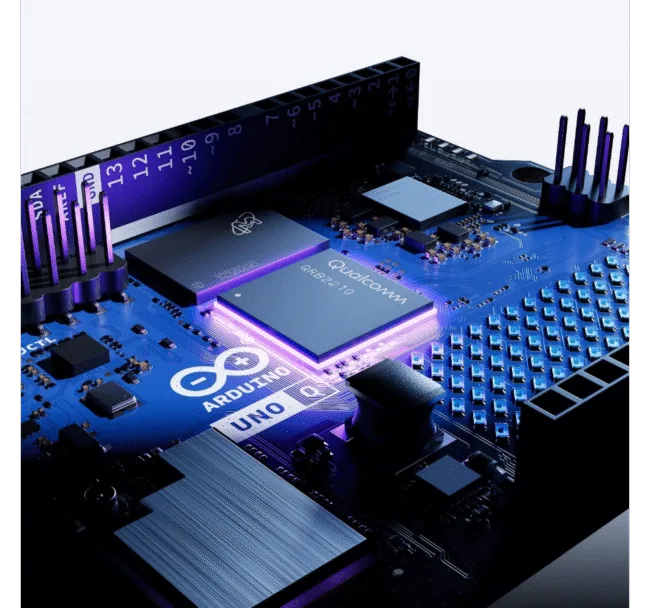
The acquisition also coincides with the launch of two new initiatives — the Arduino UNO Q development board and Arduino App Lab. Both are powered by Qualcomm’s new Dragonwing platform and are aimed at making edge AI and real-time computing more accessible to developers, students, and businesses. Qualcomm stated that the transaction, subject to regulatory approvals, will help “democratize access to AI and computing power,” a vision that aligns with its recent strategic acquisitions of Foundries.io and Edge Impulse.
Arduino, based in Turin, Italy, is widely recognized as the pioneer of open-source hardware and software ecosystems. Its platforms have enabled millions of creators, educators, and professionals to experiment with robotics, IoT, and automation. Qualcomm, headquartered in San Diego, California, sees this as an opportunity to extend its reach from high-end devices and automotive chips into a more diversified and community-driven environment that influences early-stage innovation.
How will the acquisition help Qualcomm expand its reach beyond smartphones and into the edge developer market?
Over the past decade, Qualcomm has steadily diversified from its dependence on mobile chipsets toward automotive, connected devices, and industrial IoT. The acquisition of Arduino reflects a calculated step in that journey — one that targets the fast-growing market of edge developers who bridge hardware design with AI-based decision systems. This segment is increasingly seen as critical to scaling new AI applications outside of data centers.
By combining the computational performance of Qualcomm’s Dragonwing architecture with Arduino’s easy-to-use interface, the new UNO Q board aims to make advanced AI and computer-vision capabilities available “in a blink.” Designed with a dual-brain architecture, it pairs a Linux-capable processor with a real-time microcontroller, allowing developers to build responsive systems that process data at the edge without relying on constant cloud connectivity. From smart cameras and drones to home automation and industrial control, this integration has the potential to bring enterprise-grade AI into affordable, maker-level devices.
The newly introduced Arduino App Lab will also play a central role in this strategy. It provides a unified software environment that merges Linux, Python, AI workflows, and real-time operating systems. Developers can design, train, and deploy models seamlessly while leveraging Qualcomm’s cloud-to-edge AI stack. The platform is also compatible with Edge Impulse, enabling faster model training and optimization for computer vision, anomaly detection, and audio classification tasks.
What does this deal mean for the global open-source and education communities that rely on Arduino?
For more than a decade, Arduino’s open-source philosophy has defined its success — empowering a generation of engineers, educators, and hobbyists to experiment with technology without licensing barriers. Qualcomm’s entry introduces both excitement and apprehension into this community. On one hand, it brings enormous computational resources, industrial partnerships, and manufacturing scale. On the other, some developers fear a potential shift toward commercialization or vendor lock-in.
Both companies have addressed these concerns directly. Arduino’s leadership emphasized that the brand will retain its independent identity, community structure, and support for microcontrollers from multiple semiconductor vendors. Qualcomm, meanwhile, noted that its role will be to enhance accessibility and innovation rather than to impose exclusivity. By combining affordability with enterprise-grade hardware and AI performance, the partnership seeks to bridge the gap between grassroots experimentation and commercial deployment.
Industry observers interpret this acquisition as part of a broader industry shift toward “AI-ready prototyping” — an era in which developers require faster, integrated environments that handle edge analytics without the complexity of full-scale AI infrastructure. In this sense, the Arduino acquisition could position Qualcomm at the heart of a new developer revolution similar to what Raspberry Pi and NVIDIA Jetson once sparked in their respective domains.
How did the stock market react to Qualcomm’s announcement and what does investor sentiment indicate?
On October 7, Qualcomm’s shares closed at USD 165.46, down 1.87% for the day, after briefly touching highs near USD 172 earlier in the session. The decline followed a wave of cautious sentiment as investors assessed the financial implications of the Arduino deal, which did not include disclosed valuation details. The after-hours session saw a mild recovery of 0.04%, suggesting that the market remains uncertain but not bearish about Qualcomm’s long-term outlook.
Institutional investors largely interpret the acquisition as a long-horizon innovation bet rather than a near-term earnings catalyst. While the integration of an open-source hardware ecosystem may not immediately impact revenue, analysts point out that such moves are essential for Qualcomm to sustain its competitive edge against rivals like NVIDIA, Intel, and MediaTek in the fast-converging markets of AI-enabled IoT and edge computing. Many brokerage commentaries have maintained a “buy” or “accumulate” stance on Qualcomm, noting that its diversification strategy could yield significant upside as AI adoption deepens across sectors.
Retail sentiment, however, remains mixed. While several tech-focused investors have expressed optimism about Qualcomm’s innovation roadmap and long-term diversification strategy, short-term traders have raised concerns over potential margin dilution and execution risks. For long-term holders, the general consensus remains that the Arduino acquisition strengthens Qualcomm’s strategic moat by embedding its technology into the educational and developer pipelines that fuel the next generation of IoT innovation. For long-term holders, the general consensus remains that the Arduino acquisition strengthens Qualcomm’s strategic moat by embedding its technology into the educational and developer pipelines that fuel the next generation of IoT innovation.
What competitive advantages could Qualcomm gain by integrating Arduino’s community and platform?
Qualcomm’s competitive strength has traditionally rested on its proprietary chip designs, patents, and wireless standards leadership. By adding Arduino’s global ecosystem, the company gains a non-traditional but powerful advantage: influence at the earliest stage of product ideation. Every student, engineer, or startup that experiments with the UNO Q or App Lab becomes a potential adopter of Qualcomm’s chips, tools, and cloud services. This long-tail developer funnel could prove invaluable in capturing mindshare and future commercial opportunities.
Furthermore, the combination of Arduino’s community and Qualcomm’s ecosystem could accelerate the shift toward AI-native embedded systems. Developers could, for instance, train vision or voice-recognition models using Edge Impulse, deploy them directly to Dragonwing-based boards, and later scale to industrial-grade modules with minimal re-engineering. Such vertical integration — from learning and prototyping to productization — positions Qualcomm as a holistic enabler of edge intelligence rather than just a chip supplier.
From an enterprise perspective, the move also aligns with broader industry trends. Companies across manufacturing, healthcare, logistics, and smart cities increasingly demand edge AI systems that are easy to deploy and maintain. By lowering the entry barrier for experimentation, Qualcomm could see its technologies adopted across thousands of small-to-mid-sized businesses that otherwise might not access high-performance hardware.
How will Qualcomm manage integration risks and maintain Arduino’s open-source community trust after the acquisition?
Despite its strategic appeal, the merger faces practical hurdles. Integrating a community-driven organization into a corporate framework requires careful balance. If Arduino’s independence or openness is perceived as compromised, community engagement could decline — eroding one of its core strengths. Additionally, supporting multi-vendor compatibility will be critical to maintaining developer trust.
Financially, Qualcomm must manage the cost of supporting a broader ecosystem while ensuring that new products contribute meaningfully to growth. The company also operates in a highly competitive AI-hardware landscape, where NVIDIA’s dominance in training chips and ARM’s expanding partnerships pose constant challenges. Regulatory scrutiny, particularly across the U.S. and European markets, could add further complexity to the deal’s closing timeline.
However, Qualcomm has shown resilience in managing ecosystem-level integrations before. Its absorption of smaller developer-tool startups such as Edge Impulse and Foundries.io demonstrates its capacity to scale innovation across different tiers of the edge AI stack.
What is the long-term outlook for Qualcomm after the Arduino acquisition?
The acquisition reinforces Qualcomm’s identity as an end-to-end edge computing player. From connectivity and processing to AI acceleration and cloud integration, the company is assembling a full-stack platform for the intelligent edge. Analysts predict that if effectively executed, this strategy could expand Qualcomm’s total addressable market significantly — not just through hardware sales but through developer services, partnerships, and software-as-a-service offerings.
In the medium term, the deal is unlikely to shift financials dramatically but could lay the foundation for a more sustainable revenue model that thrives on ecosystem adoption rather than cyclical smartphone demand. For investors, this represents a shift toward structural growth rather than short-term profitability — a narrative increasingly favored by long-term funds in the AI infrastructure space.
As of October 2025, Qualcomm’s share price remains under moderate consolidation following a strong year-to-date rally driven by AI enthusiasm. With this acquisition, the company signals to markets that it intends to play both at the hardware and developer-software layers of the AI revolution — a move that could redefine its valuation profile in the coming quarters.
Discover more from Business-News-Today.com
Subscribe to get the latest posts sent to your email.