





Chevron Corporation (NYSE: CVX) confirmed that a massive fire at its Los Angeles-area refinery in El Segundo has been brought under control after dramatic overnight scenes lit up the sky across the South Bay. While no injuries were reported and the fire was contained within the facility perimeter, the incident has heightened fears over California’s fragile fuel security and the reliability of one of the state’s largest refineries.
What triggered the Chevron refinery fire in Los Angeles and how was it contained?
According to emergency officials, the blaze began late Thursday night inside the refinery’s Isomax 7 jet-fuel conversion unit, following what witnesses described as an explosion that rattled surrounding neighborhoods. The El Segundo complex, which processes around 290,000 barrels of crude oil per day, is among California’s most critical energy facilities. It produces nearly one-fifth of the region’s motor gasoline and more than 40 percent of the jet fuel consumed at Los Angeles International Airport (LAX).
Flames were visible for miles, sparking fears of a wider disaster. Firefighters from El Segundo, Manhattan Beach, and other local agencies joined Chevron’s on-site emergency teams to contain the fire. Manhattan Beach briefly issued a shelter-in-place advisory that was lifted within hours. Importantly, all refinery staff and contractors were accounted for, and there were no reports of injuries or fatalities.
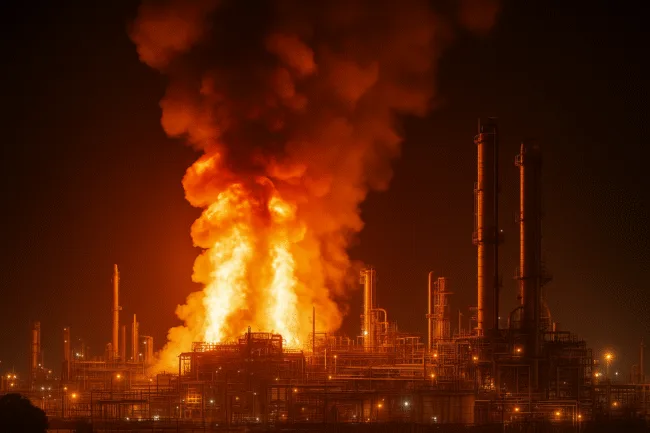
Authorities confirmed that the fire did not spread beyond the affected unit and was successfully contained by the early morning. Regulators from Los Angeles County and the state of California have opened an investigation into the cause, with Chevron pledging full cooperation.
Why is the Chevron El Segundo refinery so critical to California’s energy system?
The El Segundo refinery is a backbone of the Southern California economy. Spanning 1.5 square miles and connected to over 1,100 miles of pipelines, it supplies gasoline, diesel, and aviation fuel across the Los Angeles basin. Its proximity to LAX magnifies its importance, as the airport relies heavily on Chevron for consistent jet fuel supply.
California’s refining system is unusually isolated compared to the rest of the United States. While Gulf Coast refineries benefit from extensive pipeline networks that can redirect supply during outages, California’s West Coast market is largely self-contained. This means disruptions at a single refinery can lead to immediate price volatility, with imports from Asia often required to fill the gap.
Past incidents underline these vulnerabilities. In 2012, a fire at Chevron’s Richmond refinery led to steep gasoline price spikes and increased regulatory scrutiny. In 2015, an explosion at ExxonMobil’s Torrance refinery disrupted gasoline output for months, triggering record-high retail prices across Southern California. Analysts warn that even temporary downtime at El Segundo could replicate these scenarios, particularly given the state’s current tight inventory levels.
What are early investor and analyst reactions to Chevron’s refinery fire?
Shares of Chevron Corporation (NYSE: CVX) edged slightly lower in pre-market trading on Friday as investors weighed the potential cost of repairs and temporary supply disruption. However, the decline remained modest, reflecting early confidence that the financial hit would be limited if the outage proves short-lived.
Institutional sentiment so far leans toward caution. Several brokerages noted that Chevron’s robust balance sheet provides ample cushion. The company’s most recent quarterly results showed adjusted earnings per share (EPS) of $4.13 and net income of $6.9 billion, with refining contributing strongly to downstream margins. With refining operations generating around $1.7 billion in operating income in Q2 2025, any prolonged disruption at El Segundo would weigh on profitability, but most analysts argue it is unlikely to derail Chevron’s broader performance.
Market desks tracking foreign institutional investor (FII) flows and domestic institutional investor (DII) participation indicated no immediate large-scale selling of Chevron stock. Buy-side desks described investor sentiment as “neutral hold,” with long-term holders maintaining confidence in Chevron’s integrated oil and gas strategy, while short-term traders eyed volatility in refining margins.
Will gasoline and jet fuel prices in California rise after the Chevron fire?
California consumers are bracing for potential price spikes. The state already has the highest retail gasoline prices in the nation, with Los Angeles averages hovering at $5.35 per gallon before the fire. Analysts say even limited disruption in the Isomax 7 unit could tighten supply, especially for jet fuel.
Chevron is the largest supplier of aviation fuel to LAX, one of the busiest airports in the world. Any shortfall in production could force additional imports from Asia, adding costs that airlines may eventually pass to consumers through higher ticket prices. Traders have pointed to thin gasoline inventories and seasonal refinery maintenance cycles as compounding risks that could amplify market sensitivity to even small outages.
Energy economists stressed that California’s fuel market operates with very little slack. Unlike Texas or Louisiana, which can lean on extensive domestic pipelines, California’s West Coast system depends heavily on marine imports. That makes local refinery reliability paramount—and any outage disproportionately disruptive.
How does this fit into a broader pattern of U.S. refinery incidents in 2025?
The Chevron blaze is the latest in a string of refinery fires reported in the U.S. this year. Reuters data show at least six major incidents have occurred at refining sites in 2025, underscoring concerns over the aging state of much of America’s downstream infrastructure.
Refinery fires often result from equipment failure, deferred maintenance, or accidents during high-pressure processes. With tighter environmental and safety regulations, refiners face a costly balance between compliance upgrades and sustaining throughput levels. Chevron itself is no stranger to regulatory scrutiny—its Richmond fire in 2012 resulted in record penalties and forced modernization mandates.
For California regulators, the El Segundo fire is likely to accelerate calls for more stringent oversight of refinery operations, particularly given the state’s dual mandate of ensuring fuel security while transitioning toward its 2045 carbon neutrality goal.
What does this mean for Chevron’s financial performance and investor outlook?
While the company has not yet disclosed the full extent of the damage, most analysts expect Chevron to absorb the immediate costs without jeopardizing its dividend program or overall capital allocation strategy. The larger concern is reputational and operational. Repeated incidents at Chevron facilities could raise questions about the company’s safety culture and readiness to manage complex refining assets in California’s regulatory environment.
Chevron has built investor trust through steady dividend payments, currently yielding around 3.8 percent, and disciplined spending on both fossil fuel operations and new energy ventures. Analysts argue that these fundamentals remain intact, but repeated operational setbacks could force higher capital expenditure for maintenance and regulatory compliance, reducing free cash flow in the medium term.
For now, most institutional brokers maintain a hold recommendation on Chevron stock, with some highlighting it as a potential long-term buy given its integrated upstream and downstream operations, strong earnings base, and expanding low-carbon investments.
What should regulators and consumers expect next from Chevron’s refinery response?
Attention in the coming days will focus on three areas: the timeline for restoring the Isomax 7 unit, environmental monitoring data for air quality in Los Angeles County, and the official findings from state and federal investigators. Chevron has pledged transparency and cooperation with authorities, but the speed and clarity of its communication will be critical to reassuring regulators, investors, and the public.
California’s energy system remains acutely vulnerable to refinery outages. With limited spare capacity, high seasonal demand, and ambitious decarbonization goals, policymakers face the challenge of balancing immediate supply security with long-term transition strategies. Industry experts suggest that without investments in modernization and redundancy, incidents like the El Segundo fire will continue to trigger local fuel price volatility.
What the Chevron Los Angeles refinery fire reveals about California’s fuel security and market risks
The containment of the Chevron refinery fire prevented a potential catastrophe, but it has once again spotlighted the fragility of California’s fuel supply chain. For investors, the financial hit appears manageable in the short term, but the broader takeaway is the recurring risk that operational hazards pose to refiners operating in heavily regulated markets.
For consumers, the real question is whether gasoline and jet fuel prices will edge even higher in the coming days, adding further pressure to household budgets and airline costs. For regulators, the event underscores the urgency of ensuring refinery safety while charting a viable path toward the state’s carbon neutrality targets.
Ultimately, this incident reinforces the paradox facing California: the state is accelerating its energy transition, but remains deeply dependent on aging refineries that must run without fail to keep its economy moving. Chevron’s ability to manage this delicate balance will shape both its market credibility and California’s near-term energy stability.
Discover more from Business-News-Today.com
Subscribe to get the latest posts sent to your email.