



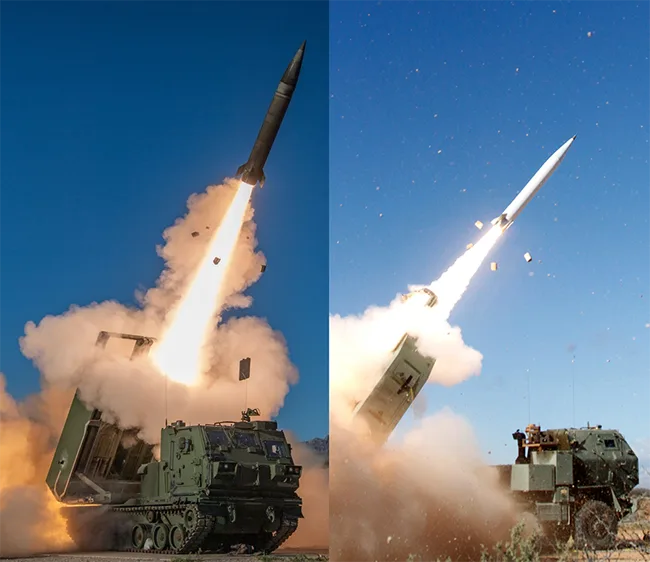
Lockheed Martin Corporation (NYSE: LMT) and the U.S. Army have reached a major program milestone with the successful completion of a soldier-led flight test series of the Precision Strike Missile (PrSM). The tests, conducted in September at White Sands Missile Range in New Mexico, showcased that American soldiers can effectively fire PrSM from both the High Mobility Artillery Rocket System (HIMARS) and the M270A2 Multiple Launch Rocket System.
This was the first time PrSM was fired from both launchers in dual-pod configurations under direct soldier operation. According to Lockheed Martin, the results validated range, lethality, and accuracy, while demonstrating compatibility with both tracked and wheeled launcher platforms. The achievement brings the U.S. Army closer to deploying its next-generation long-range strike capability, designed to replace the aging Army Tactical Missile System (ATACMS).
The successful tests also underscored the growing emphasis on modernization priorities within the Army, ensuring that troops are equipped with precision strike systems capable of countering adversaries at greater ranges.
How do these tests change the trajectory of the PrSM program and its role as a replacement for ATACMS?
The Precision Strike Missile is designed to deliver a next-generation precision strike capability with ranges extending beyond 400 kilometers. By comparison, the legacy ATACMS system had limited reach and lacked the modularity needed for future upgrades.
PrSM’s open systems architecture is central to its appeal. It allows incremental modernization, meaning the missile can be adapted for longer ranges, improved targeting systems, and potential integration with allied systems in future increments. The modular design lowers lifecycle costs and offers scalability, aligning with U.S. Department of Defense goals to reduce procurement risks while maintaining technological superiority.
The soldier-led tests are a significant step forward, moving PrSM closer to full-rate production and eventual field deployment. Demonstrating the missile’s operational readiness under troop-controlled conditions validates not only the hardware but also the training, command interfaces, and integration into Army doctrine. This level of validation is what acquisition officials look for before granting Milestone C approval, the key decision gate for mass production.
What is the historical timeline of PrSM development and why is 2025 a critical year?
PrSM’s development has accelerated over the past five years as the Army sought to counter long-range threats from peer adversaries. In early 2025, Lockheed Martin secured an indefinite delivery/indefinite quantity contract with a ceiling of nearly USD 5 billion, signaling Pentagon confidence in the program’s trajectory.
The year has seen multiple successful demonstrations. In February 2025, the missile passed a qualification flight test, including a double-shot launch from HIMARS. In March, PrSM achieved extended-range results in a high-profile flight from Vandenberg Space Force Base. By April, compatibility was confirmed with the tracked M270A2 launcher. These milestones steadily de-risked the program, showing that the missile was not just a laboratory prototype but a robust solution moving toward deployment.
The September soldier-led firings represented the next logical step in this progression. They bridged the gap between contractor-controlled demonstrations and field-ready systems, showing that PrSM could be operated under authentic troop conditions.
What does institutional sentiment suggest about Lockheed Martin’s defense portfolio after the PrSM tests?
Institutional sentiment toward Lockheed Martin remains cautiously optimistic. The stock closed on October 1 at USD 499.00, a slight dip of 0.04 percent on the day, but investors continue to value the company as a core defense contractor with predictable revenue streams. While the PrSM program itself may not immediately swing quarterly earnings, it strengthens Lockheed Martin’s long-term positioning in the precision strike segment, a market that is gaining strategic importance as great-power competition intensifies.
Analysts tracking defense equities note that every successful PrSM milestone reduces program risk and adds confidence for institutional investors. In March, the nearly USD 5 billion contract ceiling award provided a tangible demonstration of Pentagon commitment, which boosted investor sentiment at the time. With continued test successes, analysts expect the program to transition smoothly into production, generating recurring revenue for Lockheed Martin over the coming decade.
For defense-focused funds, the PrSM program is also a hedge against geopolitical uncertainty. Rising tensions in Eastern Europe and the Indo-Pacific have increased demand for long-range strike capabilities. Investors view Lockheed Martin’s role in supplying these systems as a durable growth driver, even in the face of federal budget debates.
How does the PrSM program reflect broader trends in U.S. defense modernization and missile technology?
The PrSM initiative fits squarely into the U.S. Army’s broader push for long-range precision fires, one of its top modernization priorities. Modern conflicts demand the ability to neutralize high-value targets at extended distances, often in GPS-contested environments. Systems like PrSM give commanders greater flexibility to deter adversaries and provide a credible strike option short of deploying air or naval forces.
The modular and open architecture approach is also reflective of a broader shift in defense acquisition philosophy. Rather than procuring rigid, single-purpose systems, the Pentagon is increasingly investing in platforms that can be upgraded over time to adapt to evolving threats. PrSM’s design allows for future increments, potentially extending range well beyond 500 kilometers and incorporating advanced seekers for moving targets.
This forward-thinking design ensures that the system is not obsolete upon deployment but remains adaptable for decades, making it a cornerstone of Army firepower modernization.
What comes next for Lockheed Martin’s PrSM and what are analysts watching closely?
Looking ahead, the next phases for PrSM involve continued soldier-led testing in diverse operational conditions, including extreme climates, electronic warfare environments, and combined arms exercises. The U.S. Army is expected to conduct additional firings to validate the missile’s performance envelope before formally granting Milestone C approval.
Analysts are particularly focused on whether the Army will fast-track PrSM Increment Two, which aims to extend range and add advanced targeting features. Increment Two would significantly expand the missile’s role, giving U.S. forces the ability to engage mobile and maritime targets at standoff distances.
For Lockheed Martin, each successful step brings the program closer to generating significant production revenue streams. Investors and institutional stakeholders are monitoring not only the technological progress but also budget allocations in upcoming defense bills. While short-term stock movements may not spike dramatically with each test, the steady accumulation of successful milestones strengthens long-term confidence in the defense contractor’s growth trajectory.
How do the successful PrSM tests position Lockheed Martin and the U.S. Army for future conflicts?
The successful soldier-led flight tests at White Sands Missile Range confirm that Lockheed Martin’s Precision Strike Missile is no longer just a promising prototype but a near-ready operational capability. The validation of performance under troop control proves readiness and marks a clear step toward full-rate production.
For the U.S. Army, PrSM provides an answer to a critical capability gap, ensuring long-range strike superiority in contested theaters. For Lockheed Martin, it reinforces the company’s dominance in precision strike systems, securing long-term contracts and reassuring investors of predictable growth.
While Lockheed Martin’s stock price reflects broader market conditions rather than single test events, the institutional sentiment remains supportive. Investors recognize that defense modernization programs like PrSM underpin Lockheed Martin’s resilience and growth potential, even amid cyclical budget debates.
In an era where adversaries are investing heavily in long-range strike capabilities, the U.S. Army’s successful test series positions it at the forefront of modernization. With its open architecture, scalability, and demonstrated performance, PrSM looks set to define the future of long-range precision fires — and Lockheed Martin stands to benefit as both contractor and strategic partner.
Discover more from Business-News-Today.com
Subscribe to get the latest posts sent to your email.

