

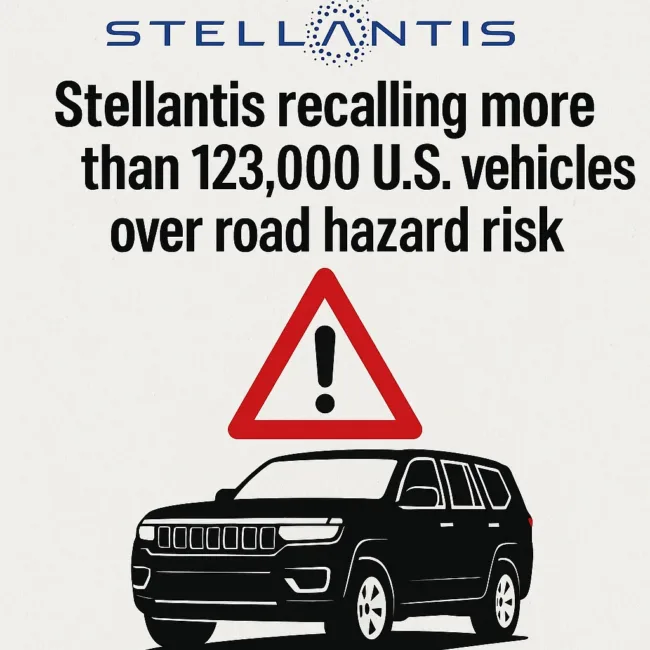
Stellantis NV (NYSE: STLA), the multinational automaker behind Jeep, Chrysler, Dodge and Ram, announced a major recall in the United States covering more than 123,000 vehicles due to a safety defect that could turn decorative trim into dangerous road hazards. The U.S. National Highway Traffic Safety Administration (NHTSA) disclosed that the recall affects Jeep Wagoneer and Grand Wagoneer models produced between 2022 and 2024. Regulators warned that quarter-trim pieces near the front windows may not be secured properly, raising the risk of detachment while vehicles are in motion.
The company’s latest safety action underscores how even seemingly minor trim components can trigger large-scale recalls, costly service campaigns, and investor scrutiny. Although Stellantis confirmed that it is developing a remedy and that affected owners will be contacted to arrange free repairs, the recall adds to a growing list of quality-related challenges for the company in 2025.
Why is Stellantis recalling more than 123,000 Wagoneer and Grand Wagoneer SUVs in the United States?
According to documents published by NHTSA, the defect centers on exterior quarter-trim pieces installed on the driver and passenger side windows of Jeep Wagoneer and Grand Wagoneer models. These parts may not have been adequately secured during assembly, meaning they could detach at highway speeds. A detached trim piece, while not a core mechanical failure, poses a serious road hazard if it strikes other vehicles or causes drivers to swerve unexpectedly.
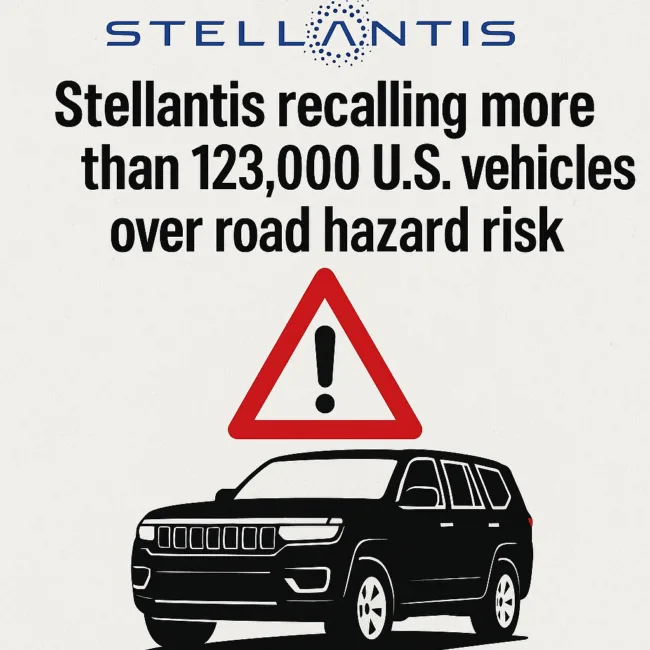
Safety regulators consider such defects significant because they can generate unpredictable dangers. While Stellantis has not publicly reported crashes or injuries linked to this issue, the potential for incidents was sufficient to trigger a mandatory recall under U.S. law. Affected owners will be notified in the coming weeks and directed to dealerships for inspection and repair once a technical solution is finalized.
How does this recall compare with other Stellantis safety issues in 2025?
The timing of this recall adds pressure on Stellantis because it follows closely on the heels of another campaign announced earlier in September, when the company recalled more than 164,000 vehicles for similar trim detachment issues on doors. Earlier in June, Stellantis also recalled over 250,000 vehicles in the United States for improperly sealed airbag inflators, while in late 2024 the automaker had to address a global recall of more than 1.4 million units over unrelated safety issues.
When considered together, these campaigns suggest that Stellantis is dealing with recurring problems related to assembly quality and design validation. Industry analysts point out that while major recalls involving powertrains, braking systems, or airbags often dominate headlines, smaller component failures can be just as damaging to consumer trust, particularly when they happen in clusters.
What does the latest recall mean for Stellantis’ reputation and investor sentiment?
For Stellantis, recalls carry both tangible costs and intangible risks. On the financial side, recalls require extensive logistical coordination — from notifying owners to supplying parts and scheduling dealer service time. This creates expenses that can run into tens of millions of dollars. On the reputational side, consumers may perceive repeated recalls as signs of declining quality, particularly in the competitive U.S. SUV market where Jeep Wagoneer models play a premium role.
Investor sentiment around Stellantis has been sensitive in 2025 due to industry-wide cost pressures, electrification investments, and labor challenges in North America and Europe. Shares of Stellantis NV (STLA) have been under scrutiny as investors weigh the company’s ability to maintain profitability while meeting regulatory targets and sustaining consumer confidence. Repeated recalls, even if limited in severity, risk compounding investor concerns about execution discipline. Analysts suggest that while the stock impact may be modest in the short term, institutional investors are likely to monitor whether recall frequency increases in the coming quarters.
How do recalls like this highlight broader quality control challenges in the auto industry?
The Stellantis recall is part of a wider trend across the automotive industry. As vehicles incorporate more components, electronics, and complex assembly processes, the probability of small failures rises. Trim pieces, sealing materials, and mounting fasteners may not seem as critical as engines or braking systems, but their failure can still create safety risks. Regulatory authorities such as NHTSA have also intensified scrutiny in recent years, meaning automakers are more likely to issue recalls proactively to avoid penalties and litigation.
This is not unique to Stellantis. Rivals such as General Motors, Ford, Toyota, and Tesla have all faced large recalls in the past two years related to software glitches, trim failures, and structural defects. The growing cost of recalls across the industry is measured in billions of dollars annually. For Stellantis, the challenge is ensuring that quality oversight improves, especially as it integrates multiple brands and platforms across global markets.
What can owners of affected Jeep Wagoneer and Grand Wagoneer models expect?
Stellantis confirmed that it is developing a remedy to address the loose trim issue. The fix is expected to involve inspection and reinforcement or replacement of the quarter-trim pieces at no cost to owners. Letters of notification will be mailed to affected consumers once the repair process is validated. Until then, Stellantis has not advised drivers to stop using their vehicles but recommends scheduling repairs as soon as dealer availability is confirmed.
Consumer advocacy groups emphasize that owners should treat recall notices seriously, even if the defect appears minor. Detached trim can become dangerous debris on highways, posing risks not only to drivers of affected vehicles but also to surrounding traffic.
How does the recall influence Stellantis’ long-term strategy and brand positioning?
For Stellantis, the recall is a reminder that quality control remains just as critical as electrification and autonomous driving innovation. The company is investing heavily in next-generation electric platforms, battery plants, and software-defined vehicle initiatives, yet frequent recalls threaten to undermine its ability to position Jeep and other brands as premium, reliable choices for consumers.
Analysts believe Stellantis must demonstrate stronger internal controls to reassure both regulators and shareholders. Recalls can be an opportunity for automakers to show transparency and accountability, but when they accumulate in rapid succession, they risk eroding the narrative of progress. For Jeep, which has positioned the Wagoneer and Grand Wagoneer as flagship SUVs in the United States, maintaining trust is essential for sustaining pricing power and brand loyalty.
What is the final outlook on Stellantis recalls, quality control risks, and how these issues are shaping investor sentiment and long-term consumer confidence?
The recall of 123,396 Jeep Wagoneer and Grand Wagoneer SUVs over potentially detached window trim underscores how small defects can escalate into large-scale business challenges. For Stellantis, the latest campaign compounds a year already filled with recalls, adding to investor unease and raising questions about quality oversight at a time when the company is trying to balance growth with regulatory compliance and electrification investment.
From a consumer perspective, the recall is inconvenient but necessary. While no injuries have been reported, the risk of debris on highways is real, and the company’s willingness to act pre-emptively reflects regulatory pressure and heightened safety standards. For investors, the episode reinforces the importance of monitoring Stellantis’ ability to control costs, safeguard its reputation, and manage execution risk across multiple markets and vehicle lines.
Ultimately, the Stellantis recall story is about more than 123,000 SUVs. It is about whether one of the world’s largest automakers can maintain consumer confidence and investor trust while navigating an era of intense competition and transformation in the automotive industry.
Discover more from Business-News-Today.com
Subscribe to get the latest posts sent to your email.