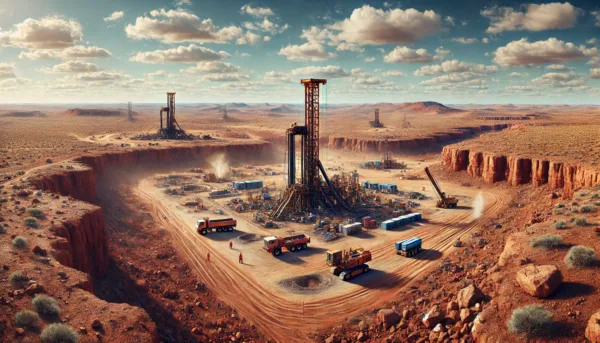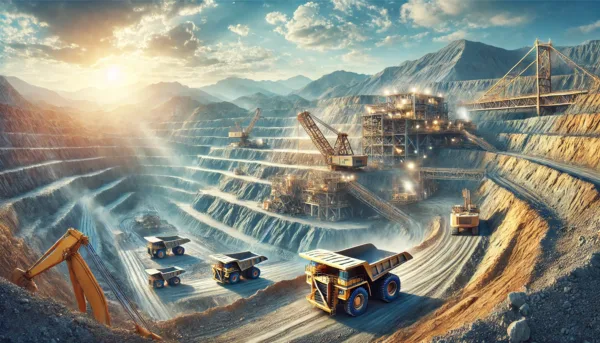





Australian Strategic Materials Limited (ASX: ASM), Ionic Rare Earths Limited (ASX: IXR), International Graphite Limited (ASX: IG6) and Lynas Rare Earths Limited (ASX: LYC) are intensifying their push into the United States, advancing plans for processing and magnet-grade production facilities that could reposition Australia’s role in global supply chains. The shift reflects more than a strategic choice; it underscores the combined forces of U.S. policy incentives, defense demand, and customer proximity in a sector where time-to-market and political risk matter as much as geology. Executives have signaled that America is becoming the new epicenter for midstream and downstream operations, while Australia continues to supply upstream ore and concentrates.
Australia itself has not been passive. The federal government passed a tax incentive law in early 2025 offering a ten percent offset on processing and refining costs for 31 listed critical minerals between 2028 and 2040. This was positioned as a core pillar of the national Critical Minerals Strategy. Yet, despite these domestic incentives, the gravitational pull of the U.S. remains strong. For many boards, the combination of cheap industrial power, state-level support, and federal defense contracts is simply too compelling to ignore. The result is a dual-hub vision: extraction and early-stage processing at home, with value-added separation, alloying, and magnet production increasingly based in North America.
Why are Australian critical mineral producers prioritizing U.S. processing even with Canberra offering a decade of tax offsets?
The core reason is proximity to end customers. Rare-earth magnets and battery anode materials are not commodities in the traditional sense; they are engineered products where specification and security of supply matter. Automakers, wind turbine manufacturers, and defense contractors in the U.S. want to shorten the distance between material processing and final assembly. In defense applications in particular, domestic sourcing is often mandated or at least heavily incentivized. By situating processing modules within the United States, Australian companies reduce logistical delays, improve qualification times, and reassure customers that critical inputs will not be caught in geopolitical chokepoints.
Australia’s domestic tax offsets, while attractive, apply only from 2028, creating a gap that American incentives can fill immediately. Washington has already funneled hundreds of millions of dollars into rare-earth separation and magnet manufacturing, often through the Defense Production Act. State governments are layering on further incentives such as land grants, discounted power, and fast-track permitting. These combined factors tilt the balance in favor of U.S. execution, especially for midstream and downstream activities that must be tightly linked to customer timelines.
Which companies are leading the U.S. processing pivot, and how fast can they build scale?
Australian Strategic Materials has been conducting due diligence on brownfield sites in Oklahoma and South Carolina. Both locations offer existing industrial infrastructure that can be adapted for rare-earth separation and alloying, along with competitive energy pricing and central transport access. Management has indicated that customer alignment will guide the final site decision, with a near-term selection expected to set the stage for a formal investment timeline.
Ionic Rare Earths has taken a different approach. Instead of starting from scratch, it plans to replicate its proven magnet-recycling plant from Belfast directly into the United States. The company has been in advanced talks with Tennessee and is evaluating other states as well. The copy-exact strategy allows Ionic to compress the qualification process, using equipment and processes already tested and certified in Europe. This lowers execution risk and could make Ionic one of the fastest movers in the U.S. rare-earth magnet space.
International Graphite is simultaneously building out an advanced processing facility in Western Australia but has confirmed it is weighing a complementary U.S. presence. With demand for non-Chinese graphite growing sharply under American rules that penalize foreign entity content in batteries, the company sees clear advantages in aligning its supply with U.S. automakers and energy-storage firms. Recent discussions in Washington suggest that government and private-sector stakeholders are receptive to a parallel U.S. footprint.
Lynas Rare Earths remains the bellwether, already operating a significant rare-earths separation business outside China. Its Texas project, backed by over US$250 million in U.S. government funding, was meant to establish America’s first heavy rare-earths separation facility. However, cost inflation and wastewater management issues have clouded the project’s future, underscoring how execution risk remains high even with strong political support.
How do U.S. incentives and defense priorities alter the economics of Australian midstream projects?
The U.S. government has made critical minerals a strategic priority, embedding them into clean-energy, defense, and industrial policy. The Department of Defense has committed to stockpiling rare earths, scandium, and other strategic minerals, while simultaneously funding the development of magnet and alloy capacity. State-level programs further sweeten the equation, with Oklahoma, South Carolina, and Tennessee competing to host Australian firms by offering tailored power contracts, training programs, and tax credits. The result is a financial environment where net present values for U.S. projects often outstrip equivalent Australian facilities, especially once customer proximity is factored in.
For Australian boards, this means higher confidence in payback periods and more accessible project financing. American capital markets are increasingly comfortable underwriting critical minerals projects tied to domestic customers, reducing the equity dilution risk faced in purely Australian developments. The growing list of Department of Defense contracts with rare-earth suppliers demonstrates that America is willing to pay premiums for secure supply, further reinforcing the investment case.
What execution risks remain, and how does Lynas highlight the pitfalls?
Lynas Rare Earths’ Texas project illustrates the challenges. Despite substantial federal backing, unresolved wastewater disposal questions and capex escalation have forced the company to pause, warning investors of uncertainty. The company’s recent A$750 million capital raise, partly driven by depreciation at its expanded Kalgoorlie facilities, highlights how costly missteps can pressure balance sheets even for sector leaders. For peers, the lesson is clear: site selection must emphasize brownfield infrastructure, environmental permitting, and modularity. Companies replicating existing plants, as Ionic is doing, may face lower execution risk than those attempting novel greenfield projects in complex regulatory landscapes.
How is the stock market interpreting the U.S. processing wave, and what does that mean for investors?
Investor sentiment is cautiously optimistic. Australian Strategic Materials and Ionic Rare Earths are viewed as strong thematic plays on U.S. re-shoring of supply chains, with upside potential tied to site announcements and binding offtake agreements. International Graphite remains a smaller-cap option, but its potential U.S. entry aligns with growing investor demand for diversified graphite supply chains. Lynas, while under short-term pressure due to Texas uncertainty and capital raises, continues to be the most liquid proxy for Western rare-earth exposure.
For ASX investors, the sector has become increasingly headline-driven. Institutional flows suggest a mix of buy-on-dips strategies in Lynas, accumulation in Ionic on U.S. recycling momentum, and cautious monitoring of ASM’s site decisions. Retail sentiment is more volatile, with smaller names swinging sharply on policy headlines. Analysts highlight that a “buy on milestone, hold through execution” approach may offer the best balance, especially as U.S. offtake agreements materialize. International investors are also watching closely, with foreign institutional inflows into rare-earth and graphite equities rising steadily since mid-2024.
What broader geopolitical and industrial factors ensure the U.S. will remain a magnet for Australian critical mineral investment?
China’s decision to impose export restrictions on certain rare-earth technologies has accelerated U.S. and allied determination to secure alternative supply chains. This geopolitical context explains why Washington is expanding stockpiles, tightening foreign entity rules, and embedding critical minerals into its defense procurement priorities. For Australian companies, these moves translate into clear demand signals that justify investment in U.S. modules. States like Oklahoma, with little prior connection to mining, are now rebranding as critical-mineral hubs, offering comprehensive packages to lure foreign investors.
From a macroeconomic perspective, the U.S. push mirrors historical efforts to build domestic energy independence, only this time focused on rare earths, graphite, and magnet production. For investors, this points to a structural growth trend where Australian companies remain natural partners, supplying raw material expertise while embedding themselves deeper into American industrial ecosystems.
What milestones should investors and policymakers watch over the next 12 to 24 months?
The next phase of this story hinges on three tangible signals. First, official state-selection announcements from Australian Strategic Materials and Ionic Rare Earths will mark the transition from exploratory talks to engineered projects. Second, binding offtake agreements with automakers, wind turbine producers, or defense contractors will validate the commercial logic and reduce financing costs. Third, successful qualification of U.S.-produced material into customer supply chains will mark the inflection point from strategy to cash flow. If these milestones align, Australian critical mineral companies could rerate significantly on equity markets, providing investors with clearer buy-and-hold cases.
The strategic direction is unmistakable. For Australia, this is less about losing processing value to the U.S. than about co-creating a secure, dual-hub supply chain that meets both domestic policy and international demand. For investors, the opportunity lies in identifying which companies can execute flawlessly across two jurisdictions while managing costs, regulatory risks, and customer expectations. The race is no longer about who can mine rare earths and graphite, but about who can turn them into magnets and anodes at the right time, in the right place, and under the right flags.
Discover more from Business-News-Today.com
Subscribe to get the latest posts sent to your email.