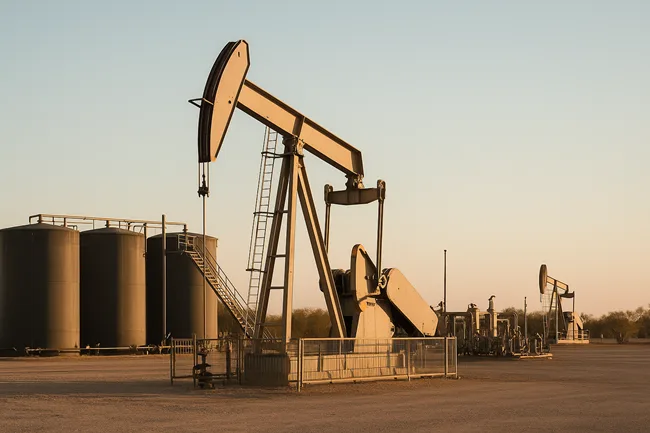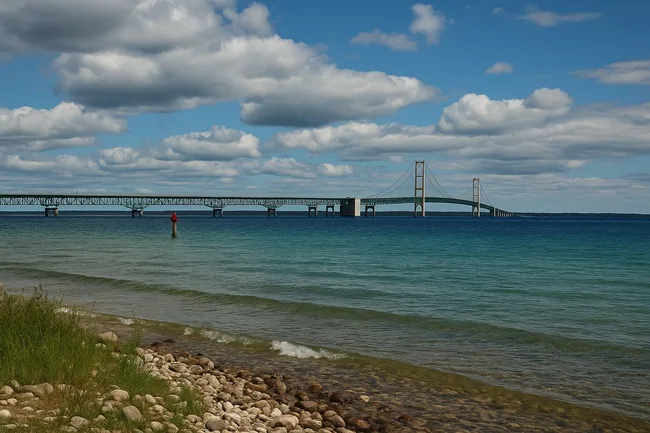
The Michigan Supreme Court has agreed to review a tribal and environmental challenge to Enbridge’s Line 5 tunnel project, according to court filings reported by AP and Michigan Advance. The move sets the stage for a high-stakes legal battle that could reshape the future of one of North America’s most controversial energy infrastructure projects. It also marks a significant escalation in the years-long dispute over whether a new tunnel beneath the Straits of Mackinac will protect the Great Lakes from oil spills or simply entrench dependence on fossil fuel infrastructure.
The case pits Enbridge Inc., the Canadian pipeline operator, against a coalition of Native American tribes and environmental groups who argue that state regulators violated Michigan law when granting the project’s permit. With the Supreme Court’s intervention, a project once considered a near-certainty now faces renewed uncertainty that could ripple across the region’s energy, environmental, and political landscape.
Why is the Michigan Supreme Court reviewing the Line 5 tunnel permit at this stage of the project?
The Michigan Public Service Commission approved Enbridge’s tunnel permit in 2023, allowing the company to replace the dual pipelines that currently rest on the lakebed with a single line encased in a four-mile tunnel drilled beneath the Straits. The permit was upheld by the Michigan Court of Appeals earlier in 2025, giving Enbridge a legal green light to advance the $500 million project. But tribes and advocacy groups petitioned the state’s highest court, arguing that lower courts had overlooked violations of both the Michigan Environmental Protection Act and the state constitution’s public trust doctrine.
The Michigan Supreme Court’s decision to hear the appeal signals that the justices see substantive legal questions around whether regulators adequately assessed environmental risks, considered treaty-protected tribal rights, and weighed less damaging alternatives to the tunnel. Legal analysts note that this review could reshape not only the fate of Line 5 but also the standards applied to major energy projects across the state.
How are tribal treaty rights and cultural heritage protections influencing the Michigan Supreme Court’s review of the Line 5 tunnel project?
Four federally recognized tribes — the Bay Mills Indian Community, the Grand Traverse Band of Ottawa and Chippewa Indians, the Little Traverse Bay Bands of Odawa Indians, and the Nottawaseppi Huron Band of the Potawatomi — are leading the challenge. They contend that the project threatens treaty-protected fishing rights, cultural resources, and the ecological integrity of the Great Lakes. Under 19th-century treaties, these tribes secured rights to hunt and fish in the waters and lands surrounding the Straits of Mackinac, and they argue that a catastrophic spill would irreparably harm those rights.
Their attorneys also emphasize that the permitting process marginalized tribal voices, failing to integrate traditional ecological knowledge or adequately account for how construction could disturb cultural sites. By raising treaty rights at the state’s highest court, the tribes are pushing for a broader recognition of sovereignty in infrastructure decisions that impact indigenous communities.
What are environmental groups arguing about the risks of the Line 5 tunnel?
Environmental organizations such as the Environmental Law and Policy Center and the Michigan Climate Action Network argue that the tunnel proposal downplays the risks of oil spills, tunnel construction hazards, and long-term climate impacts. They point to expert testimony that the tunnel’s geology poses risks of collapse and that an accident inside the confined structure could be harder to contain than a surface pipeline leak. Moreover, they say regulators failed to evaluate whether renewable energy and alternative supply chains could replace Line 5’s throughput, thereby avoiding the need for a tunnel altogether.
These groups frame the dispute as part of a larger struggle to transition Michigan away from fossil fuels. By approving a multibillion-dollar fossil fuel project that could operate for another half-century, critics argue, regulators are locking the state into an outdated energy pathway just as climate science and policy demand decarbonization.
What does Enbridge argue in defense of the Line 5 tunnel?
Enbridge maintains that the tunnel is the safest way to continue operating a pipeline that delivers crucial energy supplies to the Midwest and Canada. Line 5 transports up to 540,000 barrels per day of crude oil and natural gas liquids from Superior, Wisconsin to Sarnia, Ontario, providing feedstock for refineries and heating fuel for millions of households. Company representatives insist that shutting down the pipeline would trigger fuel shortages, higher energy prices, and logistical disruptions.
The Canadian operator also stresses that the tunnel will eliminate the risk of anchor strikes, a key vulnerability of the current dual pipelines lying on the lakebed. By encasing the line in bedrock beneath the Straits, Enbridge argues, the project will dramatically reduce the risk of an oil spill contaminating the Great Lakes. Company officials say the Michigan Public Service Commission thoroughly reviewed environmental impacts before granting approval and that the Court of Appeals correctly upheld those findings.
How does federal oversight complicate the future of the Line 5 tunnel?
Even as the Michigan Supreme Court weighs the state-level permit, Enbridge still requires federal approval from the U.S. Army Corps of Engineers. The Corps is conducting an environmental impact statement, with a decision expected later this year. Federal regulators could impose additional conditions or delays, particularly if the state case highlights unresolved environmental or cultural concerns.
The U.S. Department of Justice has already signaled interest in the litigation, filing a statement of interest in related federal cases. This highlights the cross-border and interstate dimensions of Line 5, which transports energy across multiple states and into Canada. Any federal intervention could either accelerate or further complicate the project’s timeline.
How could the Michigan Supreme Court’s Line 5 tunnel review reshape the state’s energy security, fuel prices, and overall economic outlook?
Line 5 has long been a flashpoint in Michigan politics. Supporters, including many in labor and manufacturing, argue that the tunnel secures jobs, ensures energy stability, and provides economic benefits through reliable fuel supply. Opponents counter that Michigan’s tourism, fisheries, and drinking water supply are at far greater risk from an oil spill than from potential fuel shortages.
Economically, the stakes are significant. If the project is blocked or delayed, regional refiners may need to find alternative supply routes, potentially raising costs for consumers. At the same time, uncertainty over Line 5’s future may accelerate investments in renewables and regional energy independence, aligning with Michigan’s long-term climate goals.
How could the Michigan Supreme Court’s review of the Line 5 tunnel project influence investor sentiment and reshape midstream energy industry strategy?
For investors in midstream energy infrastructure, the Michigan Supreme Court’s review injects fresh uncertainty into a sector already grappling with regulatory risk. Enbridge, which trades on both the Toronto Stock Exchange and New York Stock Exchange, has long marketed Line 5 as a stable, cash-generating asset. A legal setback could cast doubt on those assumptions, potentially pressuring its stock performance and highlighting the volatility of permitting battles in North America.
Institutional investors and analysts will be watching closely for how courts balance energy security against environmental protection. A ruling that strengthens tribal and environmental claims could ripple beyond Michigan, raising the bar for pipeline approvals in other jurisdictions and forcing midstream companies to adopt more rigorous engagement and risk assessment strategies.
What key legal milestones, regulatory reviews, and political developments should stakeholders track as the Michigan Supreme Court reviews the Line 5 tunnel case?
The Supreme Court will likely set oral arguments in the coming months, with a decision expected in 2026. Observers should watch whether the justices focus on procedural questions, such as whether regulators sufficiently considered alternatives, or on substantive constitutional issues like the public trust doctrine. The latter could carry far-reaching consequences, reinforcing that Michigan’s waters must be held in trust for the public and protected from undue private risk.
In parallel, stakeholders should track the U.S. Army Corps of Engineers’ federal review, which could provide a separate veto point regardless of state proceedings. Political dynamics will also matter: Governor Gretchen Whitmer has previously sought to shut down Line 5, and her administration’s role in defending or revising permits may influence the state’s stance. Cross-border relations with Canada, which strongly supports the pipeline, will also play into the diplomatic context.
Why could the Michigan Supreme Court’s decision be the pivotal moment that defines whether the Line 5 tunnel moves forward or faces major setbacks?
The Michigan Supreme Court’s decision to hear the tribal and environmental challenge has shifted the Line 5 debate into a new, uncertain phase. What was once framed as a straightforward modernization project now faces scrutiny over whether it violates treaty rights, endangers the Great Lakes, and undermines Michigan’s constitutional protections. Enbridge argues the tunnel is the safest option and a necessary investment, while opponents say it perpetuates fossil fuel dependence and marginalizes indigenous sovereignty.
For Michigan residents, the ruling will affect not just a pipeline but also the state’s broader approach to balancing economic growth, environmental protection, and indigenous rights. For investors and industry, it is a reminder that infrastructure projects are no longer guaranteed by technical approval alone. With environmental law, tribal sovereignty, and climate policy converging in court, the Line 5 case could set precedent for decades to come.
Discover more from Business-News-Today.com
Subscribe to get the latest posts sent to your email.