



Why are transformers becoming the hidden choke point in the energy transition?
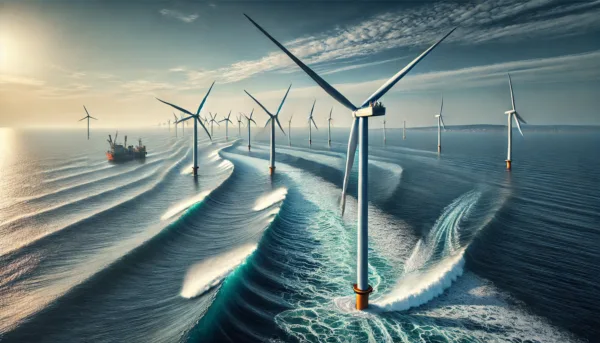
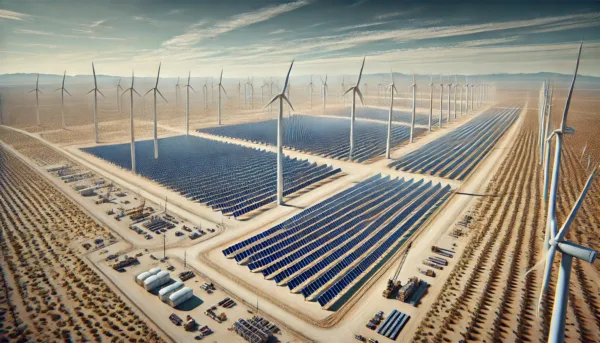
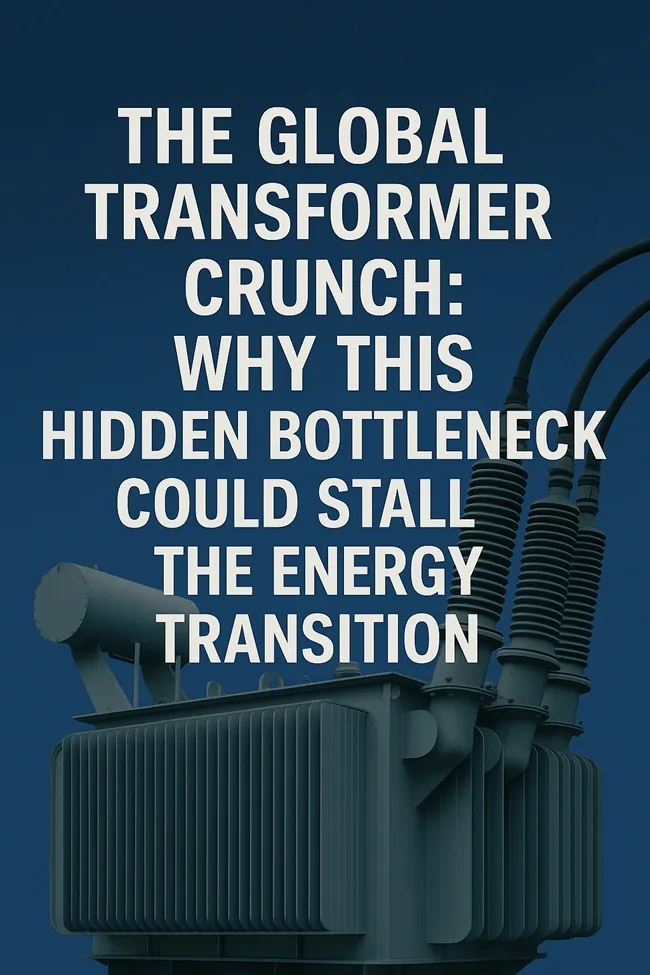
The race to build renewable-powered grids is colliding with an unlikely obstacle: a shortage of transformers. As nations roll out solar, wind, and electrification projects at record pace, a vital but often invisible component of power networks is proving to be the weak link. Without transformers, offshore wind farms cannot feed the grid, interconnectors between countries remain idle, and electric vehicle charging corridors stall. Unlike wind turbines or solar panels, which have drawn significant industrial investment and political attention, transformers are manufactured in limited facilities, require specialized materials and skills, and take years to deliver. The result is a crunch that risks delaying global decarbonization efforts.
How severe is the current transformer shortage across global energy markets?
Evidence of a transformer shortage is mounting across multiple geographies. In the United States, soaring electricity demand, aging infrastructure, and aggressive renewable integration have exposed a shortfall in both distribution transformers and large power transformers. Analysts warn that the country may face a supply deficit of up to 30 percent by 2025, leaving utilities reliant on imports at a time when geopolitical risks and trade barriers are rising.
Lead times for high-voltage transformers, which before the pandemic ranged between 30 and 60 weeks, have ballooned to between 120 and 210 weeks. In practical terms, this means utilities and developers may wait between two and four years for equipment that was once delivered within a year. Manufacturers have reported order books stretching to the end of the decade, a situation that drives up costs and complicates project financing.
The pressure is not confined to the United States. Europe is facing its own backlog as it builds cross-border power lines to support renewable energy exchange and prepares to meet electrification targets. In Asia, India has launched ambitious plans for grid modernization and renewable integration but faces similar bottlenecks, while China, the largest producer of electrical steel, has its own priorities in domestic grid expansion.
What is driving the surge in transformer demand and why can’t supply keep up?
The core of the shortage lies in the mismatch between surging demand and slow-moving supply. Demand is being driven by multiple converging forces. Renewable energy projects, particularly offshore wind and large-scale solar, require massive high-voltage transformers to step up power for long-distance transmission. Electrification of transport and heating is loading distribution networks with unprecedented demands. The explosive growth of data centers, artificial intelligence workloads, and digital services is also adding volatile load spikes that require advanced transformer capacity.
On the supply side, the transformer industry is not designed to scale quickly. Factories that produce large power transformers require decades of investment in specialized floor space, heavy-lift equipment, and high-voltage testing labs. They cannot be set up overnight. The industry also depends heavily on scarce raw materials, such as high-grade electrical steel and copper, both of which face global supply constraints. Skilled labor is another bottleneck. Winding transformers, insulating components, and testing high-voltage equipment require rare expertise, which many regions are struggling to replenish amid aging workforces.
Why does the transformer crunch matter more than other clean energy bottlenecks?
The transformer crunch is unique because it sits at the intersection of generation, transmission, and consumption. Without sufficient turbine production, renewable projects are delayed, but without transformers, even completed projects cannot deliver power to the grid. They are indispensable not only for voltage conversion but also for stabilizing grids when renewable sources fluctuate. Transformers are critical for international power links, such as the cables connecting the UK and Norway or Europe’s planned Mediterranean supergrid, where power must be transmitted efficiently across thousands of kilometers.
The shortage is also directly inflating project costs. Developers are paying premiums for fast-tracked orders, sometimes double or triple pre-pandemic levels. Project financing is strained as capital remains tied up longer due to delays in equipment delivery. Some developers have reported postponing or canceling projects altogether, a stark reminder that even with abundant renewable capacity, grid hardware remains the real bottleneck.
How are major manufacturers and governments responding to transformer supply challenges?
The industry’s biggest names are scrambling to expand capacity. Hitachi Energy has committed to multi-billion-dollar investments to expand global manufacturing and hire thousands of new workers by the late 2020s. Siemens Energy has doubled down with major investments in its Nuremberg factory in Germany and is planning additional production in the United States. ABB and Bharat Heavy Electricals in India are also scaling their facilities to meet local demand and reduce reliance on imports.
Governments are recognizing transformers as strategic assets akin to semiconductors or rare earths. In the United States, the Department of Energy has flagged transformer shortages as a national security risk. In Europe, policymakers are tying grid hardware production to broader industrial sovereignty goals, with subsidies and funding packages being offered for local manufacturing expansions. India has rolled out incentives to encourage domestic production of high-voltage transformers, while China continues to protect its leadership in electrical steel.
Policy efforts are also being directed at accelerating permitting for new manufacturing sites and at reshaping procurement strategies for utilities. Some governments are encouraging developers to place orders years in advance to avoid delays, while others are exploring stockpiling strategies for key materials like copper and steel.
Could the transformer shortage stall global renewable targets and grid modernization plans?
The short answer is yes. Clean energy projects across the globe are already experiencing delays linked to transformer shortages. In the United States, utilities report multi-year wait times for distribution transformers, delaying connections for new housing developments and electric vehicle charging infrastructure. In Europe, interconnector projects critical to balancing renewables across borders are at risk of falling behind schedule. In emerging economies, where rural electrification and renewable integration are priorities, limited transformer supply risks slowing development goals.
Beyond delays, there is the risk of systemic stress on grids. Without modern transformers, grids are more vulnerable to blackouts, voltage instability, and load mismatches. As data centers proliferate, with some facilities consuming the power of a small city, the strain on existing transformer fleets is intensifying. Without timely upgrades, even developed economies could face reliability challenges.
How long is the transformer crunch likely to last and what is the future outlook?
Most industry experts expect the shortage to persist at least until 2027. New capacity is coming online, but the pace is insufficient to meet the surge in demand. Factories take years to build and scale, and workforce shortages compound the challenge. Analysts at major consultancies note that even with aggressive investment, it may take the rest of the decade before supply and demand begin to balance.
That said, the outlook is not uniformly negative. The transformer crunch has placed grid hardware in the spotlight, prompting governments and investors to treat it as a strategic priority. This attention could accelerate investment in new factories, stimulate innovation in modular and digital transformer designs, and encourage diversification of supply chains. It may also create attractive opportunities for investors, as companies positioned in transformer production gain pricing power and long-term contracts.
For Siemens Energy, ABB, Hitachi Energy, and Bharat Heavy Electricals, the shortage represents both a challenge and an opportunity. If they can expand quickly without compromising quality, they stand to benefit from multi-year order books and higher margins. However, failure to deliver could erode investor confidence and delay energy transition targets globally.
What does the transformer crunch teach us about the future of the energy transition?
The transformer crisis underscores that the energy transition is not just about wind turbines, solar panels, or batteries. It is about the less glamorous but equally critical components that tie these systems together. Grids are only as strong as their weakest link, and today that link appears to be transformer capacity.
Investors should see this as a reminder that the most resilient plays in the clean energy transition may not always be in generation, but in grid infrastructure. Utilities must adapt procurement and planning to account for longer lead times and higher costs. Governments, meanwhile, will have to treat transformers as strategic infrastructure, worthy of the same urgency as semiconductors or natural gas supply.
As the decade unfolds, the global energy transition may well hinge not just on ambitious climate targets but on the ability to deliver enough steel, copper, and engineering expertise to build the transformers that make those targets achievable. The hum of transformers may not capture public imagination, but it is the sound of the energy transition either succeeding or stalling.
Discover more from Business-News-Today.com
Subscribe to get the latest posts sent to your email.