



Why did Island Pharmaceuticals’ share price react to the FDA milestone, and what does it signal for investors?
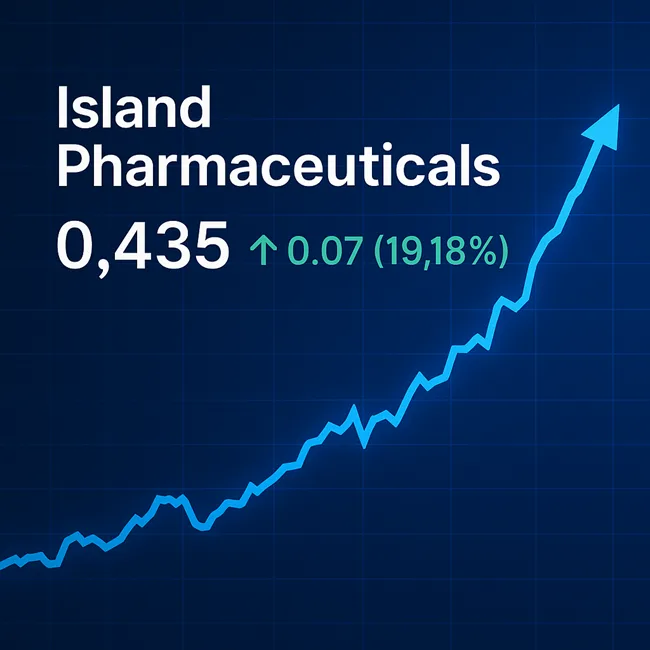
Island Pharmaceuticals Limited (ASX: ILA) saw renewed investor attention on September 19, 2025, as its shares traded at A$0.435, up 19.18% in a single session, with nearly 3 million shares changing hands. The surge lifted its market capitalization to A$110.39 million, marking a 457.69% return over the past year. The performance ranks Island 70th of 232 stocks in the healthcare sector and 978th among 2,298 companies on the ASX, underscoring its transformation from a speculative microcap into a high-profile biotech play.
This momentum coincided with a regulatory breakthrough: the U.S. Food and Drug Administration (FDA) granted the company’s request for a Type C meeting under Galidesivir’s open Investigational New Drug (IND) application. The FDA has committed to providing written feedback by November 12, 2025, addressing whether Galidesivir can progress under the Animal Rule pathway and its potential eligibility for a Priority Review Voucher (PRV). With recent PRVs selling for between US$100 million and US$158 million, the monetization potential has become a clear driver of investor interest.
How does the FDA’s Animal Rule create a unique pathway for Galidesivir approval?
For Island Pharmaceuticals, the Animal Rule represents both a scientific and commercial opportunity. The framework was created to address situations where human clinical trials are unethical or impossible, such as high-consequence pathogens like Marburg virus. Instead, regulators rely on robust animal efficacy studies combined with human safety data to make approval decisions.
Since 2012, eight drugs and countermeasures have been approved via this route for inclusion in the U.S. Strategic National Stockpile, with lifetime contract values ranging from US$100 million to over US$1.2 billion. Marburg virus remains the only Category A biothreat without an approved treatment in the stockpile, highlighting a clear gap that Galidesivir could fill. Island’s upcoming meeting with the FDA is designed to confirm whether its existing non-human primate survival data, combined with prior Phase 1 human safety trials, is sufficient to support an accelerated approval process after one more pivotal study.
What survival data underpins investor confidence in Galidesivir’s potential?
Investor enthusiasm is grounded in the remarkable efficacy results from earlier non-human primate studies. In Marburg virus models, Galidesivir achieved an overall survival rate of 94%. When treatment was initiated at 24 or 48 hours post-infection, survival was 100%, compared with zero survival in placebo groups.
The data set for Ebola is equally compelling. Studies demonstrated 100% survival when dosing began immediately or within 48 hours of infection, while even at 72 hours, survival remained at 67%. These outcomes underscore Galidesivir’s unusually wide therapeutic window for a filovirus antiviral. With the FDA recognizing these primate models as gold standards for human disease progression, the translational credibility of the data has reinforced both regulatory momentum and investor sentiment.
Phase 1 trials in more than 100 healthy volunteers also established a strong safety profile, showing Galidesivir was well tolerated at multiple dose levels without serious adverse events. Together, the efficacy and safety findings position Galidesivir as a strong candidate for Animal Rule consideration.
What are the next regulatory and clinical milestones for Island Pharmaceuticals?
The roadmap for the next six months is dense with value catalysts. Island will submit a comprehensive briefing package of historical Galidesivir data to the FDA in the coming weeks. The company expects the agency’s written feedback in November, after which it plans to commence a pivotal GLP-compliant animal study in Marburg. This trial, expected to conclude by December 2025, could be the final piece of data needed before a New Drug Application submission.
If timelines hold, Island anticipates filing its NDA in the first quarter of 2026, with potential FDA approval by mid-year under Priority Review. Such speed is rare in the antiviral space, but the combination of the Animal Rule and PRV eligibility makes it feasible. For investors, each milestone represents a binary event that could significantly shift the company’s share price trajectory.
How large is the potential market for Galidesivir in government stockpiles?
Island Pharmaceuticals has been explicit about its strategy: to become a trusted supplier to government stockpiles. The U.S. Strategic National Stockpile and equivalent programs in allied nations represent a combined multi-hundred million dollar annual procurement market for filovirus countermeasures.
Precedents are encouraging. Other antivirals and vaccines admitted to the stockpile under the Animal Rule have secured multi-year contracts worth several hundred million dollars, ensuring predictable revenue streams for developers. Galidesivir’s broad-spectrum activity across more than 20 RNA viruses, including Zika, MERS, and Yellow fever, further enhances its appeal as a multipurpose countermeasure, potentially widening its procurement base beyond Marburg alone.
What role does ISLA-101 play in Island’s dual development strategy?
While Galidesivir has captured most of the attention, Island’s second program, ISLA-101, provides diversification. Repurposed for dengue fever and other mosquito-borne viruses, ISLA-101 has been tested in more than 40 Phase I–III trials across oncology and respiratory indications, giving it a long-established safety profile.
Island’s dual strategy—combining a high-consequence outbreak antiviral with a vector-borne disease program—creates a balanced portfolio. Galidesivir offers potential near-term revenue through government contracts, while ISLA-101 targets a broader endemic market where dengue outbreaks continue to challenge health systems globally.
How is Island Pharmaceuticals positioned financially and structurally?
As of June 30, 2025, Island Pharmaceuticals reported A$7.25 million in cash reserves and no debt. Its market capitalization of roughly A$74.9 million underscores the asymmetric risk-reward profile common to small-cap biotechs: execution of its regulatory and clinical strategy could deliver returns many times current valuation, while setbacks would weigh heavily on sentiment.
The shareholder base includes high-profile biotech investors such as Dr William James Garner (16.86%), Chairman Jason Carroll (12.25%), MWP Partners (8.25%), and Dr Daniel Tillett (5.55%). This alignment between management and long-term backers is viewed positively by institutions, as it reflects insider confidence in the company’s prospects.
Why is Island Pharmaceuticals’ share price gaining momentum, and what does investor sentiment reveal about confidence in Galidesivir’s FDA pathway?
Market observers have pointed out that Island’s recent share price move reflects early positioning ahead of key milestones rather than speculative hype. The stock has been gradually trending upward over the past year, buoyed by anticipation of FDA engagement and strengthened by the announcement of the Type C meeting.
Institutional investors are watching closely for clarity on PRV eligibility, as a successful award could provide a major non-dilutive capital event. Retail investors, meanwhile, are framing Island’s story within the broader narrative of pandemic preparedness and biosecurity, themes that have attracted global policy and funding attention.
Current sentiment leans cautiously bullish, with many investors adopting a “buy and hold” stance on the expectation that the combination of strong survival data and regulatory momentum will culminate in transformational stockpile contracts.
What risks could challenge Island Pharmaceuticals’ trajectory?
Despite the optimism, risks remain. Scientific risks include the possibility that the upcoming Marburg animal study fails to replicate earlier survival outcomes. Regulatory risks involve potential changes in FDA guidance or delays in feedback. Manufacturing scale-up for government procurement also presents execution challenges, particularly for a small-cap biotech.
Financially, the company’s cash position provides runway for near-term studies but would need bolstering for large-scale manufacturing and distribution unless offset by PRV monetization or stockpile contracts. Management has emphasized mitigation through early regulator engagement, partnerships with experienced trial sites, and preparation of a robust historical data package.
What are the key milestones, regulatory decisions, and catalysts that could shape Island Pharmaceuticals’ stock and investor outlook in 2025–2026?
The coming quarters are critical. If the FDA provides favorable feedback in November and the Marburg animal study confirms earlier results by year-end, Island could file for regulatory approval as early as the first quarter of 2026. The prospect of an expedited review and a PRV award adds a layer of financial upside that investors have already begun to price into the stock.
Island Pharmaceuticals embodies the high-risk, high-reward dynamic of the biotech sector. Success would position it as a supplier of critical antiviral countermeasures with predictable revenue through government stockpile contracts. Failure to meet regulatory or scientific benchmarks would test investor patience.
For now, the stock’s rise reflects cautious confidence. With Galidesivir’s survival data, the FDA’s engagement, and the looming potential of a PRV, Island is no longer viewed as a niche repurposing play but as a serious contender in global biosecurity.
Discover more from Business-News-Today.com
Subscribe to get the latest posts sent to your email.