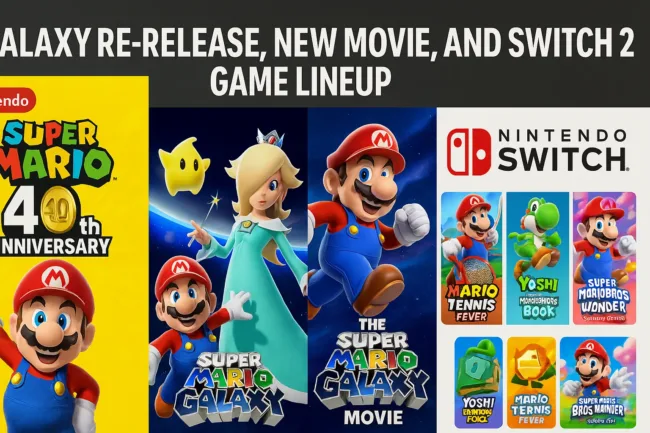
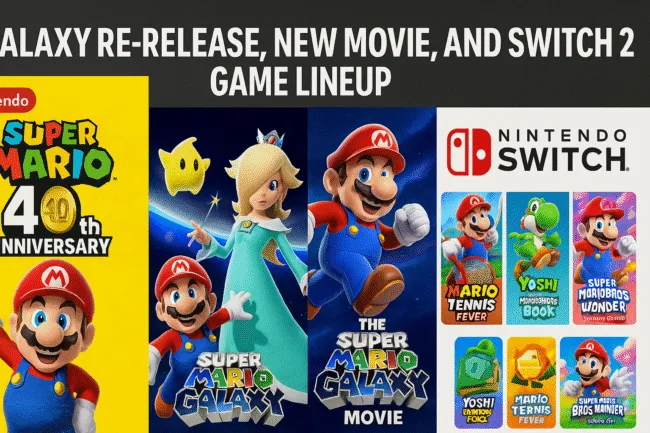
Nintendo Co., Ltd. (TYO: 7974) marked a landmark moment in gaming history by celebrating the 40th anniversary of Super Mario Bros. with a showcase that paired nostalgia with future growth plans. In a Nintendo Direct presentation streamed from Redmond, Washington, Mario creator Shigeru Miyamoto announced that Super Mario Galaxy and Super Mario Galaxy 2 would be re-released for the Nintendo Switch on October 2, bringing two of the most acclaimed 3D platformers back to a new generation of players. The reveal was accompanied by news of a new animated feature, The Super Mario Galaxy Movie, set to release globally on April 3, 2026.
The anniversary was not limited to throwbacks. Nintendo also positioned the milestone as a launchpad for its next-generation system, Nintendo Switch 2, by showcasing titles that expand beloved franchises while experimenting with new forms of play. The announcements underscored how Nintendo continues to rely on its iconic characters, multimedia storytelling, and loyal fan base to extend its growth cycle amid heightened competition from Sony and Microsoft.
Why does the Super Mario Bros. franchise remain the centerpiece of Nintendo’s long-term growth strategy?
Super Mario Bros. debuted in Japan on September 13, 1985, and went on to define side-scrolling platformers while helping the original Nintendo Entertainment System (NES) achieve global success. Forty years later, the franchise continues to function as Nintendo’s strongest intellectual property (IP), with more than 420 million Mario games sold worldwide across platforms. The Mario brand has become more than just a series of video games—it now anchors theme parks, toys, film, and mobile titles.
Analysts suggest that Nintendo’s decision to reintroduce Super Mario Galaxy and its sequel on Switch is not simply an act of nostalgia. Both games highlight the inventive design and enduring charm of the franchise, appealing both to long-time fans and to younger audiences who may not have played them on the Wii. By offering enhanced features, improved visuals, and 4K upgrades for Switch 2 users, Nintendo is showing that it can preserve legacy content while leveraging technical advancements to sustain commercial relevance.
How are multimedia tie-ins like the Super Mario Galaxy Movie expected to shape Nintendo’s brand visibility?
Following the success of The Super Mario Bros. Movie in 2023, which grossed more than $1.3 billion globally, Nintendo is leaning deeper into cross-media. Miyamoto confirmed that the new film will be titled The Super Mario Galaxy Movie and will expand the narrative universe into the cosmos, mirroring the themes of the re-released games. Institutional investors view this as a calculated move to extend Mario’s global reach, linking cinematic storytelling with hardware and software launches.
Nintendo’s broader multimedia push includes its Universal Studios Japan theme park attractions and museum exhibitions in Kyoto, which are also hosting anniversary-specific installations. Analysts note that these efforts allow Nintendo to monetize its characters across multiple revenue streams while insulating against cyclical dips in hardware sales.
What role do new Switch 2 exclusives play in reinforcing Nintendo’s hardware cycle during the anniversary window?
Alongside anniversary content, Nintendo revealed a slate of new titles designed to drive adoption of the Switch 2. Among the highlights were Mario Tennis Fever, a sports spin-off set for February 2026; Yoshi and the Mysterious Book, an adventure launching in spring 2026; and enhanced multiplayer modes in Super Mario Bros. Wonder – Switch 2 Edition. Each game is positioned to showcase the capabilities of the new hardware, including improved performance, motion controls, and co-op experiences.
Investors note that Nintendo’s strategy relies heavily on a staggered release schedule. By tying new Mario, Yoshi, and other franchise updates to Switch 2, the Japanese gaming giant aims to generate a steady cadence of must-have titles that prolong hardware demand. This is consistent with Nintendo’s past practice of spacing out franchise tentpoles to sustain console lifecycles.
How do non-Mario franchises and third-party collaborations strengthen Nintendo’s competitive positioning?
The Direct also spotlighted Fire Emblem: Fortune’s Weave, scheduled for 2026, and Metroid Prime 4: Beyond, which launches in December 2025. Third-party publishers brought additional weight with announcements such as Capcom’s Resident Evil Requiem (February 2026), Supergiant Games’ Hades II (September 2025), and Monster Hunter Stories 3: Twisted Reflection (March 2026). These additions reflect Nintendo’s growing collaboration with global developers, giving the Switch 2 a broader library that appeals to diverse audiences.
Market watchers suggest that while Mario drives hardware adoption, partnerships with established third-party studios are vital to sustaining engagement beyond Nintendo’s own catalog. By ensuring Switch 2 owners have access to cross-platform hits alongside exclusive first-party titles, Nintendo is mitigating the risk of being typecast as a “family-only” console provider.
What signals are investors watching in Nintendo’s anniversary strategy and Switch 2 pipeline?
Institutional sentiment has been cautiously optimistic. Nintendo’s stock price has historically responded strongly to major franchise announcements, and the dual reveal of anniversary re-releases and new Switch 2 exclusives is expected to drive holiday sales momentum. Analysts note that the Japanese gaming company’s emphasis on nostalgia aligns with a proven formula: bundling beloved IP with new experiences to maximize both short-term revenue and long-term loyalty.
At the same time, investors are closely watching the adoption curve of Switch 2, which enters a crowded market dominated by Sony’s PlayStation 5 Pro and Microsoft’s Game Pass ecosystem. Nintendo’s reliance on first-party IP has been a strength but also a risk; without sufficient third-party depth, there is concern that the hardware could face saturation earlier than expected. However, the addition of heavyweight franchises like Resident Evil, Final Fantasy VII Remake Intergrade, and Dragon Quest VII Reimagined suggests that Nintendo is working actively to broaden its portfolio.
How could the anniversary-driven momentum influence Nintendo’s global growth outlook beyond 2025?
Looking ahead, the convergence of Mario’s 40th anniversary, Switch 2 hardware adoption, and cross-media expansion sets Nintendo up for what analysts describe as a “synergy cycle.” Revenue contributions from film, theme parks, merchandise, and digital subscriptions through Nintendo Online are expected to complement physical game sales. The addition of Virtual Boy classics to Nintendo Switch Online + Expansion Pack further reflects how the company is monetizing nostalgia in digital form.
For Nintendo, the challenge will be sustaining this momentum past 2026, when competitors will likely unveil next-generation consoles with greater technical capabilities. Market observers believe Nintendo’s success will depend less on raw performance and more on maintaining its distinct identity—anchored in character-driven storytelling, accessible gameplay, and creative hardware experiences. By leaning into its heritage during Mario’s anniversary year, Nintendo is betting that its brand equity remains its strongest defense against disruption.
Discover more from Business-News-Today.com
Subscribe to get the latest posts sent to your email.