


Shares of Resources & Energy Group Limited (ASX: REZ) gained 4.55% on September 9, 2025, after the company announced regulatory approval for full-scale gold vat leach production at its Maranoa Deposit in Western Australia. Closing the day at AUD 0.023 per share, the REZ stock moved higher on above-average trading volumes, reaching 6.35 million shares—a strong sign of renewed retail and speculative interest following months of rangebound activity.
While the one-year return for REZ still stands at 0.00%, investors appeared to be positioning ahead of what could become the company’s first revenue-generating operation. The company’s market capitalization now sits at approximately AUD 17.19 million, with 747.47 million shares on issue.
For a microcap gold explorer, the Maranoa expansion represents a material shift—not just in operational trajectory, but in narrative. REZ is no longer just a story about exploration upside. It is now entering the realm of near-term cash flow, something that could transform investor sentiment and reduce reliance on dilutive equity raises that have historically weighed down junior miners on the ASX.
Why did REZ stock move on the Maranoa gold production approval, and how significant is the regulatory milestone?
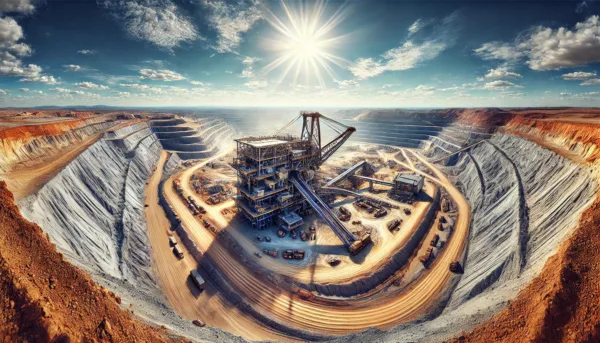
The rally in REZ shares follows the announcement that the Department of Mines, Petroleum and Exploration (DMPE) has approved amendments to the company’s mining proposal at Maranoa, located within its flagship East Menzies Gold Project. This amendment authorizes REZ to construct eight additional vat leach cells, each with a 5,000-tonne capacity, totaling 40,000 tonnes of ore processing infrastructure.
This marks a shift from the 5,000-tonne trial operation that has been underway since early 2025. According to Managing Director J. Daniel Moore, the scale-up will allow REZ to begin generating meaningful gold output—and more importantly, operating cash flow. He emphasized that the revenues generated will directly support future drilling, exploration, and development activities across the broader Menzies Greenstone Belt.
For investors, this development presents a crucial de-risking event. Until now, REZ has been an early-stage exploration bet, with value contingent on future discoveries. With Maranoa entering full-scale production, the company can now pursue a self-funding model—often a catalyst for re-rating in the junior mining space.
How does Resources & Energy Group stack up against its ASX mining peers, and what is the current sentiment?
Resources & Energy Group’s stock ranks 627 out of 1,066 companies in the ASX basic materials sector, and 1,647 out of 2,298 overall. While these rankings place it firmly within the speculative microcap category, the company’s current activity level suggests a pivot from passive asset holding to active gold production.
Unlike many exploration firms in the same tier, REZ has now laid the groundwork for internal cash flow generation. That gives it a relative advantage, especially as global interest rates remain elevated and risk capital continues to be selective in backing pre-revenue miners.
From a valuation standpoint, REZ’s AUD 17.19 million market cap appears modest when weighed against the production capacity of 40,000 tonnes and the potential for gold recovery in a price environment hovering around AUD 2,800–3,200 per ounce. If the company can deliver even modest ounces with low all-in sustaining costs (AISC), the implied cash flow yield could dramatically alter investor perception.
What role does the East Menzies Gold Project play in REZ’s long-term strategy—and why is Maranoa central to it?
The East Menzies Gold Project (EMGP), located roughly 130 kilometers north of Kalgoorlie, spans a 100-square-kilometre footprint across the Menzies Greenstone Belt. It is the company’s principal asset and includes multiple prospective gold deposits beyond Maranoa. Historically underexplored and fragmented, the region is now attracting renewed interest as infrastructure access improves and gold prices remain strong.
Maranoa was selected as the company’s initial production site due to its near-surface mineralization and suitability for vat leaching—a method offering lower capex and faster commissioning than conventional CIL or heap leach operations.
The company had earlier conducted a 5,000-tonne pilot program at Maranoa to validate metallurgical performance and recoveries. Following positive results, it moved quickly to seek regulatory approval for expansion—a signal of confidence in both orebody quality and the process route.
With eight vats now approved for development, REZ has positioned Maranoa as the operational backbone of its cash-flow engine. This base could, over time, support exploration and fast-tracked development at other tenements within East Menzies, effectively seeding a pipeline of gold assets under a centralized production strategy.
Is the gold vat leach model a competitive advantage for junior miners like REZ in 2025?
Yes—and REZ is not alone in pursuing it. Vat leaching is gaining popularity among ASX-listed juniors as a scalable, modular, and environmentally preferable alternative to large-scale milling plants. The method allows companies to extract gold from ore with a relatively small environmental footprint and faster turnaround time, reducing both permitting complexity and upfront capital requirements.
For REZ, vat leach processing aligns with the geological and logistical constraints of Maranoa. It allows for selective targeting of higher-grade material, minimizing dilution and optimizing recovery rates. Given the ore profile and existing infrastructure, full-scale vat leach deployment could be among the most cost-efficient ways to monetize the company’s resource base without overcommitting capital.
Should REZ prove that it can deliver consistent recoveries at scale, this model could serve as a blueprint for parallel development across its other holdings—and potentially attract interest from regional players looking to enter the Kalgoorlie north corridor through partnerships or M&A.
What should investors expect in the next 1–2 quarters, and what are the possible re-rating catalysts?
Several near-term developments could influence the next leg of movement in REZ shares. First and foremost, the conclusion of the current 5,000-tonne trial and the publishing of its metallurgical performance will be watched closely. Recovery rates, processing efficiency, and ore grade will all help set expectations for the full-scale operation.
Next, clarity on how the company intends to finance the expansion—whether through internal resources, new equity, or debt—will inform market sentiment. Investors will also be looking for signs of execution discipline, including procurement, construction timelines, and first gold pour guidance.
Any updated JORC resource estimates or drilling results across the East Menzies belt will also play into the broader rerating thesis, especially if they suggest expansion potential beyond Maranoa. The presence of tolling or offtake agreements could provide revenue visibility and reduce execution risk—two critical factors in driving up junior mining valuations.
Can REZ sustain investor interest beyond the initial Maranoa approval pop?
The September 9 move in REZ stock may only be the beginning—provided the company executes on its operational roadmap. Investors have signaled that they are ready to reward de-risked, production-focused gold juniors with a scalable model. The key now is delivery.
If Resources & Energy Group (ASX: REZ) can convert its Maranoa approval into sustainable production, demonstrate operational discipline, and expand its resource base with internally funded exploration, the market may start pricing in more than just a speculative upside—it may start seeing REZ as a legitimate gold growth story in Western Australia.
Discover more from Business-News-Today.com
Subscribe to get the latest posts sent to your email.