



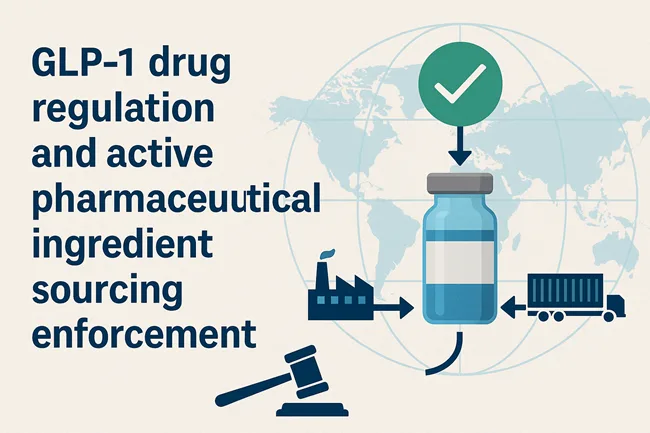
The U.S. Food and Drug Administration (FDA) has launched a new regulatory tool known as the “green list” to restrict unauthorized foreign imports of active pharmaceutical ingredients (APIs) used in GLP-1 receptor agonists such as semaglutide and tirzepatide, amid growing safety concerns about the compounded versions of these drugs. The initiative represents a targeted enforcement effort to prevent illegal or substandard GLP-1 ingredients from entering the American pharmaceutical supply chain.
This move comes at a time when demand for GLP-1 drugs is surging, fueled by their popularity in type 2 diabetes treatment and chronic weight management, as well as off-label use for general weight loss. However, the proliferation of compounded formulations—especially those based on unverified or foreign-sourced APIs—has raised alarm bells within both regulatory and medical circles.
What are GLP-1 drugs and why is the FDA targeting unapproved compounded versions now?
GLP-1 drugs like Ozempic (semaglutide) and Mounjaro (tirzepatide) are FDA-approved therapies for managing blood sugar in type 2 diabetes and, more recently, for chronic weight loss under brand names such as Wegovy and Zepbound. Their clinical effectiveness and high-profile endorsements have driven unprecedented demand, which, in turn, has created shortages and incentivized compounding pharmacies to fill the gap.
While compounding pharmacies are allowed under certain regulatory exemptions to prepare individualized medications, the FDA has flagged major risks associated with these compounded GLP-1 drugs—especially when the APIs are sourced from overseas suppliers with no inspection history or FDA clearance.
The newly launched green list specifically aims to curtail this loophole by naming foreign API manufacturers who have undergone FDA evaluation and meet the agency’s manufacturing standards. APIs not on the green list will be detained without physical inspection at the border, creating a higher compliance barrier for importers attempting to bring in raw semaglutide or tirzepatide.
How will the green list change enforcement actions around compounded GLP-1 drugs in the U.S.?
FDA Commissioner Dr. Marty Makary emphasized that the green list is part of a broader crackdown aimed at “protecting consumers from poor-quality or dangerous GLP-1 drugs.” By targeting the supply chain at its point of entry, the FDA hopes to eliminate one of the primary risks associated with compounded semaglutide and tirzepatide products—namely, that their active ingredients may be contaminated, misformulated, or mislabeled.
The initiative will be enforced through a specialized Import Alert, which empowers the FDA and Customs and Border Protection (CBP) to block any API shipment that doesn’t originate from a listed, compliant facility. This detainment process will happen automatically—no lab testing required—unless the importer can provide documentation proving regulatory compliance.
Dr. George Tidmarsh, Director of the FDA’s Center for Drug Evaluation and Research (CDER), stated that “targeting illegal foreign GLP-1 active ingredients at the border is a critical part of this work.” The agency is expected to update the green list periodically as more manufacturers undergo inspections or fall out of compliance.
What safety concerns prompted the FDA to act—and how serious are they?
The FDA’s decision follows a growing body of evidence showing that compounded versions of semaglutide and tirzepatide have resulted in serious adverse events, including cases requiring hospitalization. Some compounded products were found to use unapproved salt forms—notably semaglutide sodium and semaglutide acetate—which have not been evaluated for safety or efficacy.
In other cases, dosing errors have led to severe gastrointestinal side effects and hypoglycemia. Physicians and pharmacists have raised red flags about inconsistent concentrations, improper storage, and absence of batch testing for impurities. This has created an unpredictable safety profile for patients, particularly those who assume compounded versions are equivalent to branded, FDA-approved medications.
The agency had already issued consumer advisories and joint warnings with state pharmacy boards earlier this year. However, the green list marks a significant escalation in its enforcement strategy, shifting the focus from post-market actions to pre-market interdiction at the port of entry.
How are compounding pharmacies and foreign API suppliers likely to respond?
Industry stakeholders are now on notice. Compounding pharmacies relying on offshore suppliers for semaglutide or tirzepatide APIs will need to review their sourcing relationships or risk disruption in supply. Legal experts expect an uptick in regulatory scrutiny and potential warning letters for facilities that continue to use APIs from non-listed manufacturers.
On the foreign side, API manufacturers that wish to access the lucrative U.S. GLP-1 market may seek FDA inspections or third-party audits to achieve green list status. However, this process is neither quick nor guaranteed. The FDA has made it clear that “compliance with U.S. Current Good Manufacturing Practices (CGMPs)” is non-negotiable.
Institutional observers suggest that the green list could create a two-tier market—one where FDA-verified APIs command a premium, while lesser-known suppliers are effectively locked out of the U.S. compounding pipeline.
What is the broader implication for the GLP-1 market and U.S. regulatory policy?
The launch of the green list reflects the FDA’s more assertive posture toward the increasingly commercialized world of drug compounding. Analysts suggest that the measure could become a template for future interventions, particularly in high-demand therapeutic areas where compounding activity rises due to supply shortages.
It also raises broader questions about drug affordability and access. While FDA-approved semaglutide and tirzepatide formulations remain expensive, compounded versions were often seen as a lower-cost workaround. Cutting off this path could lead to price pressures and increased patient frustration, especially in markets with limited insurance coverage for branded GLP-1 drugs.
Nonetheless, the agency has made it clear that patient safety outweighs price-based arguments. Institutional investors tracking GLP-1 sector leaders such as Novo Nordisk A/S (NYSE: NVO) and Eli Lilly and Company (NYSE: LLY) have welcomed the move, interpreting it as a potential moat against lower-cost compounded competitors.
How are public health and regulatory experts viewing this enforcement shift?
While most public health experts agree on the need for tighter controls, there is some debate over how far the FDA should go in regulating compounding practices that fall under state jurisdiction. Still, the consensus remains that foreign API imports represent a high-risk vulnerability, especially when quality oversight is inconsistent.
As the FDA expands the green list and tightens import rules, compounded GLP-1 providers may find themselves forced to either exit the category or comply with higher sourcing standards. Analysts expect more warning letters, pharmacy audits, and public advisory updates in the coming quarters.
The agency has also reiterated that this is just one piece of a broader compliance and surveillance effort. “We will continue to work with state regulators, monitor the market, and take enforcement actions as necessary,” the FDA’s statement read.
Discover more from Business-News-Today.com
Subscribe to get the latest posts sent to your email.