


Why is Mitsubishi Power building five new gas turbine units at Taiwan’s Tung Hsiao facility—and how does it impact the island’s energy strategy?
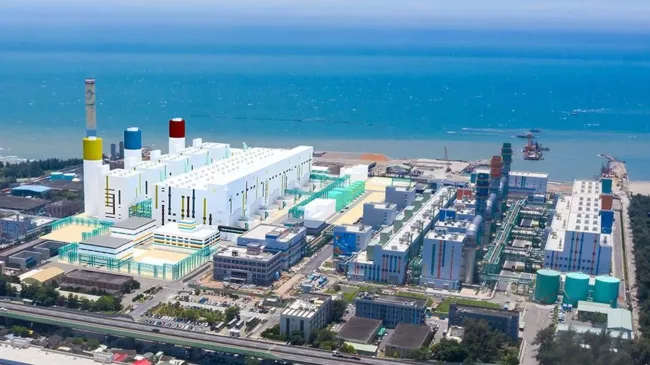
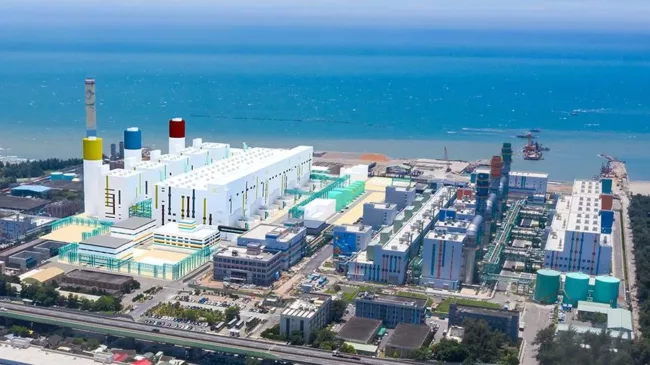
Mitsubishi Power, the power solutions division of Mitsubishi Heavy Industries, Ltd., has landed a major contract to deliver a 2,800 MW gas turbine combined cycle (GTCC) expansion at Taiwan Power Company’s Tung Hsiao Power Plant. The contract, jointly awarded to Mitsubishi Power and Taiwan’s CTCI Corporation, covers engineering, procurement, and construction (EPC) of five new state-of-the-art units and is valued at approximately ¥760 billion (USD $5.2 billion).
This large-scale turnkey deal marks one of the biggest GTCC deployments in East Asia and will form the second phase of an ambitious long-term upgrade of the Tung Hsiao facility in Miaoli County. Taiwan Power Company, the island’s state-owned electric utility, aims to modernize existing generation assets and meet surging electricity demand while reducing the environmental footprint of fossil fuel-based power.
What kind of gas turbines are being installed—and how do they compare with previous generation technology?
At the heart of the new power station units will be Mitsubishi Power’s M501JAC (J-Series Air-Cooled) gas turbines, considered among the world’s most efficient large-frame turbines for combined cycle operation. The Japan-headquartered equipment manufacturer will also supply steam turbines, auxiliary systems, and generators through its subsidiary, Mitsubishi Generator Co., Ltd.
Mitsubishi Power had earlier supplied three M501J turbines for the Tung Hsiao site under a 2013 contract for the first phase of its GTCC revamp. Those units began commercial operations in 2018. The new contract builds upon this previous collaboration, reinforcing the long-standing partnership between Mitsubishi Power and CTCI Corporation, one of Taiwan’s leading engineering and construction firms. CTCI will be responsible for the balance of plant (BOP) systems and full-scale civil construction for the second-phase expansion.
The next-generation M501JAC turbines differ from their earlier counterparts in their advanced air-cooled architecture, enhanced thermal efficiency, and superior operational flexibility. The five new units will begin operations in a staggered manner between 2030 and 2031, significantly boosting grid stability and system efficiency.
How does this project fit into Taiwan’s long-term energy and decarbonization roadmap?
The GTCC expansion at Tung Hsiao is a cornerstone of Taiwan’s long-term electricity supply development strategy. As the island economy rapidly urbanizes and industrializes, Taiwan Power Company has been under pressure to expand base-load capacity without undermining its net-zero emission commitments. The dual mandate—of scaling power delivery while reducing environmental impact—has pushed utilities and regulators toward cleaner fossil-based options, such as high-efficiency combined cycle gas turbines.
By replacing aging thermal plants with low-emission, high-efficiency GTCC units, the Tung Hsiao upgrade is expected to reduce overall greenhouse gas output per megawatt generated. The project directly supports Taiwan’s national energy transition plan, which involves a gradual shift away from coal and nuclear generation toward renewables and cleaner gas-based generation.
Mitsubishi Power’s JAC-series turbines, with their reduced water consumption and carbon emissions profile, are particularly well-suited for power systems undergoing such structural transitions.
What is the historical significance of Mitsubishi Power and CTCI’s collaboration in Taiwan?
The collaboration between Mitsubishi Power and CTCI at Tung Hsiao dates back over a decade. The two companies jointly executed the first GTCC phase in 2013, which resulted in three Mitsubishi-supplied M501J units becoming operational by 2018. The success of that phase—marked by on-schedule delivery, operational reliability, and demonstrated efficiency—cemented a high level of trust between Taiwan Power Company and the Japanese–Taiwanese consortium.
Industry observers view the 2025 contract as a strong vote of confidence in the Mitsubishi Power–CTCI pairing. By choosing the same partners for the follow-up five-unit expansion, Taiwan Power Company signaled its preference for continuity, proven execution, and technological familiarity over experimenting with new OEM or EPC providers.
Institutional sentiment also suggests that repeat contracts in the capital-intensive GTCC sector tend to favor incumbents with solid local experience and a track record of navigating regulatory and logistical hurdles.
How does this impact global GTCC momentum and Mitsubishi Heavy Industries’ power portfolio?
From a global perspective, this project signals continued momentum for GTCC deployments in Asia, even as renewable energy capacity grows. While solar and wind dominate new build headlines, large-scale GTCC plants remain critical in grid balancing, peaking support, and clean baseload provisioning—especially in markets with dense industrial activity like Taiwan.
For Mitsubishi Heavy Industries, this win reinforces its global leadership in the large-frame turbine category. The JAC-series gas turbines are a core pillar of the company’s energy transition portfolio, which aims to deliver decarbonized, yet reliable power solutions. The project aligns with MHI’s broader corporate strategy to decarbonize power systems while maintaining system stability in growing economies.
According to company statements, Mitsubishi Power will continue to promote widespread adoption of GTCC technology worldwide. The manufacturer emphasized that highly efficient and flexible gas turbines remain essential in both near-term decarbonization goals and in long-term pathways to hydrogen-based combustion systems.
What is the investor sentiment around this $5.2 billion contract, and how is it being perceived in the energy market?
Though Mitsubishi Heavy Industries, Ltd. (TYO: 7011) has not made a separate earnings statement following this contract, institutional investors are expected to view the award as a strong backlog addition. The ¥760 billion EPC valuation adds multi-year revenue visibility to Mitsubishi Power’s order book, which has already seen a boost from energy transition-linked projects in Southeast Asia and the Middle East.
Investor sentiment appears stable to positive, with analysts broadly projecting that GTCC and hydrogen-ready gas turbine contracts will play a growing role in the company’s future growth. Mitsubishi Heavy Industries’ stock has been trading within a consolidated range, but the addition of this megaproject could reinforce market confidence in its power systems division.
Although no short-term boost in stock price has been observed immediately after the announcement, long-term value is expected to accrue as the project moves into execution over the next half-decade.
What can we expect from Mitsubishi Power and Taiwan Power Company in the coming years?
The sequential rollout of the five Tung Hsiao units from 2030 to 2031 will mark one of the largest phased GTCC deployments in the region. The Taiwanese utility sector is expected to lean further into modernized GTCC plants as a core complement to renewables, especially as battery storage and interconnection solutions continue to mature.
Mitsubishi Power’s ability to deliver across such long project horizons will be closely watched by other utilities in Asia looking to replicate similar large-scale upgrades. Given Taiwan’s constrained land availability and high grid reliability requirements, GTCC remains one of the most viable solutions to meet future electricity demand in a cost-effective and environmentally acceptable manner.
As decarbonization continues to reshape power infrastructure across the region, Mitsubishi Power’s hybrid strategy—balancing GTCC leadership with emerging hydrogen and ammonia-based combustion technologies—could offer a long-term template for Asia’s transition economies.
Discover more from Business-News-Today.com
Subscribe to get the latest posts sent to your email.